

The Trump administration has stopped waiting for cameras it no longer controls. Locked in a bitter standoff with some of America’s biggest news organisations, the White House has switched on its own round-the-clock video channel, giving the president a broadcast outlet that answers to no editor but his own.
The service, called “TRUMP TV: The Essentials Station,” went live on Monday evening through the White House website and YouTube channel. It gives viewers direct access to videos, presidential remarks, announcements and other content from the administration.
leadership
The timing is no coincidence. The launch came on the same day CNN, MS NOW and Politico filed a federal lawsuit challenging the administration’s decision to bar their journalists from the White House.
Related News
For decades, a rotating pool of reporters has supplied the raw footage that news organisations worldwide rely on for presidential coverage. That system has now cracked. CNN, MS NOW and Politico filed a lawsuit after the ban, and the White House removed CNN from the Monday pool that covers the White House and shares footage with news organisations globally.
The fallout spread fast. Major American television networks suspended pool service indefinitely after CNN’s coverage duties were stripped, deepening the dispute as the White House rolled out its own stream. Time Magazine reported that ABC, CBS, CNN, Fox News and NBC halted television pool coverage of presidential events entirely, an unprecedented rupture between the West Wing and the networks that have covered it since the television era began.
With that pipeline broken, Trump TV effectively becomes the administration’s own newsroom — filming, editing, and distributing its own narrative without a single independent journalist in the loop.
Related News
Despite the round-the-clock branding, the channel is not built for breaking news. Trump TV is not a conventional television network; it is essentially a government-operated digital livestream distributed through online platforms.
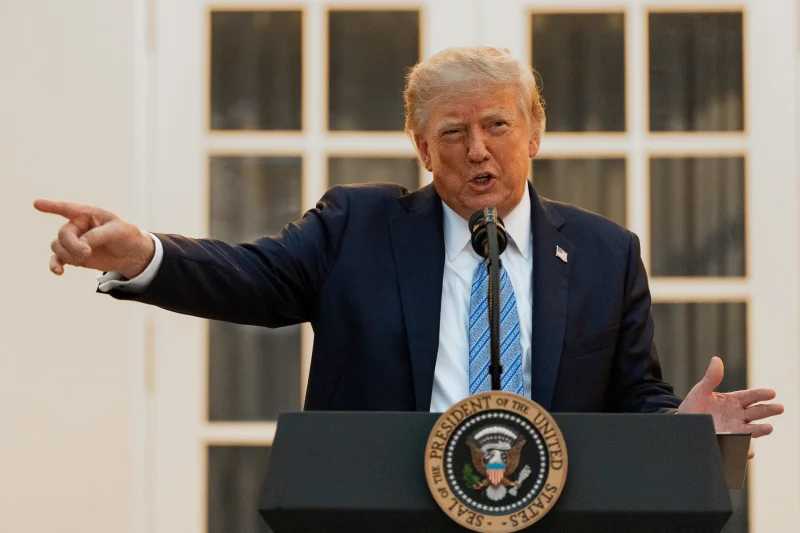
Its opening broadcast was archived footage of Trump speaking at Mount Rushmore on 3 July, streamed from 7 p.m. The programming later moved to footage from his January 2025 inauguration, and by Tuesday the stream was carrying his remarks from the United Nations General Assembly in New York.
The White House has been candid about the channel’s purpose. In its own words, the platform will showcase what it considers the administration’s “biggest moments,” including videos, major presidential remarks, announcements and other highlights. On X, the White House framed the project as a way to control which moments the public sees: “Not every big moment has made it on your tv, now it can.”
For all the fanfare, the numbers tell a quieter story. Trump TV’s viewership figures came under scrutiny almost immediately after launch, with the channel drawing an audience below 1,000 viewers.
Size, however, may not be the point. Critics argue the channel signals something bigger than ratings — a shift toward government-produced content standing in for independent press coverage. Commentators have questioned whether the timing of Trump TV’s arrival is linked to the administration’s restrictions on press access, rather than coincidental.
The three banned outlets are not backing down quietly. Their lawsuit argues that press access should not hinge on editorial tone. A joint statement from the affected networks read: “No Administration should restrict a news organization because it objects to its reporting.” The case, filed in federal court in Washington, D.C., is now pending.
For Nigerian and other international audiences who rely on US wire services and pooled footage for coverage of the White House, the pool’s collapse carries real consequences. Independent verification of presidential events may increasingly compete with content produced, edited and released solely by the administration itself.
Whether Trump TV grows into a lasting alternative platform or fades as a footnote in the ongoing press-access battle will likely depend on how the courts — and the American public — respond to a White House that has chosen to become its own broadcaster.