

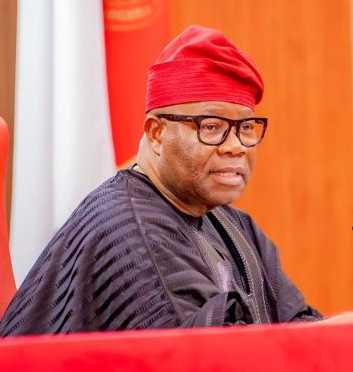
Senate President Godswill Akpabio has firmly rejected claims that he is Nigeria’s Acting President during President Bola Tinubu’s extended stay abroad, stressing that Tinubu remains in charge and that no constitutional vacuum exists. His remarks have reignited debate over Section 145 of the Constitution and the transfer of presidential authority.
Speaking in Akwa Ibom, Akpabio dismissed suggestions that he had assumed presidential powers. He stated: “I am the Senate President and not the Acting President of Nigeria because President Tinubu is still in power. He’s on a working leave, and there’s no absence in Aso Rock.”
Akpabio emphasized that only the National Assembly, under specific constitutional circumstances, could declare a vacancy in the presidency. He insisted that Tinubu continues to govern remotely, citing modern communication tools as sufficient for directing affairs of state.
Related News
Tinubu left Nigeria on August 30, 2026 for a three-week working vacation.
His stay abroad was prolonged, with officials confirming he remained in France.
Vice President Shettima: Travelled to New York on September 20, 2026 to represent Nigeria at the UN General Assembly.
Related News
The Presidency has maintained that Tinubu remains in contact with government officials and continues to issue directives from abroad.
Opposition figures, including Omoyele Sowore and the African Democratic Congress, have questioned whether Section 145 of the Constitution has been properly applied. This section requires the President to transmit a written declaration to the Senate President and House Speaker when unable to perform duties, authorizing the Vice President to act.
Critics argue that Tinubu’s prolonged absence without a formal handover raises constitutional concerns. Sowore insisted that the expiration of the initial 21-day period demanded National Assembly action.
Akpabio countered these arguments by pointing to Tinubu’s recent engagements abroad, including meetings with French President Emmanuel Macron. He argued that geography does not hinder governance in a digital age: “The world is a global village; you can give instructions from the internet. So why are people complaining?”
He reiterated that there is “no vacancy in Aso Rock”, stressing that Tinubu remains the legitimate leader of Nigeria.
This episode highlights recurring tensions in Nigeria’s constitutional framework regarding presidential absences. While Akpabio’s remarks aim to reassure the public, the opposition’s insistence on strict adherence to Section 145 underscores concerns about transparency and accountability in governance.
The debate reflects a larger struggle between political authority and constitutional procedure, raising questions about how Nigeria balances executive continuity with legal safeguards.