

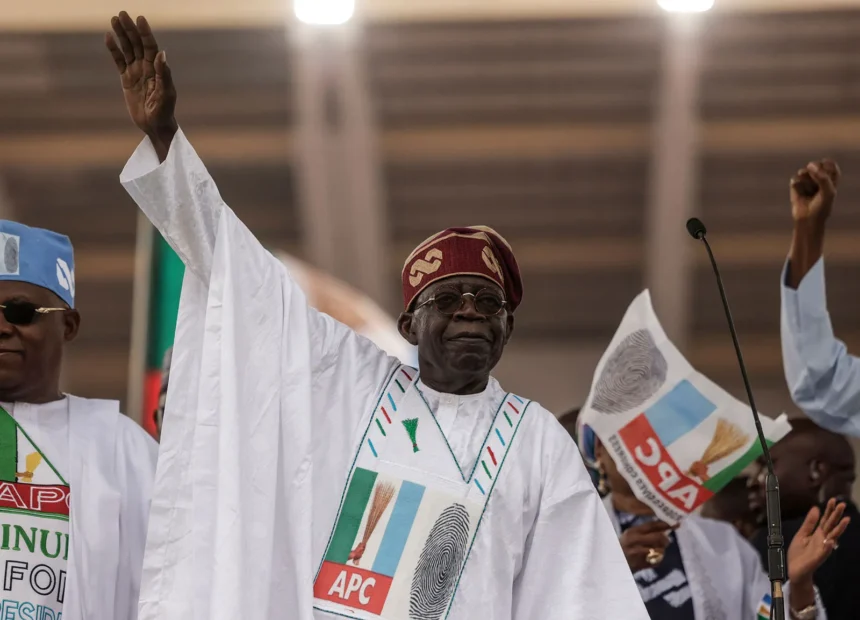
Secretary to the Government of the Federation Senator George Akume confirmed on Tuesday that President Bola Tinubu’s administration intended to seek what he described as a revalidation of its mandate from Nigerians in the 2027 general elections, framing the upcoming electoral cycle as an opportunity for citizens to assess and reward the government’s three-year reform record.
Akume made the declaration at the 2026 Democracy Day press conference themed ‘Challenges, Achievements and the Roads Ahead,’ saying the administration remained committed to delivering on its promises and was preparing to present Nigerians with a comprehensive account of its achievements before asking for a second term.
However, the path to reelection is far from smooth. The combination of worsening insecurity, persistent economic hardship, the unresolved Oyo school abduction, growing opposition party consolidation, and the nationwide Democracy Day protests organised by Femi Falana, Falz, and civil society groups all represent serious political headwinds for the APC going into 2027.
Related News
APC Manages Post-Primary Fallout
Inside the APC, the aftermath of the National Assembly primaries continues to generate friction. President Tinubu met National Assembly leaders earlier in the week to address complaints about governors’ alleged interference in primary outcomes, but no formal resolution of the grievances had been publicly announced. Disgruntled lawmakers, defections to other parties, and lingering resentment among aspirants who lost primaries they considered compromised are all signs of a party that needs serious internal repair work before 2027.
Furthermore, the APC’s performance in the Ekiti governorship election on June 20 will be closely watched as an early indicator of the ruling party’s electoral health. Governor Biodun Oyebanji is widely expected to win re-election, but the margin of victory and the level of voter turnout will be seen as proxies for the depth of APC support in southwestern Nigeria ahead of the presidential contest.
Related News
Meanwhile, SGF Akume said the administration had delivered tangible results on welfare, citing the disbursement of N184 billion in student loans to over one million beneficiaries, the distribution of N37 billion in consumer loans through the Nigerian Consumer Credit Corporation, and the Conditional Cash Transfer Programme reaching three million households. Still, opposition parties described these figures as insufficient given the scale of Nigeria’s poverty challenge and the pain caused by subsidy removal and currency devaluation. Notably, the administration said it was on track to deliver a stronger second half of 2026 on infrastructure, jobs, and security before the formal campaign season begins. Consequently, the next six months will be critical in determining whether the Tinubu administration enters 2027 from a position of strength or vulnerability.
Governors Issue Democracy Day Messages
All 36 state governors issued Democracy Day statements, with most striking a dual tone of celebrating Nigeria’s democratic resilience while acknowledging the real suffering of their constituents. In addition, former President Olusegun Obasanjo released a statement urging Nigerians not to give up on democracy as a system, even as they held elected officials to higher standards of governance. As a result, Democracy Day 2026 generated an unusually rich body of public reflection on the state of Nigeria’s democracy from leaders, activists, and ordinary citizens alike.