


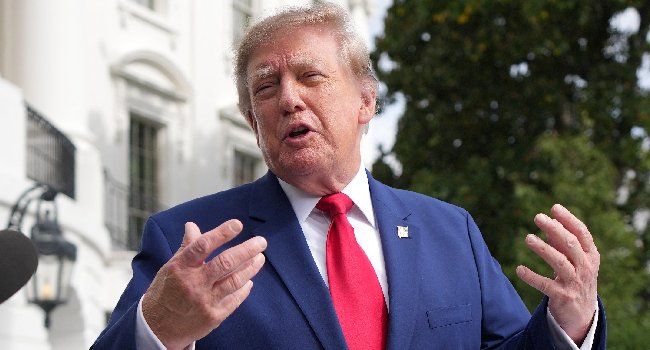
United States President Donald Trump has pointed to the Democratic Party’s strong performance in the recent midterm elections as a key factor behind a sharp decline in the U.S. stock market, as investors grapple with uncertainty over the future of the technology and artificial intelligence sectors.
The comments came after a turbulent trading session that saw major U.S. stock indexes suffer substantial losses, triggering concerns among investors and retirement savers across the country. The technology-heavy Nasdaq recorded one of its worst trading days in recent times, while the Dow Jones Industrial Average and the S&P 500 also posted steep declines.
Reacting to the market downturn, Trump argued that the election outcome had unsettled investors. In a post on his Truth Social platform, the president blamed Democratic victories for the selloff and suggested that the results had negatively affected Americans’ retirement savings.
Related News
The Democratic Party achieved significant gains during the midterm elections, winning key Senate seats and expanding its influence in Congress. Several Democratic candidates also secured victories in governorship races and local contests across multiple states.
Market analysts, however, have linked the selloff largely to growing concerns that a stronger Democratic presence in Washington could lead to tighter oversight of the artificial intelligence industry and slower expansion of large-scale data centre projects. Investors fear that stricter regulations could affect the growth outlook of leading technology companies that have driven much of Wall Street’s recent gains.
Shares of several technology and semiconductor firms came under heavy pressure during the trading session as investors reassessed future earnings prospects in a potentially more regulated environment. The uncertainty surrounding AI infrastructure development contributed to the broader market decline, analysts said.
Related News
Despite the market turmoil, Trump sought to reassure supporters, expressing confidence that the U.S. economy and stock market would recover. He insisted that the setback was temporary and predicted stronger performance in the future.
For many Americans, however, the immediate concern remains the impact of market volatility on savings and investment portfolios. The sharp drop serves as another reminder of how political developments can influence investor sentiment and financial markets, particularly when emerging industries such as artificial intelligence are at the centre of national policy debates.