

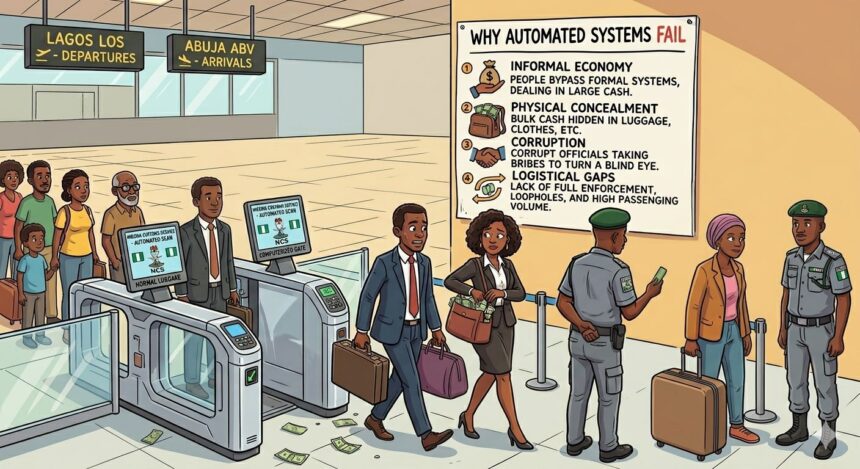
The federal regulatory architecture has proudly unveiled yet another digital milestone in its ongoing campaign against international financial misconduct. Speaking at an interagency security gathering earlier this week, the Comptroller General of the Nigeria Customs Service, Bashir Adewale Adeniyi, announced a major operational expansion involving the deployment of automated currency declaration systems across the aviation sector. This high technology initiative, engineered in direct partnership with the Federal Airports Authority of Nigeria and the Nigeria Financial Intelligence Unit, is being aggressively promoted as a critical frontline defense against money laundering, transnational asset movement, and the financing of regional terrorism. Top administration officials are already pointing to this automated framework as a primary reason why Nigeria must maintain its recent hard won exit from the Financial Action Task Force grey list.
While this multi agency focus on technological modernization is commendable on paper, the strategic emphasis exposes a staggering disconnect from the actual geographic realities of transnational crime. Pouring immense capital and administrative focus into automated kiosks at heavily policed international terminals creates a highly visible but deeply superficial shield. Sophisticated money laundering syndicates and terror networks do not routinely pack millions of undeclared dollars into designer suitcases to pass through the intense security gauntlets of major airports, especially when the domestic back door remains entirely unhinged. The hard operational reality is that the overwhelming bulk of illicit financial flows, illegal weapons, and smuggled resources move silently across thousands of kilometers of porous, unmonitored land frontiers.
Relying on digital infrastructure at airport terminals while leaving land borders exposed is the administrative equivalent of locking the front screen door while the back wall of the house is missing. Section 4 of the Nigeria Customs Service Act 2023 mandates comprehensive border enforcement, yet regional security reports consistently paint a picture of total institutional paralysis along the land perimeters. While airport customs officials celebrate isolated cash seizures from commercial airline passengers, vast sums of illicit capital move untracked through informal bush paths and unmanned border crossings in the northern and western corridors. These funds directly grease the operational wheels of banditry and insurgency without ever intersecting with an automated system or an airport terminal database.
Related News
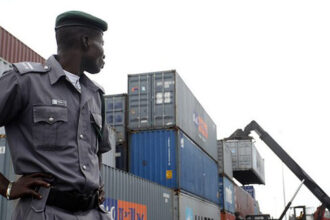
Furthermore, this structural fixation on aviation security ignores the systemic failure of trade based financial manipulation. As the customs leadership itself acknowledged, modern criminal networks heavily utilize sophisticated invoicing fraud, under valuation, and over valuation within maritime shipping and commercial trade to move billions of Naira undetected. These complex financial maneuvers are executed entirely through digital bank transfers and corporate paperwork, completely bypassing physical airport screening lines. By treating physical currency detection at airports as the primary metric of success, the federal government is effectively playing a performative game of security theater while the actual macro economic channels of terror financing continue to thrive unhindered.
Therefore, this newspaper demands that the leadership of the Nigeria Customs Service and the Office of the National Security Adviser immediately pivot from airport optics and confront the vulnerability of our land borders. We call for an immediate redirection of capital away from redundant terminal software and into the aggressive deployment of mobile patrol units, border community intelligence networks, and non intrusive cargo scanning technology at regional land outposts. The automated systems at our airports are useful tools for basic compliance, but they will never serve as a substitute for real sovereign control over our physical territory. If the federal government does not urgently expand its financial surveillance to the actual land and maritime entry points where transnational syndicates operate, its highly praised technological shield will remain nothing more than an expensive illusion.