

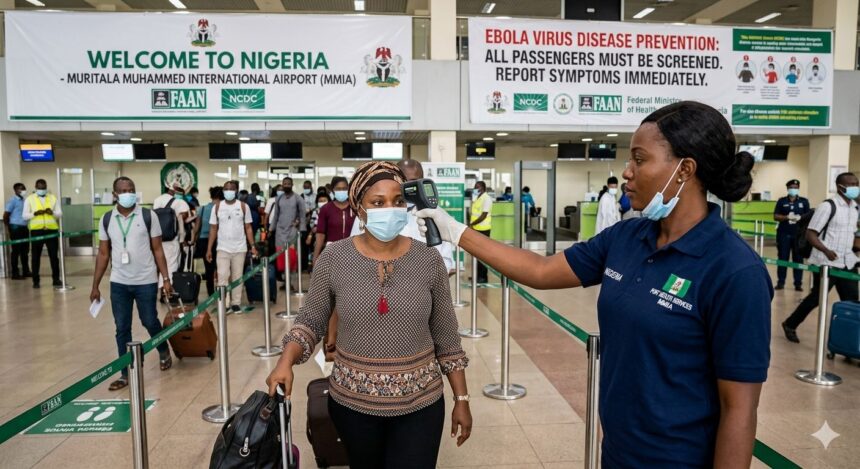
The Nigeria’s international border defence mechanisms are again shaken out of their lethargy. After the World Health Organization officially announced the fresh Ebola virus outbreak in the Democratic Republic of Congo and Uganda is a Public Health Emergency of International Concern, the federal government has been scrambling to deploy emergency responses. The Nigeria Civil Aviation Authority has made a firm directive to the airlines, while the Federal Airports Authority of Nigeria has promised airlines to carry out strict screening of passengers at all the international airports. Coordinating Minister of Health and Social Welfare, Prof. Muhammad Ali Pate, has quickly responded to the public, saying there were no confirmed cases in the Nigerian territory, adding that the port health services would be intensifying surveillance.
These comforting assurances and airport interventions are essential, but they address symptoms of border vulnerability not disease of a weakened domestic health-care system. This specific outbreak is a stark reality in the science of the situation, and highlights the severe risks of using primary screening only at airports. With the current ebola epidemic, the Bundibugyo ebolavirus strain has no approved vaccine or therapeutic treatment, and can be spread quietly for weeks before it is finally picked up. In addition, the incubation period of Ebola is as long as twenty one days. A traveler who tested positive for COVID at the Murtala Muhammed International Airport in Lagos or Nnamdi Azikiwe International Airport in Abuja, can easily pass through the most modern thermal scanner facility without ever being detected to have a single degree of fever, only to become spreader of the virus days later in an urban community.
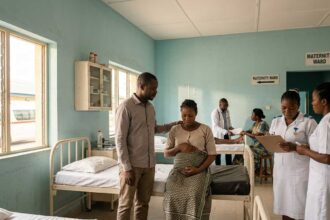
Temperature checks and passenger locator forms at entrance points give the false sense of security but leave the “back door” wide open for domestic travel. The real fight against an imported viral threat is not at the airport but at the local primary health care provider, at the state isolation ward and at the epidemiology lab. Currently, the Nigeria Centre for Disease Control and Prevention (NCDC) is urging state health commissioners to revamp their viral haemorrhagic fever (VHF) response plans, but many states are not equipped with the most basic financial means and equipment to do so. Acute shortage of basic personal protective equipment (PPEs), running water and reliable electricity in most of the public hospitals in Nigeria renders our healthcare workers a vulnerable target and not a resilient line of defense.
Related News
Also, the geographic extent of the virus’ transmission in the region points to a serious lack of containment in our overall containment effort. The vast porous borders of the country which thousands of traders cross daily without detection is not being secured by the temperature screenings. Informal land travel into northern or western Nigeria allows a traveler to pass through the airport without any surveillance whatsoever, entering local populations unmonitored. Given that the federal ministry of health is not yet notified of the breach of the market, before it can trigger a national epidemic, there are local markets, regional motor parks and local communities where surveillance teams are not deployed, a single imported case could initiate a local epidemic.
Thus, this medium said it was time for the federal government to drop the superficial airport optics and approve emergency funds, directly to state general hospitals and local surveillance units. The ministry of health is urged to put in place compulsory isolation centres equipped with proper facilities in all the state capitals and ensure adequate supply of protection materials to medical practitioners on the frontline. While Federal Airports Authority of Nigeria is duty bound to be alert, the Presidency needs to know that a public health wall is as strong as its weakest local clinic. Without investing in improving its own medical facilities and capability and using the flimsy defense of the airport thermal scanners, Nigeria may be left unarmed when the next pandemic strikes.