

According to the most recent UN inter-agency estimates published in April 2025, covering data through 2023, Nigeria’s maternal mortality ratio stands at 993 deaths per 100,000 live births, the third highest in the world, behind only South Sudan and Chad. The same report, produced jointly by WHO, UNICEF, UNFPA, the World Bank and the UN Population Division, confirms that approximately 75,000 Nigerian women die from pregnancy or childbirth-related causes every year, accounting for nearly one in five of all maternal deaths globally. UNICEF, citing these figures in May 2026, added a statistic that should stop every Nigerian in their tracks: one woman in this country dies every seven minutes from childbirth or pregnancy-related complications. In sub-Saharan Africa as a whole, a woman faces a lifetime risk of maternal death of 1 in 55, roughly 250 times higher than in Western Europe, where the equivalent risk is 1 in 14,000. Nigeria, sitting at the very worst end of that African average, is not merely failing its mothers in the abstract. It is failing them at a rate that has no parallel among the world’s major economies. Yet in the middle of this ongoing catastrophe, routine vaginal deliveries in public hospitals now cost as much as N800,000, and Caesarean sections frequently exceed N1 million, climbing toward N2 million in some facilities. In a country where median monthly household income for the majority of families falls well below N100,000, childbirth has become, for millions of women, a financial sentence passed alongside a medical one.
Nigeria is not merely failing its mothers. It is pricing them out of the right to survive.
The public hospital was supposed to be the answer. For decades, the argument has been made that even where private healthcare costs soared beyond reach, the public system would remain accessible. That argument has now collapsed under the weight of its own contradictions. What patients in public hospitals across Nigeria now encounter is a parallel economy of unofficial charges, compulsory consumable purchases, and referrals to private laboratories and pharmacies with undisclosed connections to hospital personnel. Patients are compelled to purchase surgical gloves, disinfectants, detergents, and consumables, many of which are never used. Tests are conducted in private laboratories linked to consultants, while medications are sourced from pharmacies tied to hospital staff. As medical analysts have described it, such practices amount to racketeering that preys on vulnerable families at one of the most delicate moments of their lives. The public hospital has not been abolished. It has been quietly privatised from the inside.
Related News
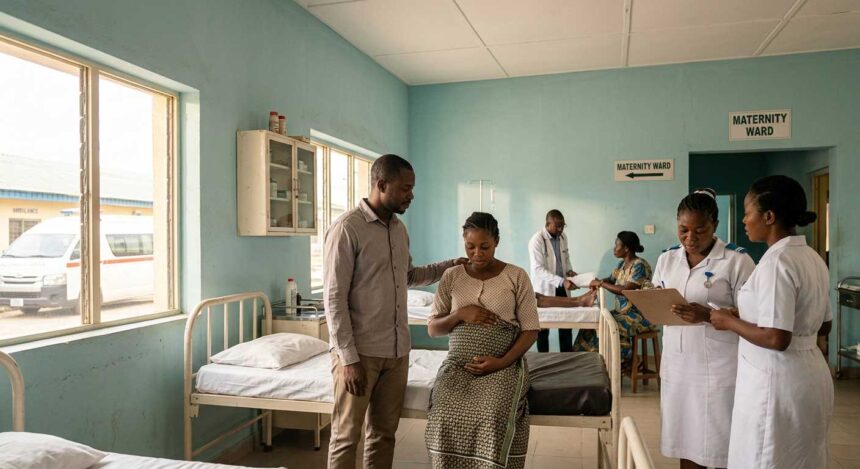
The consequences of this financial barrier are as predictable as they are preventable. When childbirth in a public hospital costs N800,000 and a family earns N60,000 a month, the calculation is not difficult. Pregnant women seek cheaper alternatives through traditional birth attendants, unlicensed maternity homes, and unskilled providers. Many do not survive. What begins as an attempt to save money ends as a preventable death. According to the most current UN data, only 39 percent of births in Nigeria take place in a health facility, while 59 percent of Nigerian women deliver at home. Only 43 percent of all births are assisted by a skilled provider. These numbers are the direct arithmetic of unaffordability. Every N800,000 bill posted on a public hospital noticeboard is a calculation that sends another woman to a neighbourhood compound to deliver alone. And some of those women do not come home.
The Federal Government is not unaware of the crisis. Health Minister Muhammad Pate launched the Maternal Mortality Reduction Innovation Initiative on November 7, 2024, declaring, rightly: “No woman should lose her life simply because she cannot afford a C-section.” It was the right statement, spoken at the right moment. The implementation, however, has fallen far short of the promise. To access the programme, poor and vulnerable women must present their National Identification Number and prove their indigence. For a pregnant woman in a medical emergency, navigating bureaucratic documentation requirements is not a minor inconvenience. It is, for many, an insurmountable wall. The programme exists on paper. For the woman in Kogi State bleeding in a taxi on the way to a facility that will demand payment before it admits her, it does not yet exist in practice.
The wider funding picture tells a damning story. Nigeria’s health expenditure has consistently fallen below the 15 percent benchmark that Nigerian leaders committed to in the 2001 Abuja Declaration, signed in this same city more than two decades ago. In the 2026 budget, healthcare received N2.48 trillion out of a total appropriation of N68.3 trillion, representing roughly 3.6 percent of the national budget. Meanwhile, the Central Bank of Nigeria confirmed that Nigerians spent $550 million on medical tourism in just the first nine months of 2025, more than 17 percent higher than the same period in 2024. The wealthiest Nigerians, including those who write and sign the budgets, fly abroad for the healthcare that public funds have never adequately built at home. The woman in Kebbi State has no such option. She has only the public hospital whose consumables she must buy, whose laboratory fees she cannot afford, and whose beds may already be occupied when she arrives.
Related News
- THE PRICE OF PARALYSIS: Why the Oyo Education Shutdown Exposes the Total Failure of Local Security
- THE ILLUSION OF GATEWAY SECURITY: Why Automated Customs Systems at Airports Cannot Stem the Flow of Illicit Cash
- THE SUPERFICIAL SHIELD: Why Airport Thermal Scanners Will Not Save Nigeria from the New Ebola Threat
We recognise that the challenge is not merely financial. The medical causes of maternal death in Nigeria are known and documented. High blood pressure during pregnancy, including preeclampsia and eclampsia, is the single biggest killer. Postpartum infections rank second. Severe bleeding before, during, or after delivery kills rapidly when there is no emergency care available. These are conditions that skilled providers, equipped facilities, and functioning blood banks can address. The knowledge exists. The interventions exist. What does not exist, in sufficient quantity or accessibility, is the system to deliver them to the women who need them most. Nigeria’s own health ministry estimates that the vast majority of its 75,000 annual maternal deaths are preventable. Not because the medicine does not exist, but because the system is broken and the financing is absent.
We therefore call on the following urgent actions. First, the Federal Government must immediately review and simplify the eligibility and access process for the Maternal Mortality Reduction Innovation Initiative. A pregnant woman in an emergency must not be required to produce documentation before receiving care. The programme must be restructured to operate on an opt-out basis for indigent patients, not an opt-in one that demands proof of poverty at the point of crisis. Second, state governments, which bear direct constitutional responsibility for primary healthcare delivery, must be held to account for their own maternal health budgets. The National Primary Health Care Development Agency must publish quarterly, publicly accessible scorecards on each state’s maternal health spending and outcomes. Third, the National Health Insurance Authority must urgently expand its coverage to include comprehensive maternal care, with immediate effect, in all 36 states and the FCT. Every pregnant woman in Nigeria, regardless of income, must have a pathway to skilled, facility-based delivery that does not depend on her ability to pay. Fourth, the Federal Ministry of Health must establish and enforce a transparent, standardised fee schedule for public hospital maternity services, with criminal liability for administrators who impose charges beyond the approved schedule. Racketeering in public hospitals is not a cultural problem. It is a regulatory failure. Treat it as one.
The CBN’s medical tourism figure is, in its way, the most eloquent indictment of all. Nigerians spent $550 million going abroad for healthcare in nine months. That is not the failure of individual Nigerians. That is the verdict of millions of people who have stopped trusting a system that was built with their taxes and has not kept its promise. The woman who cannot afford N800,000 for a hospital delivery and the wealthy politician who flies to London for a knee replacement are both, in different ways, rejecting the same broken system. One of them has no alternative. She is the one we must talk about.
Bringing life into the world is the most fundamental act a human being can perform. In Norway, it is safe. In Belarus, it is safe. In Nigeria, according to the most authoritative global data available, a woman in sub-Saharan Africa faces a lifetime risk of maternal death 250 times higher than her counterpart in Western Europe. Nigeria sits at the very worst end of that statistic. That is not fate. That is policy. And policy can be changed.
No Nigerian woman should die because she could not afford to give birth. That is not a development aspiration. It is a moral minimum. And Nigeria has not yet met it.