

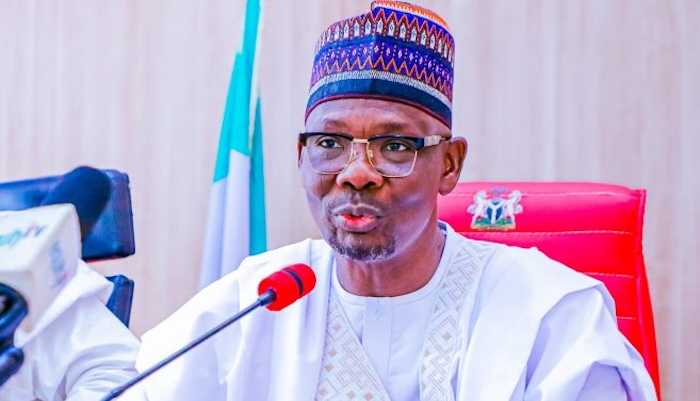
Nasarawa State Governor Abdullahi Sule has stirred fresh debate by declaring his hope that Nigeria will one day elect a Christian-Christian presidential ticket, insisting that the constitution does not mandate religious balancing in political leadership. His remarks challenge long-held assumptions about faith and representation in Nigerian politics.
In a statement that has reignited conversations about religion and politics in Nigeria, Governor Abdullahi Sule of Nasarawa State has expressed optimism that the country will one day elect a Christian-Christian presidential ticket. Speaking during an interview on Channels Television’s Politics Today, Sule argued that the Nigerian constitution does not require religious balancing in political offices but rather emphasizes inclusiveness through the federal character principle.
According to Sule, Sections 14(3) and 15 of the 1999 Constitution focus on equitable representation and ethnicity, not religion. He stressed that Nigerians should look beyond faith when evaluating political candidates, noting that competence and national unity should be the guiding principles.
Related News
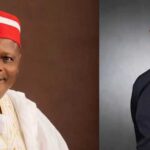
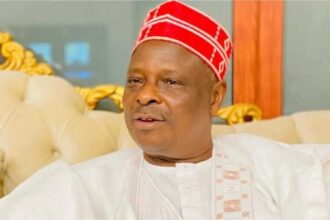
His comments came in response to concerns raised by Rabiu Kwankwaso, vice-presidential candidate of the Nigeria Democratic Congress (NDC), who criticized the ruling All Progressives Congress (APC) for its Muslim-Muslim ticket in the 2023 elections. Sule dismissed Kwankwaso’s remarks as typical opposition rhetoric, insisting that no APC governor had ever described the arrangement as exclusionary.
Sule recalled historical precedents, citing the 1993 election of Chief Moshood Abiola and Babagana Kingibe, both Muslims, as well as the 2023 victory of President Bola Tinubu and Vice President Kashim Shettima, also a Muslim-Muslim pairing. He argued that these examples prove Nigerians are capable of voting based on merit rather than religious identity.
“I pray that one day Nigeria will have a Christian-Christian ticket, and it will win. That’s what I pray to see,” Sule said, adding that the country is overdue for such a political experiment.
Related News
The governor also highlighted his own political choices in Nasarawa State, where he has consistently selected Emmanuel Akabe, a Christian, as his deputy. He explained that the decision was based on competence and the political realities of the state, not constitutional compulsion.
Sule’s remarks have sparked mixed reactions across the political landscape. Some analysts view his statement as a bold attempt to challenge entrenched narratives about religious balancing, while others see it as a strategic move to broaden political discourse ahead of the 2027 elections.
Critics argue that Nigeria’s fragile ethno-religious balance makes same-faith tickets risky, potentially alienating sections of the electorate. Supporters, however, contend that Sule’s position reflects a maturing democracy where competence and inclusivity should outweigh religious considerations.
The debate underscores Nigeria’s ongoing struggle to reconcile its diverse religious and ethnic identities with democratic governance. While the constitution emphasizes federal character, political practice has often leaned toward balancing faiths to maintain national cohesion. Sule’s intervention, therefore, raises critical questions: Should Nigeria continue to prioritize religious diversity in leadership, or should competence and inclusivity take precedence?
As the 2027 elections approach, Sule’s remarks may influence conversations within political parties and among voters. Whether Nigeria will indeed witness a Christian-Christian presidential ticket remains uncertain, but the governor’s prayer has undeniably added a new dimension to the discourse on faith and politics.