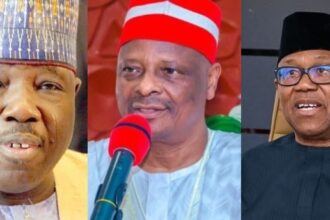


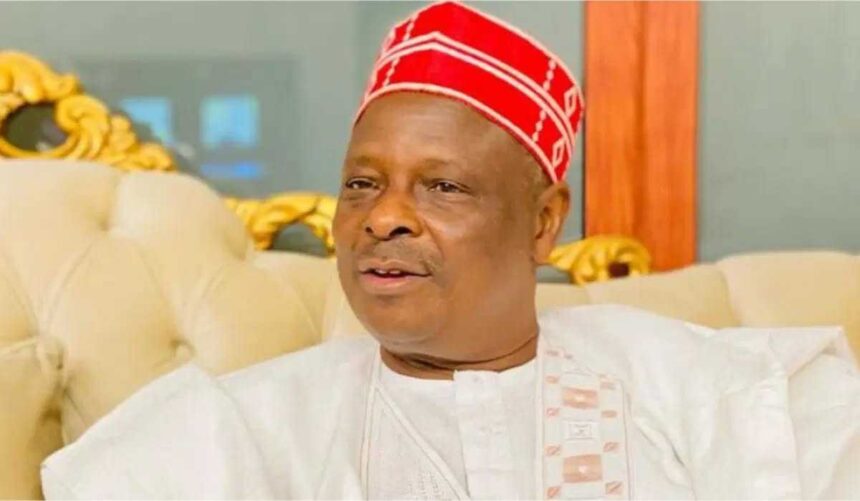
For a national and international audience, the latest exchange between former Kano State governor and New Nigeria People’s Party (NNPP) leader, Rabiu Musa Kwankwaso, and former Borno State governor, Senator Kashim Shettima, has once again spotlighted the fragile alliances shaping Nigeria’s political terrain.
Kwankwaso, speaking at a public event, strongly criticised Shettima’s recent comments questioning the depth of support for Labour Party’s presidential candidate, Peter Obi, in northern Nigeria. According to Punch Newspapers and Vanguard, Kwankwaso described Shettima’s remarks as dismissive of the political realities in the region, insisting that northern voters are not monolithic and cannot be easily swayed by elite narratives.
Shettima, who served as governor of Borno State and is now a prominent figure in the All Progressives Congress (APC), had earlier suggested that Obi’s influence in the north was limited. His comments were interpreted by many as an attempt to downplay the Labour Party’s growing appeal among younger voters and urban constituencies.
Related News
Kwankwaso countered by stressing that the north is experiencing a shift in political consciousness, particularly among youths and professionals. He argued that dismissing Obi’s support base ignores the broader dissatisfaction with traditional political structures.
The north has long been considered a decisive bloc in Nigerian elections. Historically, parties with strong northern backing have enjoyed significant leverage in national contests. However, recent developments suggest that voter loyalty is becoming more fluid.
Court records and verified post-election reports from 2023 showed that while APC maintained dominance in several northern states, opposition parties made notable inroads in urban centres. Kwankwaso’s NNPP, for instance, secured substantial votes in Kano, challenging APC’s grip.
Related News
By highlighting Obi’s northern support, Kwankwaso appears to be positioning himself as a defender of pluralism in the region. Analysts say his intervention is also a strategic move to keep NNPP relevant in national discourse ahead of 2027.
Shettima’s remarks reflect APC’s confidence in its northern stronghold, but Kwankwaso’s rebuttal underscores the risks of complacency. The Labour Party, though relatively new in northern politics, has tapped into frustrations over unemployment, insecurity, and governance.
Political observers note that Obi’s campaign in 2023 resonated with sections of the northern electorate, particularly in states affected by economic hardship. While his overall performance in the north was modest compared to the south, the momentum he generated cannot be ignored.
Kwankwaso’s criticism also signals potential realignments. His NNPP has been exploring alliances with other opposition parties, and his defence of Obi’s northern support may be interpreted as a gesture towards future collaboration.
For Nigeria’s international audience, the exchange illustrates the complexity of the country’s political landscape. Unlike the simplistic north-south divide often portrayed, Nigeria’s politics is increasingly shaped by generational shifts, urbanisation, and issue-based movements.
As of press time, neither Shettima nor the APC leadership had issued a formal response to Kwankwaso’s remarks. However, sources within the party told Vanguard that Shettima’s comments were not intended to dismiss Obi’s supporters but to emphasise APC’s enduring strength in the region.
Meanwhile, Labour Party officials welcomed Kwankwaso’s intervention, describing it as validation of their efforts to expand into northern Nigeria. They argued that the recognition of Obi’s support base by a northern heavyweight like Kwankwaso strengthens their credibility.
Kwankwaso’s rebuke of Shettima is more than a war of words. It reflects the ongoing contest for relevance in northern politics and the broader struggle for Nigeria’s democratic future. As the 2027 elections draw closer, the ability of parties to engage with diverse constituencies will determine their success.
For both national and international readers, the incident underscores that Nigeria’s political story is not just about personalities but about shifting loyalties, grassroots mobilisation, and the demand for credible leadership.