

By Alan Vance
Senior Energy and Policy Analyst
Introduction: The Lights Go Out on a Big Money Promise
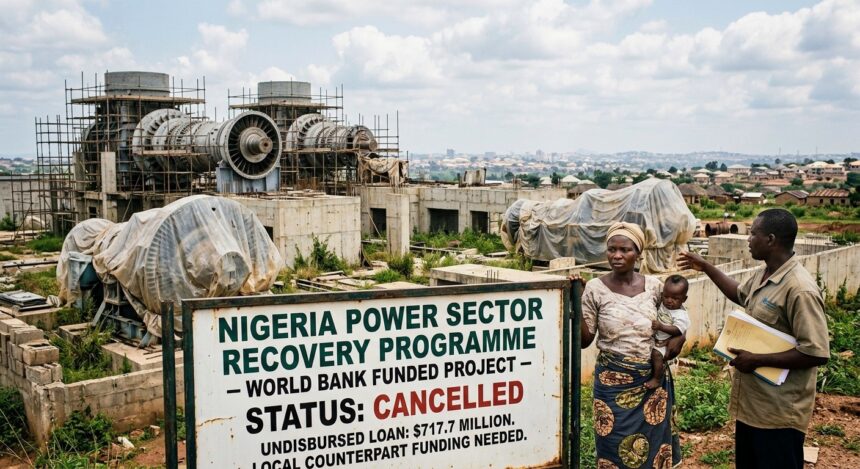
Nigeria has stopped a $717.7 million loan from the World Bank. This money was meant to fix the country’s broken electricity system. The news came after a joint decision by the Federal Government of Nigeria and the global bank. It ends a major plan called the Power Sector Recovery Performance-Based Operation.
Related News
Instead of fixing the power grid, the loan was ended early. The final date for the project was changed from June 30, 2027, to May 31, 2026. This means the plan died more than a year before it was supposed to end.
For many Nigerians, this news is not a shock, but it is a major disappointment. Millions of families and businesses across Nigeria still live in darkness. They face constant grid failures and high costs for fuel. This $717.7 million was the leftover part of a bigger $1.52 billion financial aid package.
So, what went wrong? Why did the government and the World Bank agree to cancel such a massive amount of money during an energy crisis?
Related News
This news analysis looks deep into the facts. We will explore the economic shocks, the policy mistakes, and the heavy financial losses that broke this deal. We also look at what this means for the future of light and power in Nigeria.
The History of the Loan: Big Hopes, Weak Results
To understand why this loan failed, we must look back to where it started. The World Bank and Nigeria began this journey on June 23, 2020. They launched the Power Sector Recovery Programme (PSRP). The first part of the loan was worth $752.5 million.
The Early Wins
At first, the programme worked well. The money helped the government make small but important changes. Between 2019 and 2022, things looked good:
* The money gap in the power sector dropped by 71 percent. It went from N581 billion down to N166 billion.
* Power companies became better at collecting money. Regulatory cost recovery moved from 56 percent up to 94 percent.
* The amount of electricity sent to the national grid grew by 13 percent between 2018 and 2021.
The Turn for the Worse
Because of these good results, the World Bank approved more money. On June 9, 2023, the bank added another $763.5 million to the pot. This brought the total plan to $1.52 billion.
But this new phase, called the Additional Financing (AF) stage, hit a brick wall. The economic rules of the game changed rapidly in Nigeria. The power sector could not keep up. The World Bank reported that only 9 percent of this new money was ever sent out. The rest of the money, the $717.7 million, sat idle because Nigeria could not meet the strict reform conditions set by the bank.
The Core Problem: The Currency Shock of June 2023
The biggest reason this loan failed was a major change in Nigeria’s economy. In June 2023, the Federal Government liberalised the foreign exchange market. This means the government stopped controlling the value of the Nigerian currency, the Naira. As a result, the value of the Naira dropped significantly against the United States Dollar.
This currency drop hit the power sector hard because of how Nigeria makes its electricity.
NIGERIA’S POWER SOURCES:
Natural Gas: 70%+ (Priced in USD) Hydro/Other
More than 70 percent of the electricity on Nigeria’s national grid comes from power plants that burn natural gas. By law and market rules, this natural gas is priced in US Dollars.
When the Naira lost its value, the cost of buying gas shot up instantly. Power generation companies (GenCos) had to pay much more in Naira to buy the same amount of gas. However, the money they received from selling electricity did not increase. This created a massive financial trap.
The Billions in Black Hole: The N1.9 Trillion Tariff Deficit
In a normal business, when your costs go up, you raise your prices. But electricity is not a normal business in Nigeria. It is highly political and controlled by the government.
The Frozen Tariffs
After the Naira dropped in value in 2023, the government froze electricity tariffs for most citizens. They did this to protect Nigerians from high inflation. But this choice created a giant hole in the finances of the power sector. This hole is called a “tariff shortfall” or tariff deficit. It is the gap between the real cost of producing electricity and the price consumers actually pay.
Annual Tariff Shortfall (Naira)
- 2022 – N140 Billion
- 2024 – N1.9 Trillion
- 2025 – N1.9 Trillion
As the table shows, the money gap exploded from N140 billion in 2022 to a giant N1.9 trillion per year in both 2024 and 2025.
The Subsidy Burden
The government had to cover this N1.9 trillion gap with public funds to keep the power companies from going bankrupt. This meant the government was spending trillions of Naira on power subsidies instead of using that money for schools, roads, or hospitals.
In April 2024, the government tried to fix this by raising prices for “Band A” customers. These are wealthy areas and businesses that get 20 hours of power a day. While this helped a little bit, it was not enough to clear the massive debts across the entire power network.
Why the World Bank Walked Away: The Broken Conditions
The World Bank does not just give out money for free. It gives loans based on performance. This is called a Performance-Based Operation. To get the cash, Nigeria had to prove it was fixing the power sector according to a strict timeline.
The bank required Nigeria to show a “credible and fiscally sustainable financing plan.” This meant the government needed a clear plan to reduce the N1.9 trillion deficit and show how the sector would fund itself in the future.
Nigeria failed to show a workable plan for 2023, 2024, and 2025. The World Bank stated that the government’s recent finance plans did not show enough funding sources to cover the losses. Because the government could not show how it would fix the money leak, the World Bank graded the project’s progress as “Moderately Unsatisfactory.”
Both sides realized the original plan no longer fit the harsh realities of the Nigerian economy. Therefore, they made a pragmatic choice: close the project early and cancel the remaining $717.7 million.
Another View: The Government’s Frustration with Delays
While the World Bank points to missed reform targets, there is another side to the story. The Nigerian government has expressed its own frustrations with international lenders.
The Accountant-General of the Federation, Dr. Shamseldeen Ogunjimi, recently gave a strong warning about World Bank loans. He noted that long bureaucratic delays from the bank make these loans hard to use.
“If approvals take more than six months, the Nigerian Government may no longer honour such arrangements,” – Dr. Ogunjimi warned.
The government argues that when a loan takes too long to approve and distribute, the economic situation changes before the money even arrives. This delay makes the original project goals impossible to reach.
Nigeria is also trying to manage its total national debt, which stood at N159.28 trillion in early 2026. The presidency, through spokesperson Bayo Onanuga, stated that Nigeria has not over-borrowed. However, cancelling a loan that was not working helps keep the nation’s debt profile from growing unnecessarily.
Deep Structural Problems: The Unbroken Chain of Failures
The failure of this loan highlights the deep-rooted issues that have plagued Nigeria’s power sector for decades. The electricity system is like a chain with three main links: Generation, Transmission, and Distribution. Right now, every link in this chain has a major problem.
1. Weak Distribution Performance
The Distribution Companies (DisCos) are the ones who collect money from everyday consumers. They suffer from high technical and commercial losses. This means a lot of electricity is wasted, stolen, or never paid for due to a lack of prepaid meters. Because DisCos cannot collect full payment, they cannot pay the transmission or generation companies.
2. Transmission Bottlenecks
The national grid is owned and run by the government through the Transmission Company of Nigeria (TCN). The grid is old and weak. It collapses frequently, plunging the entire nation into total darkness. Even when power stations make electricity, the grid often cannot carry it to the homes that need it.
3. Underutilized Generation Capacity
Nigeria has the machines to build more than 13,000 megawatts of electricity. But because of gas shortages, broken transmission lines, and lack of funds, the country often distributes less than 4,000 or 5,000 megawatts. This amount is far too small for a nation of over 200 million people.
What This Cancellation Means for Everyday Nigerians
The cancellation of this $717.7 million loan is not just an abstract news item for bankers and politicians. It will have real, everyday impacts on ordinary citizens and local businesses.
Continued Blackouts
The most immediate impact is that the power grid will stay weak. The cancelled money was meant to upgrade old equipment and build better tracking systems. Without this investment, grid collapses will likely continue, and power supply will remain unstable.
High Energy Costs for Businesses
Because public power cannot be trusted, businesses must continue to rely on alternative energy. Companies use large diesel and petrol generators, or expensive solar installations. Energy expert Yakubu Usman warns that this keeps business costs very high. When businesses spend too much on power, they pass those costs down to consumers, making food, goods, and services more expensive for everyone.
The Threat of Higher Tariffs
With the World Bank loan gone, the government must find another way to handle the N1.9 trillion yearly deficit. The state cannot afford to pay this subsidy forever. This means the government may be forced to raise electricity tariffs for more consumer groups, not just Band A. Nigerians might soon have to pay much more for the little electricity they receive.
Expert Opinions: What Should Nigeria Do Next?
Energy and financial experts agree that Nigeria needs a fresh strategy. The old method of taking large international loans without fixing the foundation of the business is not working.
Clear Policy Direction
Energy expert Yakubu Usman points out that Nigeria suffers from weak policy direction. He notes that the country passed the Electricity Act, but the people running the sector do not fully understand how to implement it.
“We have the same issues we talked about five years ago that are still what we are discussing today,” Usman said. He believes Nigeria must create practical, local laws that match the realities of our power marketplace.
Attracting Private Investment
Vahyala Kwaga, a deputy director at the civic group BudgIT, warned that losing this funding leaves a big gap. To fill this gap, Nigeria must make the power sector safe and attractive for private investors. Private companies will only invest their money if they are sure they can make a profit and recover their costs.
Conclusion: A Time for Local Solutions
The cancellation of the $717.7 million World Bank loan is a tough lesson for Nigeria. It shows that large sums of foreign money cannot fix a system that has deep structural and economic flaws. The currency devaluation of 2023 exposed the hidden weaknesses of relying on dollar-priced gas while selling power in local Naira.
This moment should serve as a wake-up call. Nigeria cannot rely solely on foreign loans to light up its homes and factories. The government, regulatory bodies, and private power firms must work together to build a sustainable local framework.
Nigeria needs to:
- Find local ways to price and supply gas for power plants.
- Stop the technical and commercial theft of electricity through total metering.
- Create stable policies that encourage local and foreign private buyers to invest in the grid.
Until these core structural and financial problems are solved, the national grid will continue to fail, loans
will continue to stall, and Nigeria will remain a nation waiting for the lights to come on.