

Introduction
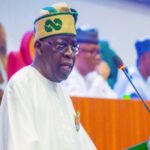
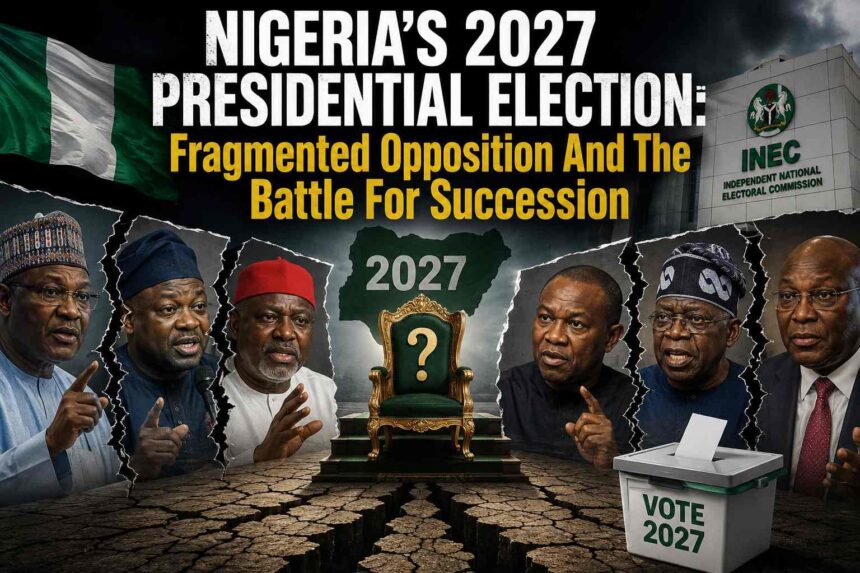
Nigeria’s 2027 presidential election is shaping up to be the most fractured in the country’s Fourth Republic history. President Bola Ahmed Tinubu has been officially declared the All Progressives Congress (APC) flagbearer after winning his party’s primaries with nearly 11 million votes. The ruling party has secured organizational advantages early. But the opposition landscape tells chaos instead of unity. Six major parties have announced flagbearers. Two factions operate within the Peoples Democratic Party (PDP). The Labour Party and African Democratic Congress (ADC) are split into competing camps. Peter Obi moved from Labour Party to the new Nigeria Democratic Congress (NDC). This election cycle could fundamentally alter Nigerian democracy. The opposition’s failure to unite despite multiple attempts suggests structural barriers to winning.
The APC’s Incumbency Advantage: How Tinubu Secured His Re-election Bid
The APC’s primary election gave Tinubu a clear organizational path forward. He emerged with 10.9 million votes in May 2026. This mathematical dominance within his party contrasts sharply with opposition primaries. The ruling party announced Tinubu as flagbearer following this victory. It provides early momentum for his re-election campaign.
Tinubu inherits challenges from his first term. His administration removed fuel subsidy in May 2023. The decision prevented “imminent bankruptcy” according to the President. But it triggered inflation that peaked at 33.88 percent in December 2024. Many households still struggle with food prices and transportation costs.
Related News
However, macroeconomic indicators show improvement. Inflation declined below 15 percent by late 2025. The Central Bank of Nigeria projects 12.94 percent average inflation for 2026. The exchange rate stabilized around ₦1,400 per dollar. These improvements form the backbone of Tinubu’s campaign narrative.
The President has invested heavily in visible infrastructure. He commissioned four major Compressed Natural Gas facilities across Lagos, Abuja, and Owerri in May 2026. The new tax laws took effect January 1, 2026. Government celebrations of “economic take-off year” are part of re-election positioning.
Yet opposition critics argue the human cost remains too high. The Civilian Group (CNG) condemned tax implementation as “an assault on democracy.” They allege gazetted versions differ from what National Assembly passed. If economic pain continues, swing voters may reject continuity.
Related News
The PDP’s Internal Crisis: Two Factions, Two Candidates, One Party
The PDP faces its most dangerous moment. The party dominated Nigerian politics from 1999 to 2015. It was the primary vehicle for opposition to the APC. Now it is split into warring factions with different presidential candidates.
The faction backed by Minister of the Capital Territory Nyesom Wike nominated former Senator Sandy Onor as consensus candidate on May 26, 2026. Samuel Ortom, chairman of the screening committee, declared Onor the “standout candidate likely to lead the party to victory.” This faction commands significant influence in Rivers State and the South-South geopolitical zone, Wike’s traditional power base.
Simultaneously, another PDP faction led by Seyi Makinde and Tanimu Turaki has cleared former President Goodluck Jonathan as their sole presidential candidate. Jonathan’s candidacy carries enormous symbolic weight. He served as president from 2010 to 2015. He remains popular in the South-South. He commands respect across the North due to political alliances.
However, Jonathan’s age and his 2015 election loss may limit appeal to younger voters. The dual-candidate crisis is not merely organizational. It threatens to split the PDP’s vote base along regional and factional lines.
In Nigeria’s first-past-the-post presidential system, a divided opposition can hand victory to the incumbent even with majority discontent. The PDP’s inability to reconcile before INEC’s July 11, 2026, deadline for presidential candidate submission raises questions about whether the party can present a credible alternative.
Wike downplayed the factional claims in March 2026. He said “there is only one PDP, no faction.” But the reality contradicts his statement. Two presidential candidates have emerged from the PDP’s factions. One faction led by Abdulrahman Mohammed and supported by Wike endorsed Jonathan. The opposing faction led by Turaki claims its candidate is Sandy Onor.
Peter Obi’s Party Switch: From Labour to Nigeria Democratic Congress
Peter Obi’s political journey has taken another surprising turn. The politician will run for president in the West African nation’s 2027 elections. This ensures that opposition to incumbent Tinubu will once again be fragmented.
Obi finished third in 2023 with 6.1 million votes. He came behind Tinubu’s 8.7 million and Atiku’s 3.9 million. His 2023 Labour Party campaign was plagued by organizational weaknesses and primary controversies. The youth support that propelled his Labour Party campaign remains significant.
Obi moved to the Nigeria Democratic Congress. The NDC is a newly formed party. It confirmed Peter Obi as its presidential candidate for 2027. Obi is the sole candidate to submit a nomination form to NDC. This suggests a cleaner nomination process compared to other parties.
The NDC recorded defectors from African Democratic Congress, Labour Party, and Social Democratic Party. Former PDP National Legal Adviser Amanda Pam led defectors formally received by NDC leader Seriake Dickson in Abuja. This strengthens NDC’s ranks ahead of future political contests.
Obi will now face Tinubu, Atiku, and potentially Jonathan or Onor in what is shaping up to be a multi-way race. His 2023 campaign demonstrated that transcending regionalism is possible. He won significant votes in the South-East and South-South. He made inroads in urban North-Central states.
However, Obi’s Anambra background and Igbo ethnicity may still limit appeal in the North. Ethnic voting patterns remain strong there. The question is whether the NDC can provide better organizational support than Labour Party did.
Atiku Abubakar’s Fourth Run: ADC Emerges as Unified Opposition Platform
Atiku Abubakar has emerged as the African Democratic Congress presidential candidate for 2027. He secured 1,846,370 votes in the primaries. He outperformed former Rivers State governor Rotimi Amaechi (504,117 votes) and businessman Mohammed Hayatudeen (177,120 votes).
Atiku’s emergence signals a major turning point for the party. It represents a significant shift in early 2027 political race dynamics. Out of 3,113,599 registered ADC members, 2,527,977 voted. The primary results show Atiku’s strong support base.
Atiku is running for president for the fourth time. He is now 79 years old. His appeal lies in political experience, North-East base, and business connections. He has previously run under PDP in 2007 and 2011. He joined ADC in 2023.
However, Atiku’s age and four previous election losses may limit his ability to break through against younger competitors. His 2023 performance (3.9 million votes) was behind both Tinubu and Obi.
The ADC faces its own internal divisions. One faction led by Ibe Kachikwu, the ADC’s presidential nominee from 2023, opposes the coalition process. This group has taken legal action. They continue to advance their own parallel initiatives.
Even before final collation, Rotimi Amaechi rejected the process. The public rejection of process by key aspirants raises serious questions about internal cohesion. The ADC may struggle to position itself as a united alternative to the ruling party.
Atiku’s registration with ADC is expected to be closely watched as political alignments crystallize. His affiliation could strengthen ADC’s visibility and organizational capacity. But internal dissent remains a challenge.
The Labour Party Crisis: Two Factions, Two Candidates, One Identity Question
The Labour Party that posed a strong challenge to Tinubu in 2023 is grappling with internal discord. Despite a court ruling recognizing Nenadi Usman as legitimate leader, former national chairman Julius Abure continues to assert authority over the party.
Both factions have named different presidential hopefuls. The Nenadi Usman faction announced Chibuzo Okereke. The Abure faction put forth Kennedy Ahanotu. This split mirrors the PDP crisis.
The Labour Party’s 2023 success was driven by youth enthusiasm and the “Obidient” movement. Frustration with unemployment, inflation, and corruption fueled the campaign. Two years later, the question is whether youth enthusiasm has translated into sustained political engagement.
Obidient support remains significant. However, the party’s organizational weakness in 2023 contributed to Obi’s third-place finish. The internal crisis may further weaken the party’s capacity.
The Labour Party faces an identity question. Is it the party of youth and reform? Or is it becoming consumed by traditional political factionalism? The split between Usman and Abure factions suggests the latter.
Both candidates represent different visions. Okereke represents the court-recognized leadership. Ahanotu represents the long-standing chairman’s faction. The legal battle continues while the party prepares for 2027.
The Social Democratic Party: Supreme Court Ruling Ignored, Two Factions Continue
The SDP has two factions announcing separate presidential candidates. One faction selected Adewole Adebayo. The other, led by Shehu Gabam, chose Abimbola Akeem Atanda.
Gabam insists he is the legitimate national chairman despite a Supreme Court ruling questioning the legality of his claim. The court ruling has not resolved the factional dispute. This shows Nigeria’s political parties often ignore judicial decisions.
The SDP’s internal crisis mirrors patterns across opposition parties. Each claims legitimacy. Both continue operations. Neither recognizes the other. The result is a divided vote base.
Regional Dynamics and the North-South Equation
Nigeria’s presidential elections remain deeply influenced by regional and religious calculations. Tinubu, a Yoruba Muslim from Lagos, broke the informal “Northerner-first” rotation by winning in 2023. His re-election bid would extend Southern presidency to 16 consecutive years (2015-2031).
This may trigger Northern political backlash. The North holds the numerical voting advantage. It has 21 of 36 states and over 60 percent of Nigeria’s population. If Northern voters coalesce behind a single candidate, they could decide the election.
Peter Obi’s 2023 campaign demonstrated transcending regionalism is possible. His 2027 campaign will test whether that breakthrough can be scaled nationally. However, Obi’s Anambra background and Igbo ethnicity may still limit appeal in the North.
Atiku’s North-East base gives him advantage in that region. But he faces competition from Jonathan, who has North-South appeal. The PDP’s split may dilute both candidates’ regional strength.
The South-South is critical. Wike’s faction commands significant influence there. But if Jonathan emerges as the other candidate, the South-South vote may split. This benefits Tinubu, who has built alliances in the region during his first term.
The Challenge of Opposition Merger: Why Attempts Have Failed
Opposition parties have attempted multiple merger efforts. The 2023 election saw some opposition coordination. But it failed to produce a united candidate. The 2027 landscape shows similar patterns.
The fundamental problem is personality-driven politics. Nigerian parties remain centered on individual leaders rather than ideology. Each faction wants its candidate to win. Trust is absent. Power-sharing agreements have not materialized.
The APC’s organizational discipline contrasts sharply with opposition chaos. The ruling party has one candidate. It has clear leadership. It has unified command structure. Opposition parties show the opposite.
Clash of interests prevents unity. Each party wants to maintain its identity. Each leader wants to be the presidential candidate. The mathematics of Nigerian elections make this impossible. Only one candidate can win.
INEC’s Role and Electoral Integrity Concerns
The Independent National Electoral Commission faces unprecedented scrutiny. INEC’s timetable fixes key dates including July 11, 2026, deadline for presidential candidate submission.
However, INEC has faced controversy. An appeals court ruling voided part of the 2027 election guidelines. The electoral body’s ability to deploy BVAS effectively, transmit results transparently, and resist political pressure will determine whether 2027 is democratic consolidation or another contested election.
Electoral integrity remains a central concern. The 2023 election was marred by logistical failures, delayed results, and legal challenges. INEC’s performance will be critical.
The Youth Vote and Reform Fatigue
Nigeria’s demographic reality makes youth voters decisive. 63 percent of the population is under 25. The 2023 election saw unprecedented youth mobilization around Obi’s Obidient movement.
Two years later, the question is whether youth enthusiasm remains. Reform fatigue may have set in. Tinubu’s economic reforms created winners and losers. For young voters facing 50 percent unemployment and double-digit inflation, slow macroeconomic improvement may not offset immediate hardship.
Conversely, if inflation continues declining and exchange rate stabilizes, the youth vote may shift toward continuity. The key variable is whether tangible improvements in food prices, transportation costs, and job creation materialize before February 2027.
Conclusion: A Pivotal Moment for Nigerian Democracy
The 2027 presidential election will test whether Nigeria’s democratic institutions can withstand the pressure of a fragmented, high-stakes contest. The APC’s incumbency advantage, Tinubu’s reform agenda, and the opposition’s disorganization create conditions favorable to a second Tinubu term.
However, if economic pain persists, if the PDP reconciles behind a strong candidate, or if youth turnout surges again, the election could produce a historic transfer of power. The opposition’s failure to merge despite multiple attempts suggests structural barriers to unity.
Yet Nigeria’s electorate has shown willingness to punish incumbents when economic conditions deteriorate. This was seen in 2015 and 2023. The election outcome will shape Nigeria’s trajectory for a decade.
What is clear is that 2027 will measure whether Tinubu’s painful reforms have laid genuine foundations for recovery. Or whether the cost has been too high politically. The coming months will reveal whether Nigeria’s democracy has matured enough to handle this complexity.