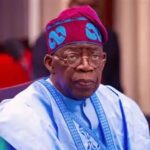


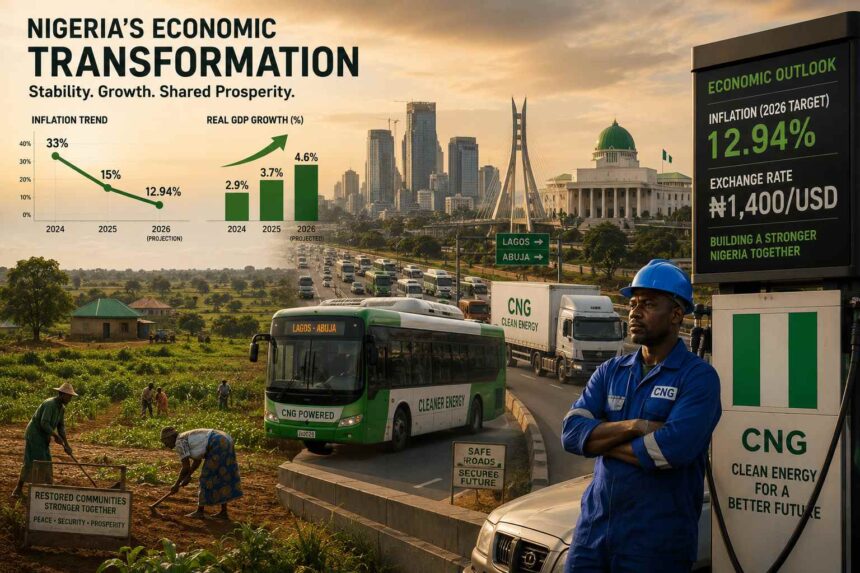
President Bola Ahmed Tinubu stood before the nation on January 1, 2026, and declared this year Nigeria’s “economic take-off,” vowing deeper reforms despite the painful adjustments his administration had unleashed over the previous two years. The proclamation came at a critical inflection point: inflation had declined consistently from its 2024 peak, falling below 15% by late 2025 in line with the government’s target, while the Central Bank of Nigeria (CBN) projected headline inflation would moderate further to an average of 12.94% in 2026. Nigeria had closed 2025 with GDP growth of 4.49%, maintained trade surpluses, and achieved increased stability in exchange rates with the CBN anchoring expectations at ₦1,400 per dollar.
On paper, these metrics suggest reform is working. Yet the ground reality tells a more complex story. The same administration that celebrates macroeconomic stabilization is implementing controversial new tax laws effective January 1, 2026, laws that civil society groups have condemned as “an assault on democracy” after allegations emerged that the published version differs from what parliament actually passed. Meanwhile, President Tinubu is commissioning massive infrastructure projects—four major Compressed Natural Gas (CNG) facilities across Lagos, Abuja, and Owerri in May 2026, record health infrastructure across all six geopolitical zones, and tertiary education projects—marking the largest single-day commissioning of federal investments in Nigeria’s history.
This article provides an authoritative analysis of whether 2026 truly represents Nigeria’s economic take-off or whether the gap between macroeconomic indicators and lived experience remains too wide. We examine the subsidy removal, tax reforms, CNG transition, security challenges, and the political economy of reform to determine whether Tinubu’s agenda will deliver sustained recovery or trigger a public backlash ahead of the 2027 election.
Related News
The Subsidy Removal Legacy: Pain Before Gain
The centerpiece of Tinubu’s economic reform is the May 29, 2023, decision to remove the decades-old fuel subsidy, a move the President defended as necessary to save Nigeria from “imminent bankruptcy”. The immediate economic impact was severe: pump prices tripled overnight from ₦617 to over ₦1,800 per liter, triggering an inflation spike that peaked at 33.88% in December 2024. Consumer prices for food, transportation, and manufactured goods surged, eroding household purchasing power and pushing millions into poverty.
By late 2025, however, the disinflationary momentum had begun. Inflation declined steadily, reaching below 15%—the government’s target—marking the first time in three years that inflation was in single-digit territory when annualized. The CBN’s projection of 12.94% average inflation for 2026 represents a dramatic improvement from the estimated 21.26% average in 2025. This trajectory suggests the initial shock of subsidy removal is dissipating, with market adjustments and increased local refining capacity (particularly from the Dangote Refinery) beginning to stabilize fuel prices.
Related News
Yet the political economy of subsidy removal remains contentious. The removal saved the government approximately ₦3 trillion annually in subsidy payments, funds that could theoretically be redirected to infrastructure, health, and education. However, critics argue that the reallocation has been insufficient and opaque. The government’s massive infrastructure commissionings in May 2026—while impressive—represent only a fraction of the subsidy savings, raising questions about fiscal discipline and whether the promised “peace dividend” from subsidy removal has reached ordinary Nigerians.
For 2026 to be genuinely Nigeria’s take-off year, the benefits of subsidy removal must become visible in household budgets. Transportation costs, food prices, and electricity tariffs must decline or stabilize. The CNG expansion is central to this strategy: by transitioning vehicles from petrol to natural gas, the government aims to reduce transportation costs by 40-50%, directly addressing the biggest driver of inflation for Nigerian households.
The New Tax Laws: Revenue Revolution or Democratic Assault?
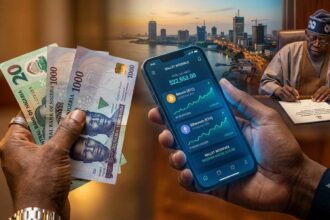
On January 1, 2026, Nigeria’s new streamlined tax laws took effect, representing the most significant fiscal reform since the Value Added Tax (VAT) amendment in 2020. President Tinubu announced the implementation as aimed at “strengthening revenue generation, improving fiscal discipline, and supporting sustainable economic development”. The government emphasizes that a fair and transparent tax system will benefit both citizens and businesses by broadening the tax base, reducing evasion, and increasing public service funding.
However, the tax laws have been embroiled in controversy from the outset. The Civilian Group (CNG) condemned Tinubu’s plan, alleging “post-passage alterations” to the published version of the laws, calling it “an assault on democracy”. African Business reported that “tampering allegations dog Nigeria’s new tax laws,” with parliamentarians claiming the version signed into law differed from what was voted on. These allegations strike at the heart of legislative integrity and raise concerns about executive overreach.
The economic rationale for tax reform is sound. Nigeria’s tax-to-GDP ratio of approximately 6% is among the lowest globally, constraining the government’s ability to fund infrastructure, education, and health without relying on oil revenue or excessive borrowing. The new laws streamline multiple taxes into a cohesive framework, close loopholes, and introduce digital tax collection systems that should reduce corruption and increase compliance.
Yet the timing and implementation raise red flags. Introducing tax increases during a period of economic hardship—when households are still recovering from subsidy removal inflation—risks triggering public backlash. Small and medium enterprises, already struggling with high operating costs, face new compliance burdens that could drive informalization rather than increased revenue. The government must demonstrate that tax revenues are being spent visibly and effectively on public goods, or the reform will be seen as extraction rather than investment.
For 2026 to succeed as a take-off year, the tax reform narrative must shift from “burden” to “investment.” This requires transparent accounting showing how tax revenues fund schools, hospitals, roads, and security. The President’s commissioning of health and education infrastructure in May 2026 is a start, but sustained visibility is essential.
The CNG Revolution: Clean Energy and Economic Transition
President Tinubu’s commissioning of four major Compressed Natural Gas (CNG) infrastructure projects in May 2026 represents a strategic pivot in Nigeria’s energy and transportation policy. The projects, spanning Lagos, Abuja, and Owerri and delivered under the Midstream and Downstream Gas Infrastructure Fund (MDGIF), expand Nigeria’s clean transport infrastructure significantly.
The CNG initiative addresses multiple economic challenges simultaneously. First, it reduces transportation costs by leveraging Nigeria’s abundant natural gas reserves, which are currently underutilized for domestic transport. Second, it reduces dependence on imported petrol, improving the trade balance and reducing foreign exchange pressure. Third, it delivers environmental benefits by cutting emissions from the transportation sector, which accounts for approximately 30% of Nigeria’s carbon output.
The Rolling Energy High-Capacity Daughter Booster Station in Jahi, Abuja, alongside projects by Ibile Oil and Gas, Portland Energy in Lagos, and Femadec in Owerri, creates a foundational CNG distribution network that can expand nationally. The Federal Government has approved expanding the CNG initiative to include electric vehicles, signaling a long-term transition toward cleaner energy.
However, the CNG transition faces significant challenges. The upfront cost of CNG conversion for vehicles is ₦1.5–₦3 million, beyond the reach of most Nigerian drivers. The government must provide subsidies or financing mechanisms to make conversion accessible. Additionally, CNG station coverage remains limited, creating “range anxiety” for drivers. Without rapid expansion beyond Lagos, Abuja, and Owerri, the CNG revolution will benefit only a small elite.
The economic payoff from CNG is substantial if executed well. Transportation costs could decline by 40-50%, directly reducing food prices, manufacturing costs, and overall inflation. This makes CNG central to Tinubu’s argument that 2026 is the take-off year: the reform pain of 2023-2024 gives way to structural benefits in 2026-2027.
Security Challenges: Terrorism, Banditry, and Economic Disruption
Economic reform cannot succeed without security, and Nigeria’s security situation remains fragile. President Tinubu declared in February 2026 that “we will overcome this unacceptable terrorism and banditry,” describing the threats as “foreign to our culture” and promising seven zones of mechanization to strengthen security forces. His remarks came in the wake of a Boko Haram attack on Woro Community in Kwara State that killed over 100 people, highlighting the spread of violence beyond the Northeast to North-Central regions.
Security challenges have direct economic costs. Banditry in the Northwest and North-Central disrupts agricultural production, Nigeria’s largest employment sector and second-largest GDP contributor. Farmers abandon fields, food supply chains break down, and food prices surge. The recent attacks in Kwara and Niger states demonstrate that insecurity is no longer geographically contained, threatening national economic stability.
Tinubu’s promise of mechanized security zones represents a significant upgrade from current manual, underfunded operations. However, security transformation takes years, not months. For 2026 to be Nigeria’s take-off year, the government must demonstrate measurable security improvements in the next six months ahead of the 2027 election. Without this, investor confidence will remain subdued, and internal displacement will continue to strain public resources.
The Political Economy of Reform: 2026 as Election Year
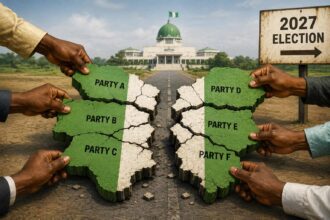
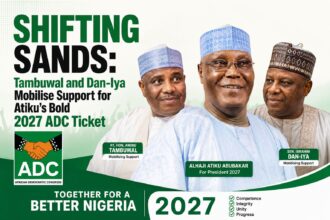
The timing of Tinubu’s economic announcements is politically sensitive. Declaring 2026 Nigeria’s “take-off year” comes 18 months before the February 2027 presidential election, positioning the administration to claim credit for economic recovery if indicators improve. The inflation decline below 15%, the CNG commissionings, and the health/education infrastructure rollouts are all visible achievements that can be marketed to voters.
However, the political risk is substantial. If economic conditions deteriorate—if inflation rebounds, if tax reforms trigger business closures, if food prices surge again—the same announcements will be seen as political theater rather than genuine progress. The 2027 election will measure whether Tinubu’s reforms have delivered tangible benefits or whether the cost has been too high.
The youth vote is particularly critical. Nigeria’s 63% population under 25 faces unemployment rates exceeding 50%, and macroeconomic stability means little if job creation is absent. The government must demonstrate that economic reforms are creating employment opportunities, not just stabilizing indicators. The CNG initiative, if expanded, could create thousands of jobs in conversion facilities, stations, and distribution networks, but this requires rapid scaling.
Conclusion: A Pivotal Year with Uncertain Outcomes
2026 is unquestionably a pivotal year for Nigeria’s economy. The macroeconomic indicators are improving: inflation is declining, exchange rates are stabilizing, GDP growth is positive, and the government is investing in visible infrastructure. These are the conditions for economic take-off. However, the gap between macroeconomic stability and lived experience remains wide, and the political economy of reform is fragile.
The forward-looking outlook depends on three variables. First, the government must sustain the disinflationary trajectory toward the CBN’s 12.94% target, ensuring that food and transportation costs stabilize. Second, the tax reform must demonstrate transparency and deliver visible public goods, shifting the narrative from extraction to investment. Third, security must improve measurably to restore investor confidence and agricultural productivity.
If these conditions are met, 2026 could indeed be Nigeria’s economic take-off year, laying foundations for sustained recovery through 2030. If not, the reform agenda risks triggering public backlash ahead of 2027, potentially ending Tinubu’s political career and derailing Nigeria’s economic transformation. The coming six months will reveal whether the President’s vision becomes reality or whether the pain of reform outweighs the promise.