


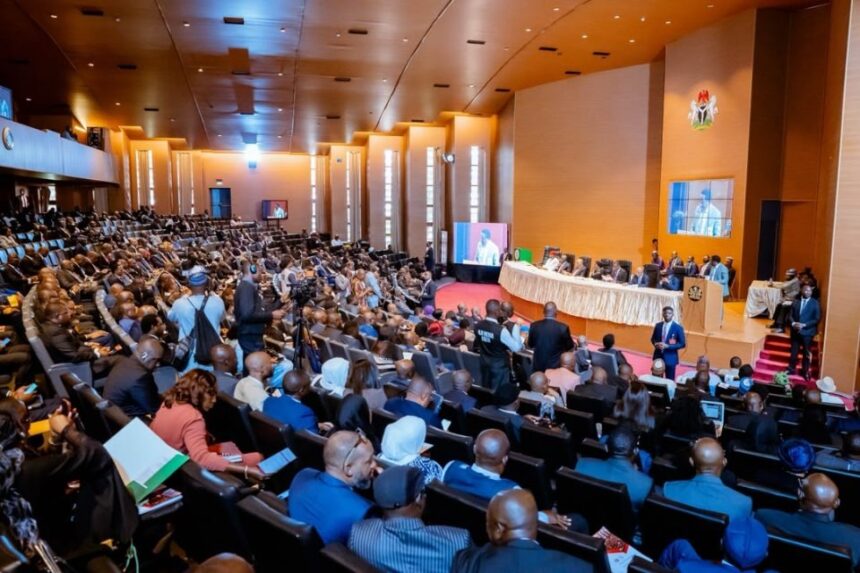
President Bola Ahmed Tinubu has urged Nigeria’s judiciary to seal loopholes that criminals exploit to escape justice. Speaking at a national legal forum in Abuja, the President emphasized that the integrity of the justice system must be protected. He noted that unchecked legal gaps embolden offenders and undermine public confidence. Tinubu stressed that reforms are necessary to strengthen the rule of law. His remarks drew attention to the urgent need for judicial accountability.
Nigeria’s justice system has long faced criticism over delays, technicalities, and loopholes that allow offenders to evade punishment. Past administrations attempted reforms, but challenges persist. Legal experts have pointed to weak enforcement mechanisms and corruption as major obstacles. Citizens often express frustration over prolonged trials and inconsistent rulings. Tinubu’s call reflects growing concern about the credibility of the judiciary. The issue has become central to governance and public trust.
The President outlined measures aimed at closing gaps in criminal justice procedures. He urged judges and lawyers to prioritize fairness and efficiency in trials. Tinubu highlighted the need for legislative collaboration to amend outdated laws. He also called for stricter oversight of judicial officers to prevent abuse of discretion. According to him, reforms must ensure that justice is not delayed or denied. The plan includes strengthening institutions to resist external influence.
Related News
Judicial officers welcomed the President’s remarks but stressed the importance of independence in implementing reforms. Civil society groups applauded the call for accountability, urging concrete action beyond rhetoric. Legal analysts noted that sealing loopholes requires both legislative and institutional commitment. Critics warned that reforms must not compromise judicial autonomy. Citizens expressed hope that the initiative would restore confidence in the justice system. The comments have sparked nationwide debate on legal reforms.
A stronger justice system could improve Nigeria’s investment climate by assuring businesses of legal protection. Analysts argue that closing loopholes would deter financial crimes and corruption. This, in turn, could boost economic growth and attract foreign investors. Socially, effective justice delivery would enhance public trust in governance. Strategically, it would reinforce Nigeria’s democratic institutions. The ripple effects of judicial reform extend beyond the courtroom.
Tinubu’s call to the judiciary underscores the urgency of reforming Nigeria’s justice system. While challenges remain, sealing loopholes could mark a turning point in the fight against crime and corruption. The success of the initiative will depend on collaboration between the executive, legislature, and judiciary. Nigerians now await concrete steps to translate the President’s words into action. The coming months will reveal whether the justice system can rise to the challenge.