

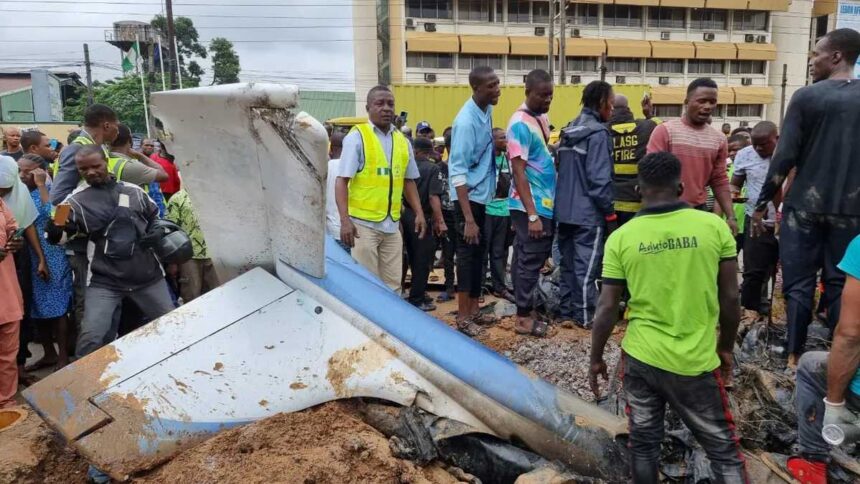
Residents of Igbokoda, Ondo State, are grappling with the aftermath of the recent Nigerian Air Force (NAF) plane crash that left the community shaken. The tragedy, which scattered body parts into waterways, has sparked fears of a looming disease outbreak as the stench of decomposing remains fills the air. Locals are calling on authorities to act swiftly to prevent a public health emergency.
Community Outcry Over Health Risks
The crash site, located near the coastal town of Igbokoda, has become a source of anxiety for residents. Eyewitnesses report that body parts were seen floating in the river, raising concerns about contamination of water sources used for drinking, cooking, and fishing.
Water contamination fears: Fishermen worry that the polluted waters could spread infections.
Related News
Lingering stench: Families living close to the site complain of unbearable odours.
Disease outbreak concerns: Health experts warn that decomposing human remains can attract pathogens if not properly managed.
Chief Adewale, a community leader, lamented: “We are mourning the victims, but we also fear for our own lives. The government must act fast to clean up this mess.”
Related News
Authorities have begun recovery operations, but residents argue that the pace is too slow. The Ondo State Ministry of Health has dispatched officials to assess the situation, while the NAF confirmed that investigations into the cause of the crash are ongoing.
NAF statement: Officials pledged to recover all remains and secure the crash site.
Health ministry intervention: Emergency teams are expected to disinfect affected areas.
Community demand: Locals insist on immediate fumigation and medical outreach.
In Igbokoda, fishing is not just an occupation but a way of life. The contamination of waterways threatens livelihoods and food security. Residents fear that the tragedy could deepen economic hardship in a region already struggling with inflation and unemployment.
Traditional leaders have also raised concerns about the spiritual implications of body parts left unattended in public spaces, urging authorities to ensure dignified burials for the victims.
Public health specialists warn that exposure to decomposing remains can lead to outbreaks of cholera, typhoid, and other waterborne diseases. Dr. Funke Adebayo, a Lagos-based epidemiologist, explained: “Swift removal and proper disposal of remains are critical. Communities must avoid using contaminated water until it is declared safe.”
The tragedy has underscored the need for stronger disaster response mechanisms in Nigeria, particularly in rural communities where infrastructure is weak.