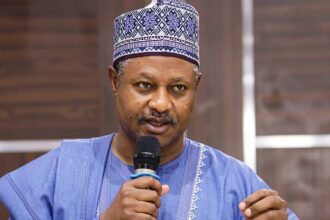


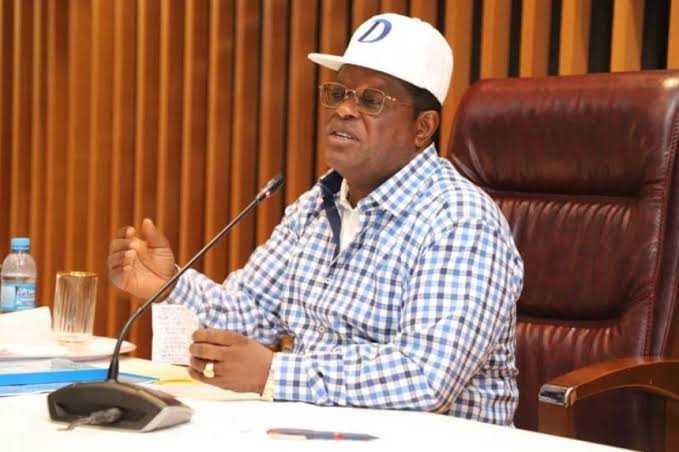
Nigeria’s political landscape ahead of the 2027 general elections continues to stir debate, as Minister of Works, Senator David Umahi, has called on the South-East to rally behind President Bola Ahmed Tinubu rather than former Anambra State Governor, Peter Obi. Umahi, speaking during a stakeholders’ meeting in Ebonyi State, emphasized that the region should avoid what he termed “political risks” by aligning with the current administration.
According to Umahi, the South-East stands to benefit more from supporting Tinubu, who he described as a leader committed to national integration and infrastructural development. He pointed to ongoing federal road projects in the region, including the reconstruction of the Enugu-Onitsha Expressway and the Second Niger Bridge, as evidence of Tinubu’s commitment to the South-East. “We must not take risks with our future. The President has shown goodwill to our people, and we should reciprocate by supporting him,” Umahi stated.
The Minister’s remarks come amid growing political tension, as Peter Obi, the Labour Party’s presidential candidate in the 2023 elections, remains a popular figure in the South-East. Obi’s supporters argue that his candidacy represents a chance for the region to produce Nigeria’s president, a long-standing aspiration among Igbo leaders.
Related News
INEC, Nigeria’s electoral commission, has yet to release official guidelines for the 2027 elections, but political alignments are already taking shape. The Commission has consistently reminded Nigerians that only officially recognized parties and candidates will be on the ballot, urging citizens to verify information through its official channels.
Civil society groups have reacted cautiously to Umahi’s comments. The South-East Elders Forum noted that while infrastructural development is crucial, political representation also matters. “Our people want both development and inclusion. We cannot ignore the aspirations of the youth who see Obi as a symbol of change,” the Forum said in a statement.
Meanwhile, the Presidency, through Special Adviser on Media and Publicity, Ajuri Ngelale, reiterated that President Tinubu’s administration is committed to equitable development across all regions. Ngelale highlighted ongoing projects in the South-East as part of the Renewed Hope Agenda, stressing that the government’s priority is to ensure no region feels marginalized.
Related News
For ordinary citizens in the South-East, the debate is deeply personal. Many residents express frustration over decades of perceived neglect, while others welcome the federal government’s recent infrastructural investments. Traders in Onitsha and Aba say they want stability and roads that will ease commerce, while students in Enugu emphasize the need for leadership that reflects their aspirations.
Political analysts caution that Umahi’s call reflects broader dynamics within Nigerian politics, where regional leaders often seek to align with the ruling party to secure development projects. However, they warn that dismissing popular sentiment could deepen mistrust between citizens and political elites.
As 2027 approaches, the South-East faces a critical choice: whether to align with Tinubu’s administration for continuity or rally behind Obi’s candidacy for change. What remains clear is that the decision will shape not only the region’s political future but also its place in Nigeria’s democratic journey.