


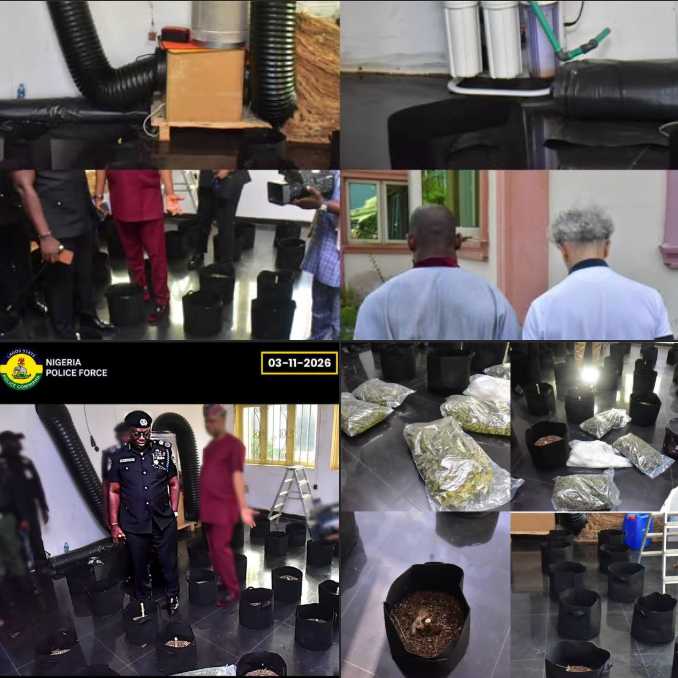
The Lagos State Police Command has uncovered an indoor cannabis farm in the heart of the city, arresting two suspects believed to be behind the operation. The discovery has sparked fresh concerns about the growing sophistication of drug cultivation and its impact on Nigerian youths.
A Hidden Farm in the City
According to police reports, the farm was concealed within a residential building, equipped with lighting and irrigation systems designed to mimic natural conditions. Officers described the setup as “highly organized,” noting that it was intended to produce cannabis discreetly without detection.
The two suspects, whose names were withheld pending investigation, were apprehended during a raid following intelligence reports. Police say the farm had the capacity to produce significant quantities of cannabis for distribution.
Related News
Human Angle: The Cost of Drug Abuse
Beyond the arrests, the incident underscores the human toll of drug abuse in Nigeria. Cannabis remains one of the most widely abused substances among young people, often linked to crime, school dropouts, and health challenges.
Community leaders in Lagos expressed worry that such operations could lure vulnerable youths into drug use and trafficking. “This is not just about the farm; it is about the lives that could be destroyed if these drugs flood our streets,” one resident said.
Police Commitment to Safer Communities
The Lagos State Police Command assured residents that it remains committed to tackling drug-related crimes. Officials emphasized that the discovery was part of ongoing efforts to rid communities of illicit substances and protect young Nigerians from falling victim to addiction.
Related News
“We will continue to work with the NDLEA and other agencies to ensure that drug traffickers have no hiding place in Lagos,” a police spokesperson stated.
Nigeria has long battled drug trafficking, with cannabis cultivation reported in several states. The sophistication of the Lagos indoor farm highlights a worrying trend: traffickers adopting modern techniques to evade detection.
Experts warn that if unchecked, such operations could escalate drug availability in urban centers, undermining public health and security.
Stakeholders are calling for stronger community vigilance and parental involvement to curb drug abuse. Civil society groups argue that while law enforcement plays a crucial role, prevention through education and awareness is equally vital.
“Parents must talk to their children about the dangers of drugs. Communities must report suspicious activities. Together, we can stop this menace,” a youth advocate urged.
While the suspects face prosecution, police and health experts stress the importance of rehabilitation for those already affected by drug abuse. They note that addiction is a disease that requires compassion and treatment, not just punishment.
As Lagos grapples with the reality of an indoor cannabis farm, the incident serves as a reminder of the urgent need to strengthen Nigeria’s fight against drug trafficking—balancing enforcement with humane approaches that protect lives and futures.