


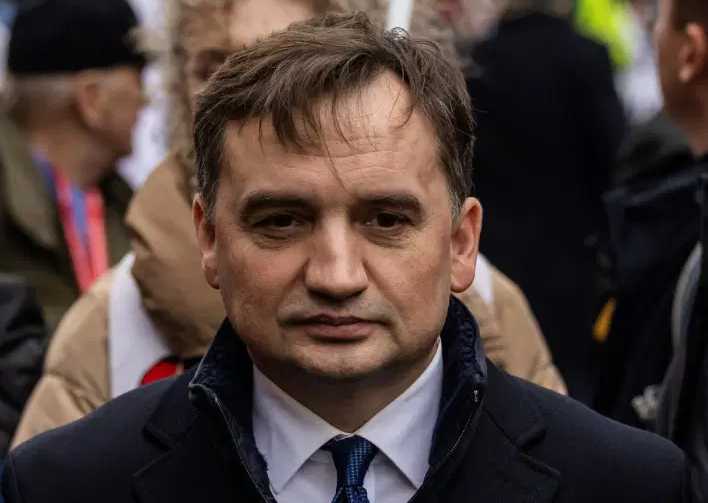
Poland’s justice system has entered a new phase of accountability as authorities formally requested the extradition of former Justice Minister Zbigniew Ziobro from the United States. The move, announced by the Polish public prosecutor’s office, comes after a series of allegations that funds earmarked for crime victims were diverted for political ends.
According to official statements, Ziobro faces 26 charges, most of which revolve around claims that money from a victims’ support fund was misappropriated to advance partisan interests. The prosecutor’s office confirmed that a request for pre-trial detention and extradition has been transmitted through diplomatic channels to U.S. authorities.
Ziobro, who served as a central figure in Poland’s judicial reforms under the conservative Law and Justice Party (PiS) between 2015 and 2023, has long been a controversial figure. His reforms were widely criticised by the European Union, which accused the PiS government of undermining judicial independence.
Related News
The former minister has rejected the accusations, insisting that the case against him is politically motivated. He claims Poland’s current pro-EU governing coalition is targeting him in retaliation for his role in reshaping the judiciary. “This is a politically driven case,” Ziobro has said, portraying himself as a victim of partisan persecution.
The extradition request marks a significant escalation in Poland’s efforts to hold former officials accountable. Ziobro’s deputy, Marcin Romanowski, is also implicated, though his current whereabouts remain unknown. Both men were previously granted asylum in Hungary under its nationalist government. However, their refugee status was revoked when Hungary’s new Prime Minister, Peter Magyar, assumed office in May. On the same day, Ziobro reportedly fled to the United States, where he was granted a visa facilitated by senior U.S. officials.
The case has sparked debate across Europe, highlighting the intersection of politics, justice, and international diplomacy. For Poland, the extradition request is not only about prosecuting alleged financial misconduct but also about restoring credibility to its justice system. For the European Union, it underscores the lingering tensions over judicial independence in member states.
Related News
Observers note that the extradition process could be lengthy, given the complexities of international law and the political sensitivities involved. The United States will have to weigh Poland’s request against its own diplomatic considerations, particularly since Ziobro has framed himself as a political refugee.
This development resonates strongly in Nigeria, where issues of accountability and misuse of public funds remain pressing. The Polish case serves as a reminder that judicial reforms, while necessary, must be carried out with transparency and integrity. It also illustrates how international cooperation is essential in tackling corruption that transcends borders.
As Poland awaits Washington’s response, the case of Zbigniew Ziobro is poised to become a litmus test for how far governments are willing to go in pursuing justice against former officials accused of wrongdoing. Whether extradition is granted or not, the allegations have already cast a long shadow over Ziobro’s legacy and Poland’s political landscape.