

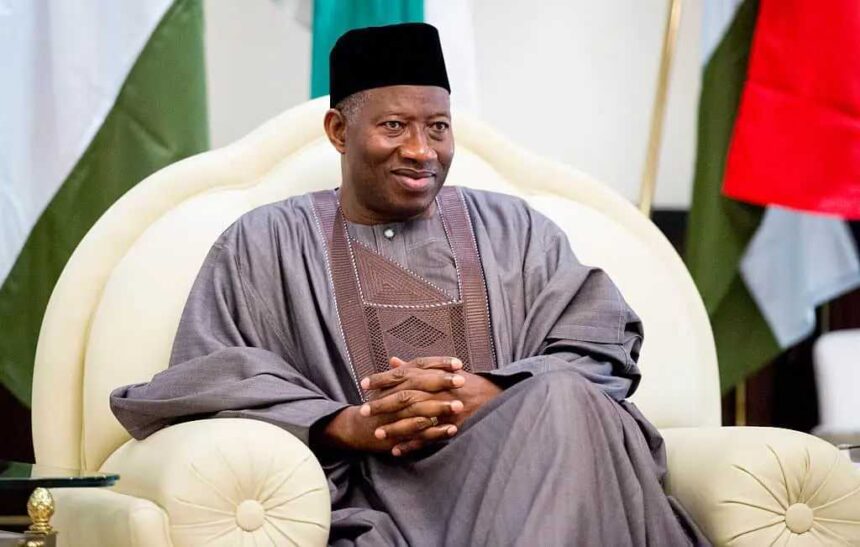
As Nigeria edges closer to the 2027 general elections, the political atmosphere within the Peoples Democratic Party (PDP) has grown increasingly tense. A faction of the party has formally submitted the candidacy of former President Goodluck Jonathan to the Independent National Electoral Commission (INEC), despite ongoing disputes over which faction is legitimately recognized.
Speaking to journalists in Abuja, Mr. Ememobong, a representative of the faction, confirmed that Jonathan’s name was included in the list of candidates submitted to INEC. He emphasized that the submission was carried out “manually and in full compliance with the Electoral Act 2026,” even though INEC had reportedly withheld access codes from the faction. “Notwithstanding INEC’s refusal to provide us with the necessary access codes, we have successfully submitted the list of candidates sponsored by the authentic Peoples Democratic Party,” Ememobong stated.
The development underscores the deepening cracks within the PDP, a party that once held sway over Nigeria’s political landscape. INEC, Nigeria’s electoral umpire, has not yet issued an official statement on the matter, but its earlier position was clear: only the faction recognized by the Commission would be allowed to submit candidates for the 2027 elections. This recognition dispute has left many party faithful uncertain about the future of their political platform.
Related News
Political analysts note that the submission of Jonathan’s candidacy, even under contentious circumstances, signals both the enduring influence of the former president and the desperation of factions within the PDP to rally behind a figure with national appeal. Jonathan, who served as Nigeria’s president from 2010 to 2015, remains a polarizing figure. While some Nigerians remember his tenure for relative stability and democratic reforms, others criticize his administration for corruption and economic mismanagement.
The human dimension of this crisis is evident among grassroots supporters. Many ordinary PDP members express confusion and frustration, unsure which faction to follow. For them, the party’s internal battles translate into uncertainty about their political future and the credibility of their votes. “We just want a united PDP that can challenge the ruling party,” said a supporter in Port Harcourt, reflecting the sentiments of many who feel caught in the crossfire of elite power struggles.
INEC’s role in this unfolding drama is critical. As the body constitutionally mandated to oversee elections, its insistence on recognizing only one faction is aimed at maintaining order and preventing electoral chaos. However, the Commission’s silence on the Jonathan submission has fueled speculation and heightened tensions. Civil society organizations have urged INEC to clarify its position swiftly, warning that prolonged ambiguity could undermine public confidence in the electoral process.
Related News
Beyond the legal and procedural wrangling, the situation raises broader questions about Nigeria’s democracy. Can political parties resolve internal disputes without jeopardizing national elections? Will the electorate be forced to choose between candidates whose legitimacy is contested? These questions weigh heavily on citizens who yearn for stability and credible leadership.
As the 2027 elections draw nearer, the PDP’s internal crisis serves as a reminder that democracy is not only about casting ballots but also about the integrity of the institutions and parties that present candidates to the people. For now, Jonathan’s name may be on a list, but whether it will appear on the ballot depends on INEC’s final decision — a decision that could shape the trajectory of Nigeria’s political future.