

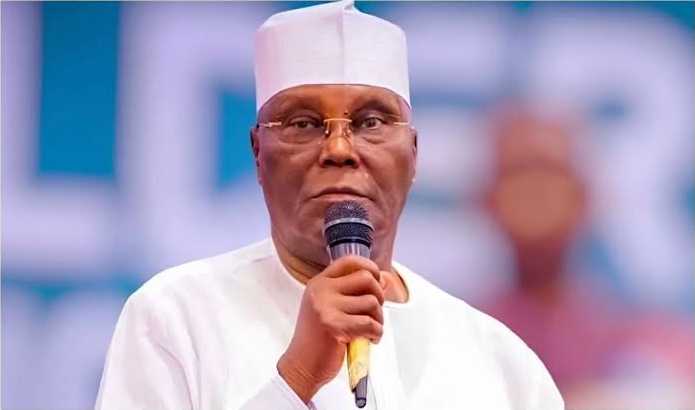
Former Vice President Atiku Abubakar has accused President Bola Tinubu’s administration of concealing ₦12.8 trillion under the Service-Wide Vote in the 2026 budget, describing it as the most opaque fiscal arrangement in Nigeria’s democratic history. He insists the National Assembly must probe the allocation to restore public trust.
Atiku Abubakar, presidential candidate of the African Democratic Congress (ADC), has queried the Tinubu administration over what he termed a suspicious ₦12.8 trillion allocation hidden under the Service-Wide Vote (SWV) in the 2026 Appropriation Act.
According to reports from Punch and Vanguard, Atiku noted that the SWV, which stood at ₦638 billion in 2025, has ballooned by 1,918 percent to ₦12.8 trillion in 2026. He described the increase as “budgetary absurdity” and warned that Nigerians deserve clarity on how such funds will be spent.
Related News
Atiku’s camp highlighted that 84 percent of the 2026 budget is concentrated in just 10 ministries, departments, and agencies (MDAs). The Ministry of Budget and Economic Planning alone carries ₦2.19 trillion in personnel costs under the SWV, compared to ₦54.8 billion allocated to the Federal Ministry of Finance.
He questioned: “Who exactly are the workers earning ₦2.19 trillion? Where are they? What offices do they occupy?”
Atiku argued that the Tinubu government owes Nigerians a detailed explanation. He warned that failure to disclose the beneficiaries and purpose of the ₦12.8 trillion could fuel suspicions that the funds are being reserved to bankroll the ruling party’s political machinery ahead of the 2027 elections.
Related News
He stressed that while critical sectors such as education, defence, and agriculture received lower allocations, trillions were parked under vague headings. This, he said, undermines fiscal responsibility and public confidence.
Atiku urged the National Assembly to conduct a line-by-line probe of the Service-Wide Vote. He insisted that Nigerians must see the payroll and understand the legal authority behind such allocations.
His spokesperson, Phrank Shaibu, described the budget as “the most brazen assault on transparency in Nigeria’s democratic history.”
The controversy raises broader questions about Nigeria’s budgeting process:
Public Trust: Concealing trillions under discretionary votes erodes confidence in governance.
Fiscal Discipline: A nineteen-fold increase in one year signals weak financial controls.
Political Risk: Allegations of hidden campaign funding could destabilise democratic institutions.