


No more “the house after the big mango tree.” Nigeria is about to give every single building in the country a real, machine readable digital address.
The Federal Government will launch its National Digital Alphanumeric Postcode System in October 2026, according to Minister of Communications, Innovation and Digital Economy Bosun Tijani. The system will assign every location in Nigeria a unique, geographically anchored digital address, replacing the country’s traditional descriptive addressing approach that has long relied on landmarks and informal directions.
How the System Will Work
Related News
Each location across Nigeria will receive a unique alphanumeric code linked to precise geographic coordinates, built on a Geographic Information System framework. Rather than describing a house as being near a particular shop or behind a specific church, Nigerians will be able to reference a structured code that pinpoints the exact location on a map.
Minister Tijani explained that the system is designed to significantly improve address accuracy and unlock efficiency gains across multiple sectors. “Beyond improving mail delivery, it will strengthen emergency response, enhance national security operations, improve address verification, support more efficient logistics and e-commerce, and enable more effective delivery of public services,” he said.
Why This Matters for Everyday Nigerians
Related News
Anyone who has tried to direct an ambulance, a delivery rider, or a ride hailing driver to a Nigerian address understands the problem this system aims to solve. Emergency response teams frequently lose precious time navigating informal directions in moments where every minute matters.
Furthermore, e-commerce platforms have struggled with delivery accuracy across much of Nigeria precisely because of inconsistent addressing. A reliable digital address system could significantly reduce delivery failures, lower logistics costs, and improve the overall efficiency of online commerce — a sector that continues to grow rapidly across the country.
Part of a Bigger Digital Push
The postcode project is being developed alongside other major national digital initiatives, including Project BRIDGE, a 90,000 kilometre fibre optic expansion programme, and the National Universal Communication Access Project targeting connectivity for over 20 million Nigerians through thousands of new telecommunications towers.
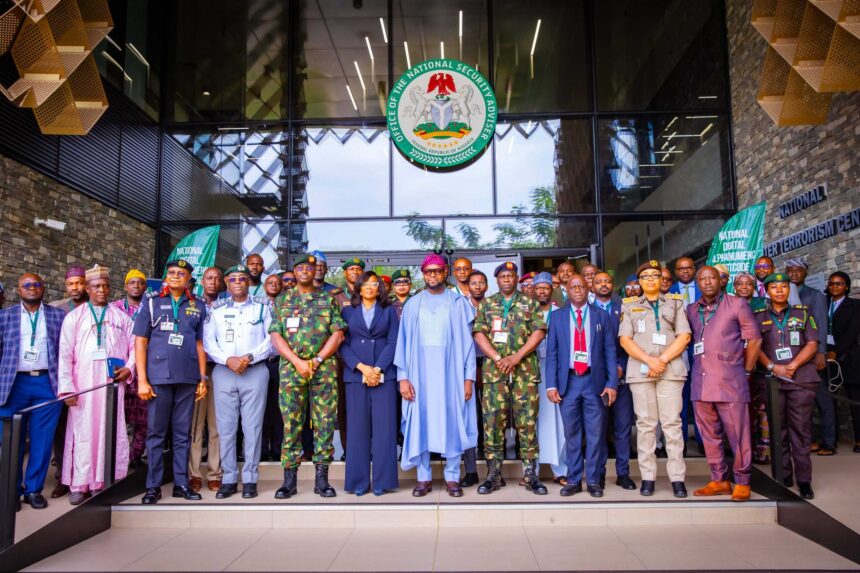
A workshop organised by the Nigerian Postal Service has already focused on operationalising the system for security and emergency response agencies specifically. Stakeholder engagement will continue ahead of the October rollout. For a country of more than 230 million people, many of whom live in informally addressed communities, this system could represent one of the most consequential pieces of digital infrastructure Nigeria has built in years.