


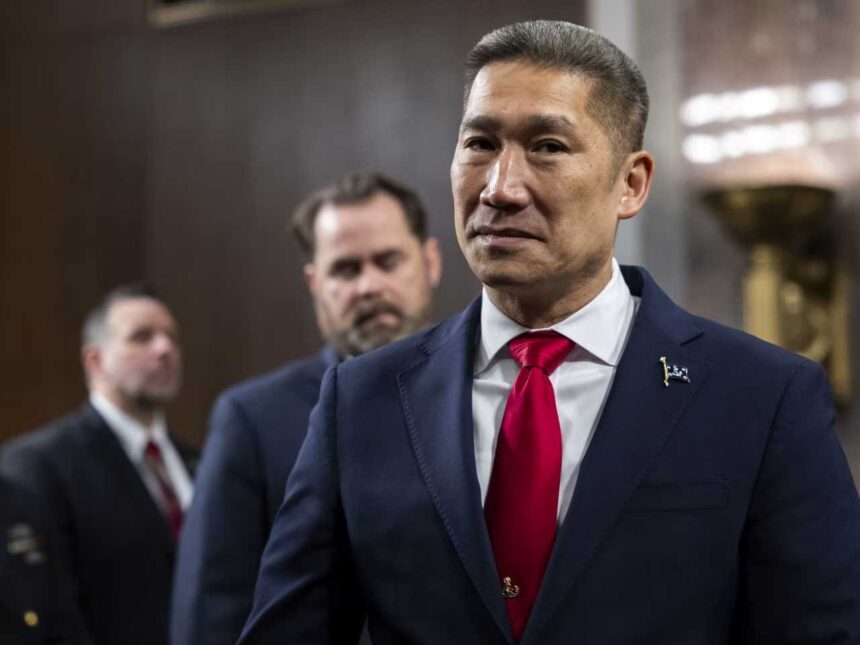
The United States military used recoded expired munitions during operations against Iran, according to Hung Cao, President Donald Trump’s nominee for Navy secretary, in remarks that have renewed scrutiny of America’s weapons inventory and military readiness.
Speaking during a Senate confirmation hearing, Cao disclosed that some of the weapons used in Operation Epic Fury had exceeded their original service dates but were restored for operational use through a recoding process.
“A lot of the munitions we used in Epic Fury, we were able to recode those,” Cao told lawmakers, explaining that some were classified under military codes indicating they had expired but could still undergo restoration or limited repair.
Related News
To illustrate the process, Cao compared refurbished weapons to stale bread that can be refreshed and consumed rather than discarded. He said the recoding allowed the military to deploy weapons that would otherwise have remained unused.
However, Cao did not specify the types of munitions involved or the number that were returned to service before being used in combat operations.
The revelation came as lawmakers questioned whether the United States has sufficient supplies of precision-guided weapons after months of military engagement with Iran. Many of the missiles used in modern warfare cost millions of dollars each, making the ability to restore older stock an attractive option when inventories come under pressure.
Related News
Concerns over munitions levels have grown in recent months. A Pentagon Inspector General report cited by Business Insider stated that spending on weapons during the Iran conflict had contributed to inventory shortfalls and exposed production bottlenecks affecting resupply efforts.
Cao’s comments also contrast with previous assurances from the Trump administration that the country maintained adequate weapons reserves despite the ongoing conflict. Reports earlier this year suggested missile and air-defence stockpiles were being depleted, claims that administration officials publicly rejected.
During the hearing, Cao argued that weapons production capacity has improved significantly over the years. He noted that Tomahawk cruise missile production has increased substantially compared with levels seen during his military career.
The confirmation hearing also highlighted broader concerns about the impact of the Iran war on the U.S. military. Senators questioned Cao about the strain on personnel, prolonged naval deployments and the diversion of resources from other strategic priorities.
Cao, a retired Navy captain who has served as acting Navy secretary since April, is seeking Senate approval to hold the position permanently. His testimony provided one of the clearest public acknowledgements yet that older weapons have been brought back into service as the military manages the demands of an extended conflict.