

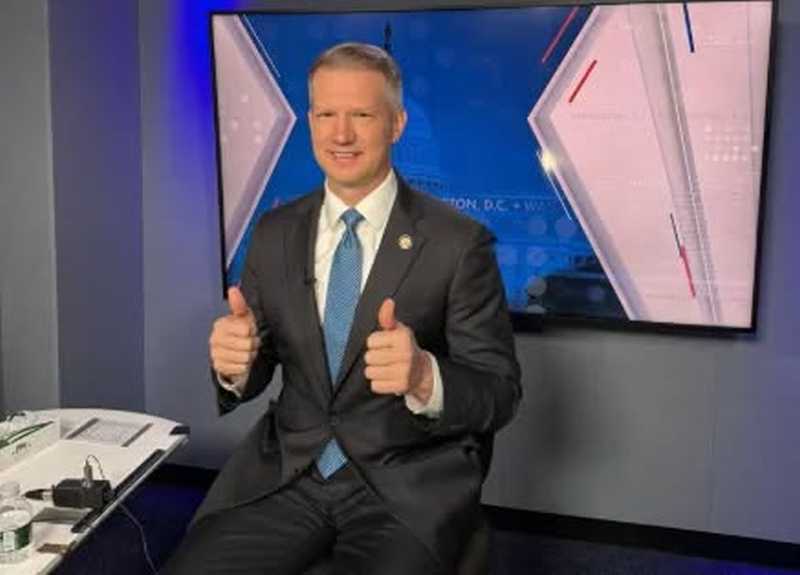
The United States has signaled a renewed interest in Nigeria’s democratic trajectory, with Congressman Riley Moore declaring that Washington will “pay close attention” to the country’s 2027 general elections. His remarks, reported by Vanguard Newspapers and corroborated by Punch, underscore mounting international concern over electoral credibility in Africa’s largest democracy.
Moore, a member of the U.S. Congress with a track record of vocal positions on foreign policy, stressed that Nigeria’s elections are not merely a domestic affair but a matter of global democratic stability. “Nigeria’s role in Africa’s democratic future cannot be overstated,” he said, noting that Washington’s monitoring would extend beyond election day to include pre-election campaigns, security arrangements, and post-election adjudications.
Nigeria, with over 200 million citizens, is Africa’s most populous nation and one of its largest economies. Its elections often set the tone for democratic governance across West Africa. Past contests have been marred by allegations of vote-buying, ballot snatching, and judicial controversies. International observers, including the European Union and the African Union, have repeatedly flagged irregularities in Nigeria’s electoral process.
Related News
Moore’s statement reflects Washington’s broader strategic interest in ensuring that Nigeria’s elections are free, fair, and credible. Analysts argue that instability in Nigeria reverberates across the continent, affecting regional security, trade, and migration.
The United States has a long history of monitoring elections in Nigeria. In 2019, the U.S. Embassy issued stern warnings against electoral violence and sanctioned individuals accused of undermining democracy. In 2023, Washington again expressed concern over logistical failures and the credibility of results announced by the Independent National Electoral Commission (INEC).
By 2027, Nigeria will face another critical test. The credibility of INEC, the neutrality of security agencies, and the independence of the judiciary will be under intense scrutiny. Moore’s remarks suggest that Washington may deploy more robust monitoring mechanisms, possibly including congressional delegations, civil society partnerships, and expanded funding for election observation missions.
Related News
Political stakeholders in Nigeria have responded cautiously. Some ruling party officials welcomed the U.S. interest, framing it as support for Nigeria’s democratic consolidation. Opposition figures, however, warned that external monitoring should not replace domestic accountability.
Civil society organizations such as the Transition Monitoring Group (TMG) and Yiaga Africa have called for reforms to strengthen INEC’s technological infrastructure, citing the failures of the Bimodal Voter Accreditation System (BVAS) in past elections. They argue that international monitoring is helpful but insufficient without systemic reforms at home.
Moore’s warning is likely to put Nigeria’s political elite on notice. With Washington’s eyes trained on the polls, candidates and parties may face greater pressure to avoid electoral malpractice. The prospect of international sanctions against individuals who undermine democracy could deter violence and fraud.
However, some analysts caution that foreign monitoring cannot substitute for domestic vigilance. “The credibility of Nigeria’s elections will ultimately depend on Nigerians themselves,” said a political scientist at the University of Lagos, speaking to Punch.
As Nigeria prepares for 2027, the stakes are high. The elections will determine not only the country’s leadership but also its democratic reputation. For Washington, Nigeria’s stability is tied to broader U.S. interests in Africa, including counterterrorism, trade, and migration management.
Congressman Moore’s remarks serve as both a warning and a reassurance: a warning to Nigeria’s political class that the world is watching, and a reassurance to ordinary Nigerians that their democratic aspirations are not ignored.
The coming months will reveal whether Nigeria can rise to the challenge of delivering credible elections. For now, one thing is clear: the 2027 polls will not be business as usual.