

LAGOS — S&P Global Ratings has upgraded Nigeria’s long-term sovereign credit rating from B-minus to B. The rating agency announced the move on Friday, citing three years of economic reforms, improved foreign exchange conditions, and the impact of the Dangote Refinery.
This is the first S&P upgrade for Nigeria in 14 years. It follows similar positive actions by Fitch Ratings and Moody’s in 2025. The upgrade comes with a stable outlook, meaning the agency does not expect the rating to change in the near term.
Finance Minister Taiwo Oyedele welcomed the news on Saturday. He said the upgrade sends a strong signal to global investors. “These independent assessments collectively affirm that the difficult but necessary reforms are yielding measurable results,” Oyedele said.
Related News
S&P highlighted several key drivers of the upgrade. Nigeria’s external reserves rose to $50 billion in March 2026, up from $33 billion in 2023. Monthly FX turnover in the official market reached $10 billion in April 2026 alone.
Dangote Effect
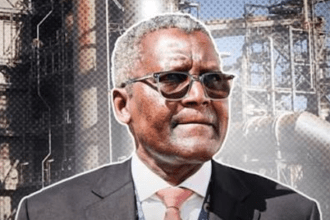
The rating agency specifically praised the Dangote Petroleum Refinery. S&P noted that the 650,000 barrel-per-day facility has “ramped up to near its maximum capacity.” The refinery has cut fuel imports and improved Nigeria’s current account position.
Related News
As a result, Nigeria’s current account surplus is set to rise to 5.8 percent of GDP in 2026. The agency projects GDP growth of 3.7 percent between 2025 and 2028. Inflation is forecast to ease from 23 percent in 2025 to 17.7 percent in 2026.
S&P also noted that Nigeria’s oil production has climbed to 1.66 million barrels per day. The combination of higher output and better refining capacity is boosting government revenue and reducing pressure on the naira.
Risks Remain
However, S&P warned that serious challenges remain. Nigeria still battles high inflation, widespread poverty, and unemployment. The agency noted low GDP per capita of roughly $1,200 and a large informal sector that limits tax collection.
Furthermore, S&P cautioned that reform momentum may slow as the 2027 elections approach. Political pressures ahead of elections have historically led Nigerian governments to loosen fiscal discipline.
Even so, the upgrade is a boost for Nigeria’s image in global markets. The government says it will use the improved rating to attract more foreign investment and negotiate better terms on international borrowing.