

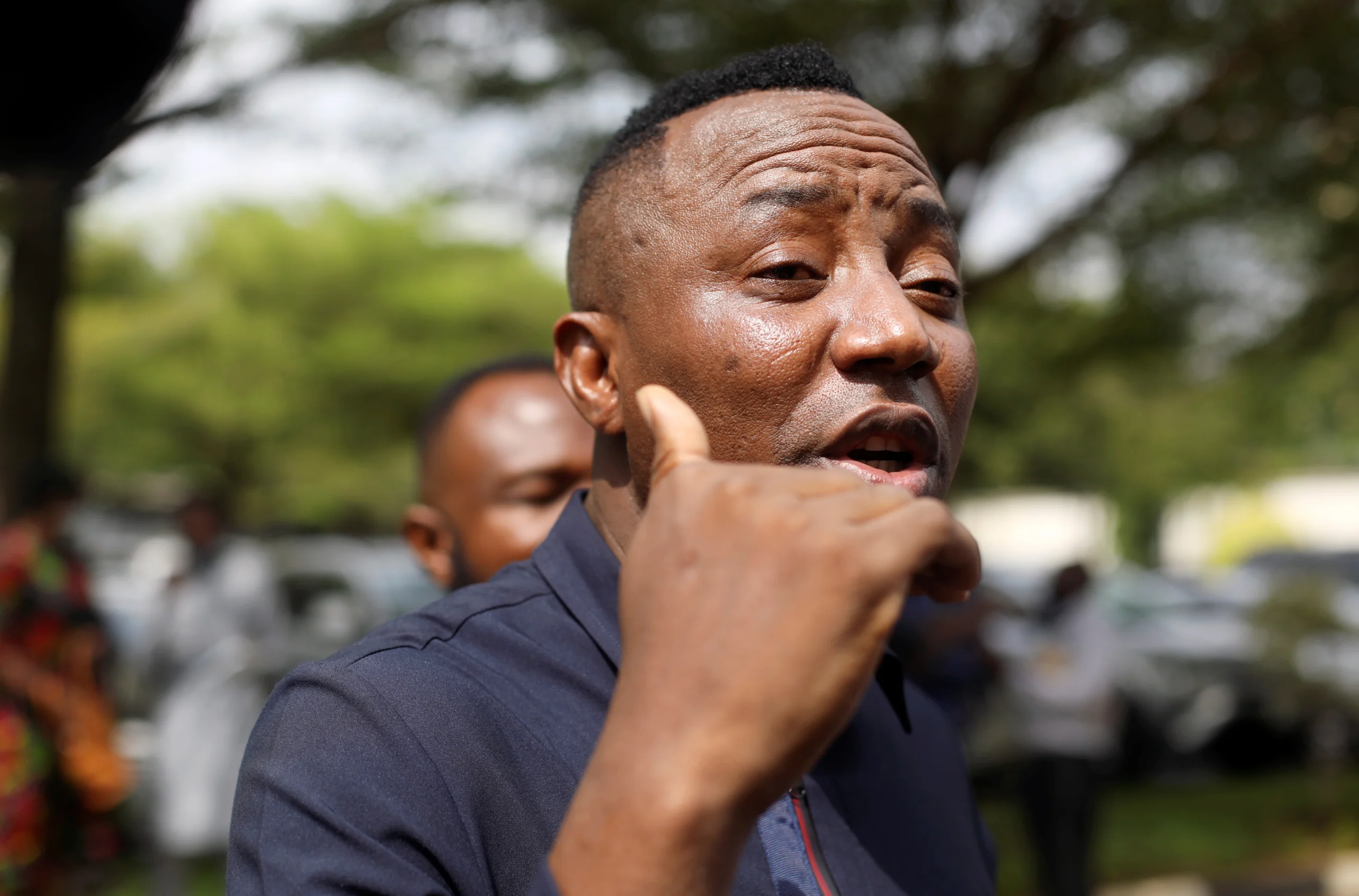
ABUJA — African Action Congress presidential candidate Omoyele Sowore has made one of the most unconventional campaign promises of the 2027 election season. He declared that if elected president, he would appoint a drone as his defence minister, using the metaphor to signal his commitment to technology-driven security solutions over conventional military thinking.
Sowore made the declaration in an interview on Democracy Day, Thursday, May 29. He said Nigeria’s security failures are fundamentally failures of strategy and technology. He said the country continues to rely on methods that were outdated decades ago while armed groups exploit technological gaps to outmanoeuvre security forces.
“If I become president, I will appoint a drone as defence minister. What I mean is that I will use technology, drones, artificial intelligence, real-time surveillance, to fight insecurity. The days of sitting in air-conditioned offices making security decisions while our people die are over,” Sowore said.
Related News
The statement generated significant attention on Nigerian social media. Supporters praised the creativity and ambition behind the technology-first vision. Critics said the statement, while attention-grabbing, oversimplifies the complex human, political, and economic dimensions of Nigeria’s insecurity problem.
The Technology Argument
Security analysts said Sowore is raising a legitimate point even within the dramatic framing. Nigeria’s military has been slow to adopt modern surveillance and targeting technology. Drone capability, real-time communication systems, and AI-powered intelligence analysis would genuinely improve security operations in the northeast, northwest, and other conflict zones.
Related News
The joint Nigeria-US strike that killed ISIS commander al-Minuki succeeded largely because of American intelligence capabilities, including surveillance technology that Nigerian forces alone do not fully possess. The contrast between that operation’s success and the daily failures of domestic security operations tells its own story about the role of technology.
Furthermore, Sowore’s argument connects to the broader debate about Nigeria’s security spending. The country allocates significant funds to defence annually. However, critics say much of that spending goes to personnel costs, fuel, and conventional equipment rather than the technology-driven capabilities that modern counterterrorism requires.
The Wider Campaign
Sowore is filing his AAC candidacy with INEC before today’s deadline. His party is small and his electoral infrastructure is limited compared to the APC, PDP, and ADC. However, his profile as an outspoken critic of the political establishment and his Sahara Reporters platform give him a media presence that larger parties sometimes struggle to match.
His core appeal is to young, digitally engaged Nigerians who want radical change rather than incremental reform. The drone defence minister comment is designed specifically for that audience. It is viral content, not policy detail. But it reflects a genuine strand of public opinion that Nigeria’s security approach needs a fundamental rethink.
Political analysts said Sowore’s candidacy is unlikely to produce a serious challenge to Tinubu or Atiku in 2027. However, his presence in the race keeps certain ideas on the table and gives a voice to voters who do not see themselves reflected in any of the mainstream candidates. In a democracy, that is a legitimate and valuable function.