

JUBA — South Sudan has been added to the Ebola risk watch list by multiple international health organisations and governments. The inclusion reflects concern that the country’s porous borders with both DRC and Uganda could allow the Bundibugyo Ebola virus to enter South Sudan even without direct confirmed cases.
The United States issued a Level 4 travel advisory for South Sudan alongside DRC and Uganda. The US State Department’s Ebola Response Task Force said South Sudan’s geographic position and weak health infrastructure make it a high-priority risk country even without confirmed transmission.
South Sudan’s health authorities said they are on high alert. The Ministry of Health has activated enhanced surveillance at border crossings and has asked health workers across the country to report any cases of fever, vomiting, or bleeding to the national health hotline immediately.
Related News
The WHO has deployed a technical team to South Sudan to assess preparedness and help strengthen surveillance capacity. Officials said the country has limited laboratory infrastructure and very few trained Ebola responders. Building those capacities quickly is now a priority.
A Fragile Health System
South Sudan has one of the world’s weakest health systems. Decades of civil war, displacement, and underfunding have left the country with critical shortages of health workers, medicines, and equipment. Many health facilities lack running water and electricity. Infection control standards are far below what Ebola containment requires.
Related News
Furthermore, the country hosts millions of internally displaced persons living in crowded camps with limited access to clean water and sanitation. An Ebola case in such a setting could spread rapidly and be extremely difficult to contain.
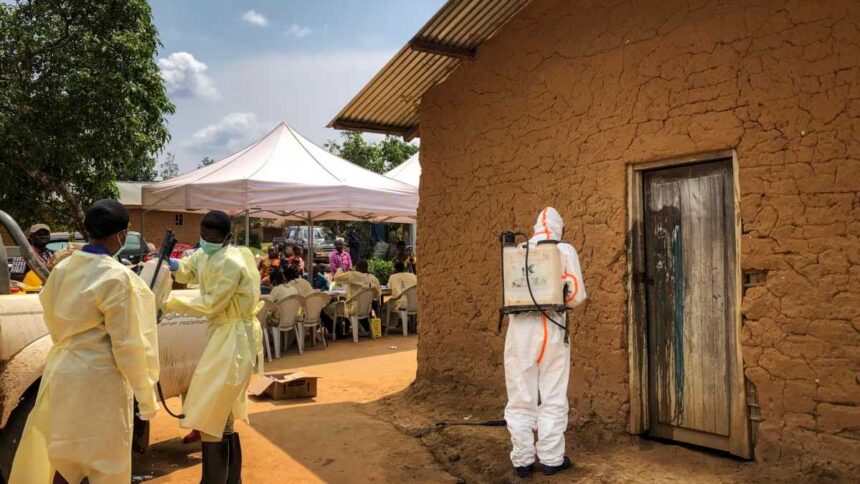
International health organisations including MSF and the International Medical Corps have pre-positioned emergency health supplies in South Sudan. These include personal protective equipment, isolation tents, and Ebola treatment kits. Officials say the supplies can be deployed within 24 hours of a confirmed case.
Broader Regional Concern
The addition of South Sudan to the risk list reflects growing concern about the potential for the Ebola outbreak to expand beyond DRC and Uganda. Rwanda, Burundi, and Tanzania have also stepped up border health screening even though they are not yet on any formal risk list.
For West Africa and Nigeria specifically, the regional expansion of risk areas adds urgency to national preparedness efforts. Nigeria has no direct border with any of the three listed countries. However, frequent air connections and overland transit routes through central Africa mean that no country on the continent is entirely insulated.
The Africa Centres for Disease Control and Prevention said it is coordinating a continent-wide preparedness response. It urged all African governments to review and strengthen their Ebola response plans immediately. The organisation said early preparation is always cheaper and more effective than emergency response after a case has been confirmed.