

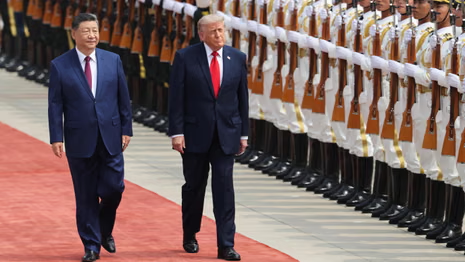
BEIJING — The war involving Iran continues to cast a long shadow over global energy markets and is shaping the background of the Trump-Xi summit taking place in Beijing this week. Both the United States and China are seeking to manage the fallout from the conflict, which has disrupted oil and gas supply chains worldwide.
Iran is a key oil exporter and sits at the heart of global energy trade through the Strait of Hormuz, one of the world’s most critical shipping lanes. Disruptions to Iranian oil exports and security concerns in the Persian Gulf have driven up energy costs for countries across Asia, Europe, and Africa.
For China, the war is particularly sensitive. Beijing has strong commercial ties with Iran, including a 25-year strategic partnership signed in 2021 covering economic, security, and technology cooperation. The conflict has complicated China’s regional relationships and added pressure to its energy import strategy.
Related News
For the United States, the Iran war has been a central foreign policy issue under the Trump administration. American military assets are engaged in the region, and Washington is working with regional partners to maintain stability in the Gulf shipping lanes.
Global energy analysts say the war has contributed to rising fuel prices in many developing countries, including Nigeria. Nigeria, which both produces and refines oil, has felt some insulation from the shock thanks to the Dangote Refinery, but global oil price swings still affect the country’s revenues and import costs.
At the Beijing summit, Iran is expected to be a key topic of discussion. The US wants China to reduce its economic support for Iran. China has historically resisted such pressure, arguing that it is not party to American sanctions on Tehran.
Related News
Scott Kennedy, senior adviser at the Center for Strategic and International Studies, said China’s confidence has grown significantly since Trump’s last visit to Beijing in 2017. “China has been able to neutralize much of Trump’s actions. It comes into this summit in a stronger position,” Kennedy said.
African nations are closely watching the summit outcome. Many African countries trade heavily with both the US and China. Economic decisions made in Beijing this week could influence global commodity prices, trade routes, and investment flows that affect African economies.
The South China Morning Post reported that growing economic and geopolitical uncertainties have given the summit added urgency. A joint communique from both leaders is expected before the summit concludes on Friday.