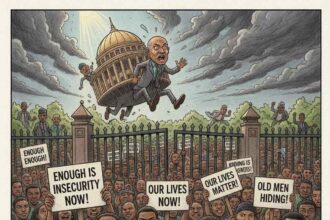


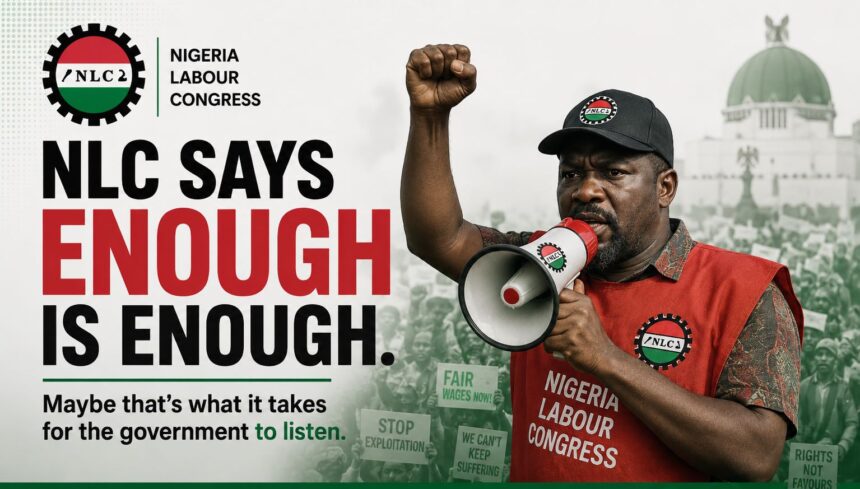
The Nigeria Labour Congress (NLC) and the Trade Union Congress (TUC) have done something remarkable. They have threatened a nationwide strike over insecurity. Not over salary. Not over allowances. Over the simple fact that Nigerian workers cannot travel to work without fear of being kidnapped. The unions made their position clear from Geneva, of all places, while attending an international labour conference. They said the government must act. Or workers will shut down the country.
Here is what most people get wrong about organised labour’s strike threat. The problem is not that workers are being dramatic or political. The truth is that insecurity has become an economic crisis that affects every sector of Nigerian life. And here is why that matters right now: because when the people who run the country’s economy say they cannot work, the country has stopped functioning already.
The NLC and TUC did not make this threat lightly. They have watched farmers abandon their fields because bandits demand harvest taxes. They have watched traders close their shops because customers are afraid to come out. They have watched civil servants relocate their families away from troubled states, commuting hours each day just to stay safe. The cost of insecurity is not measured only in bodies. It is measured in productivity. In investment. In hope.
Related News
A nation where workers need to beg for safety is a nation that has forgotten why workers matter.
Joe Ajaero, the NLC president, put it bluntly. Workers cannot be productive when their lives are under threat. That is not a union talking point. That is a statement of fact. A teacher who is afraid to drive to school cannot teach. A nurse who is worried about her children being kidnapped cannot focus on patients. A factory worker who spends half his salary on “security levies” to bandits cannot save for the future.
Let me give the government its due. The security forces have made sacrifices. Soldiers have died. Police officers have been killed. The military budget has increased. The government is not doing nothing.
Related News
But here is where that defense fails. The unions are not asking how much has been spent. They are asking why the spending has not produced results. The House of Representatives has summoned service chiefs to account for funds. That should have happened years ago. The fact that it is happening now, under pressure from labour and from the streets, suggests that the government has been reactive rather than proactive. And reactive governments do not win wars against proactive terrorists.
You cannot fight an enemy who plans while you wait for the next crisis
I know a civil servant in the Federal Capital Territory. He commutes from Abuja to his hometown in the North-East every month to check on his elderly parents. The journey used to take six hours. Now it takes twelve, because he has to travel in convoys, stop at multiple security checkpoints, and avoid roads that have become too dangerous. He spends more time planning his escape routes than planning his retirement. He is 54 years old. He is exhausted.
He told me that he supports the strike. Not because he wants to lose income. Because he has lost enough already. He has lost peace of mind. He has lost the freedom to visit his parents without fear. He has lost the assumption that tomorrow will be better than today. A strike, he said, might finally force the government to understand that insecurity is not a regional problem. It is a national emergency.
The unions have given the government a choice. Act. Or face a shutdown. That is not blackmail. That is accountability. The government should welcome the pressure. It should use the strike threat as political cover to do what needs to be done. Declare a state of emergency on security. Mobilise retired officers. Deploy technology. Coordinate intelligence. These are not impossible tasks. They just require the kind of leadership that has been missing.
If the government fails to act, the unions should follow through. A nationwide strike will hurt. But the country is already hurting. The difference is that a strike might actually force change. The current situation has not.
Here is where we land. NLC says enough is enough. Maybe that is what it takes for the government to listen. I do not know if the strike will come. I do not know if it will work. But I know that workers have run out of patience. And a patient nation that becomes impatient is the most dangerous force in politics.