


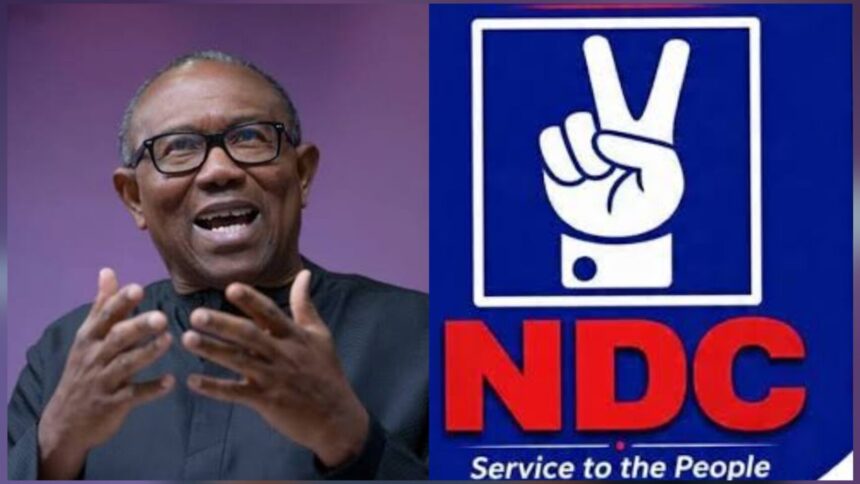
ABUJA — A Nigerian court has ordered the deregistration of the Nigeria Democratic Congress. Punch confirmed the ruling on Friday, June 26. Peter Obi and the Peoples Democratic Party swiftly condemned the decision, alleging it forms part of a broader pattern of attempts to weaken opposition political structures ahead of the 2027 general elections.
The court’s specific grounds for deregistering the NDC were not fully detailed in initial reports, though such rulings in Nigeria typically cite failure to meet INEC’s continuing registration requirements, including minimum performance thresholds in previous elections or compliance with internal governance obligations.
NDC said it intends to appeal the ruling, assuring members the party will continue operating while the appeal is pursued. A party spokesperson described the deregistration as procedurally questionable and said the timing, arriving in the same week the party was actively organising ahead of the 2027 cycle, raised legitimate concerns about political motivation.
Related News
Obi and PDP’s Response
Peter Obi said the NDC deregistration fits a troubling pattern affecting smaller opposition parties at a moment when Nigeria’s political landscape is already fractured. He said reducing the number of viable opposition platforms, whatever the formal legal justification, narrows the choices available to voters and weakens democratic competition overall.
“Whatever one thinks of any individual party’s internal struggles, the cumulative effect of these legal actions is a smaller, weaker opposition field heading into 2027. That should concern every Nigerian who values genuine electoral choice,” Obi said in a statement.
Related News
PDP echoed the concern, with the party’s caretaker leadership describing the ruling as part of what it called a coordinated legal squeeze on opposition structures. The PDP cited its own ongoing leadership disputes and the ADC’s earlier loss of INEC recognition for its David Mark-led leadership as evidence of a pattern rather than isolated incidents.
A Pattern of Opposition Crises
The NDC ruling adds to a list of legal and structural crises that have hit opposition parties throughout the 2026 primary season, including the ADC’s leadership recognition dispute with INEC, the PDP’s prolonged factional struggle, and various contested primaries across smaller platforms. Each has been litigated separately, but together they have left the opposition landscape fragmented heading into the critical pre-campaign period.
INEC has not issued a detailed public response to the NDC ruling beyond confirming it will comply with the court’s judgment. The commission has previously said its deregistration actions, where they occur, follow objective statutory criteria rather than political considerations.
Legal analysts said the NDC’s appeal is unlikely to be resolved quickly enough to materially affect its position before INEC’s various 2027 election deadlines, meaning the party may need to explore alternative political vehicles regardless of the appeal’s eventual outcome.