


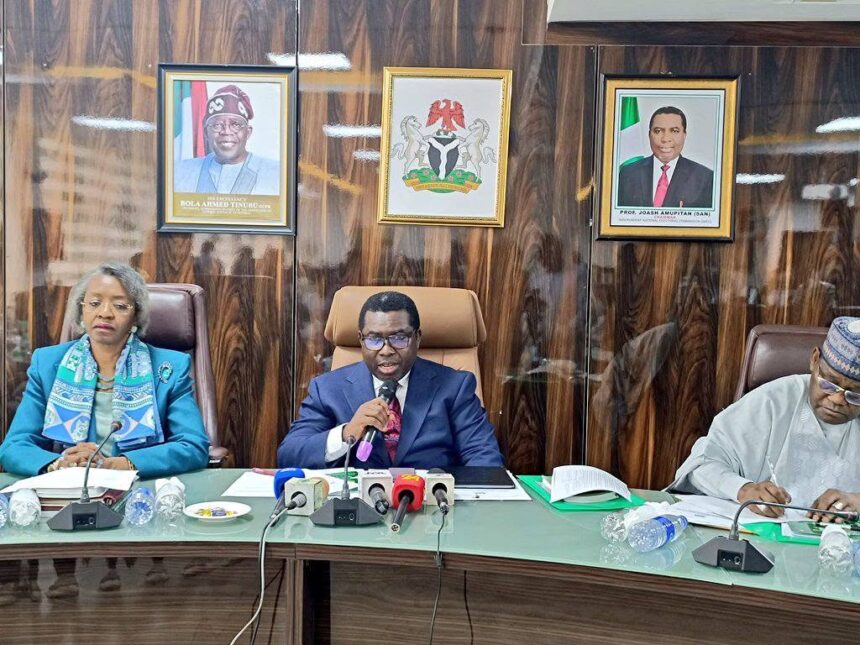
The Independent National Electoral Commission on Tuesday, June 10, 2026, confirmed that it had filed appeals against court judgments that had altered its 2027 general election timetable, insisting that the commission could not allow judicial interventions, however well-intentioned, to disrupt the meticulous operational planning required to conduct Nigeria’s most complex electoral exercise.
INEC’s Director of Voter Education and Publicity, Sam Olumekun, said in a statement that the commission fully respected the role of the courts in Nigeria’s constitutional democracy but had an institutional obligation to defend the integrity of its planning framework. He said the 2027 general elections would involve voter registration drives, candidate screening, party primary monitoring, logistics deployment, and technology integration across all 36 states and the FCT, activities that required a fixed and predictable timeline to execute successfully.
‘INEC cannot allow a situation where court orders progressively disrupt the timetable for an election of this magnitude,’ Olumekun said, adding that the commission had filed the appeals in a timely manner and was confident of a favourable ruling. He urged political parties and their supporters to channel their concerns about the election timetable through dialogue with the commission rather than through emergency court applications.
Related News
CVR Portal Anomaly Addressed
INEC also confirmed that the anomaly earlier reported in its Continuous Voter Registration portal had been assessed and addressed. The commission said no voter data had been compromised and that its internal cybersecurity review had identified the cause of the anomaly as a technical configuration issue rather than an external breach. All CVR data was confirmed to be intact.
Furthermore, INEC said it was enhancing its cybersecurity protocols across all digital systems as a precautionary measure ahead of the 2027 cycle. The commission had previously invested in the Bimodal Voter Accreditation System and other technology upgrades, but officials acknowledged that the rapidly evolving nature of digital threats required continuous investment and monitoring.
Related News
Meanwhile, INEC confirmed that preparations for the June 20 Ekiti governorship election remained fully on track, with all logistics, security briefings, and voter education activities completed. The commission urged eligible voters in Ekiti to collect any remaining unclaimed Permanent Voter Cards before election day, warning that no exceptions would be made for voters who arrived at polling units without valid PVCs. Notably, 12 parties were confirmed to be fielding candidates in the Ekiti election, with 13 having signed the peace accord. Consequently, the institutional framework for a credible June 20 exercise appeared to be largely in place, even as political tensions between parties continued to simmer.
Labour Party Primaries Row Continues
In addition, the Labour Party’s internal primaries controversy continued to generate legal disputes, with multiple aspirants in different states challenging the outcomes of their respective primary exercises in court. The party’s National Working Committee said it was reviewing the complaints and would respond to each in accordance with the party’s constitution. As a result, the Labour Party faces a parallel governance challenge managing its own internal democracy even as it campaigns against the failings of the ruling party.