

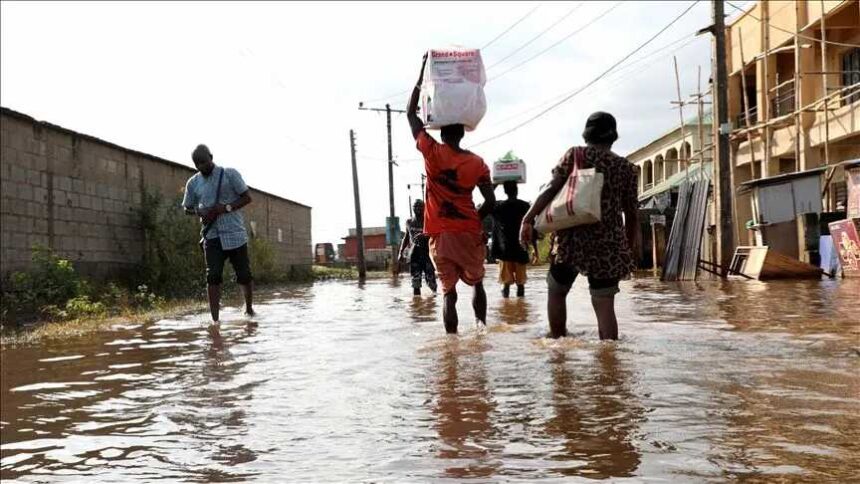
Devastating floods swept through Lagos State and several South-South states including Rivers, Delta, and Bayelsa in the days leading to Monday, July 6, 2026, displacing thousands of residents, destroying farmland and property, and exposing the persistent failure of Nigeria’s drainage and flood management infrastructure.
The Director General of the Nigeria Hydrological Services Agency, Umar Mohammed, said the scale of flooding was not a surprise, noting that NiHSA had issued advance warnings about the risk of seasonal flooding across multiple states. He said the agency’s predictions had been borne out and called on state and local governments to implement emergency drainage clearance, temporary flood barriers, and pre-positioned evacuation resources.
Lagos Hit Hard in Multiple Zones
Related News
Lagos suffered significant flooding across Ikorodu, Badagry, Alimosho, and parts of Lekki and Victoria Island, with video footage circulating on social media showing vehicles submerged and residents wading through waist-high water. The Lagos State Emergency Management Agency said it had activated its emergency response protocols and was coordinating with federal agencies to assess damage and provide immediate relief to affected households.
In the South-South, farmlands in Delta and Bayelsa were submerged, with some communities reporting that flooding had destroyed the main harvest of the early planting season. Agricultural experts warned that the crop losses would worsen Nigeria’s food security challenges heading into the second half of 2026, a period when food prices were already elevated by high input costs and insecurity-related supply disruptions.
Government Response Under Scrutiny
Related News
However, residents and civil society groups criticised the pace of government response, saying that flood warnings from NiHSA and NEMA were routinely ignored at the state and local government level until disasters actually occurred. Furthermore, analysts noted that urban flooding in Lagos was worsened by years of unregulated construction in flood plains and inadequate investment in modern drainage infrastructure. Consequently, Nigeria’s flood season is shaping up as one of the most damaging in recent years, with both food security and public safety implications still unfolding.