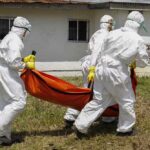


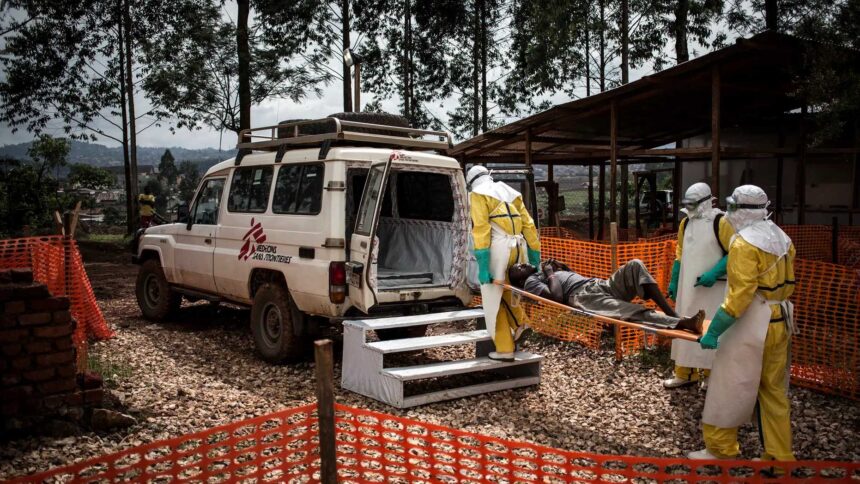
MONGBWALU — The Ebola outbreak in the Democratic Republic of Congo took a dangerous turn on May 23 when 18 suspected Ebola patients escaped from a treatment centre in Mongbwalu after local community members attacked and burned a tent at the facility. The incident severely complicated containment efforts in one of the hardest-hit areas of the outbreak.
Health authorities have launched an emergency contact tracing operation to locate all 18 escaped individuals. Each of them had been in documented contact with confirmed Ebola cases and was considered a high-risk carrier. Finding and isolating them is now the most urgent priority for the outbreak response team in Ituri Province.
Dr. Richard Kojan, a clinician with the Alima humanitarian organisation and a veteran of multiple Ebola responses, told international media that the situation is no longer contained. “The outbreak is out of control,” Kojan said in comments that have circulated widely among global health experts and policymakers.
Related News
The attack on the treatment centre reflects a recurring problem in the DRC Ebola response: deep community mistrust of health authorities. In conflict-affected and historically neglected communities, outside health workers are sometimes seen as threats rather than helpers. This mistrust has hampered every major Ebola response in the DRC in recent years.
Why Communities Resist
Community members who attacked the Mongbwalu treatment centre have given various reasons for their resistance. Some believe that treatment centres are places where people go to die rather than to recover. Others are suspicious that health authorities are using the Ebola response as cover for other agendas. These fears, while not based in fact, are deeply felt and reflect years of government neglect and conflict in Ituri.
Related News
Community engagement specialists working with the WHO say building trust requires sustained, culturally appropriate outreach that involves local leaders, religious figures, and community members in the response. Token consultations are not enough. Communities must feel genuinely included in decisions about how the response is conducted in their area.
Furthermore, the armed conflict in Ituri Province between various militia groups and Congolese military forces makes it extremely difficult and dangerous for health workers to operate. Several Ebola responders have been targeted by armed groups in previous DRC outbreaks. This security environment limits where and how the response can operate.
Global Escalation
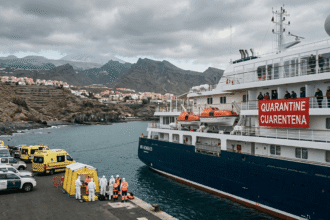
The Ebola.fyi tracker confirmed that the total suspected case count has risen to 867 with at least 204 deaths as of Monday, May 25. The US has now extended its travel restrictions to include green card holders, an unprecedented step in Ebola response history. Several European countries have introduced mandatory quarantine protocols for travellers from affected areas.
The DRC national football team has been ordered by the White House to self-isolate for 21 days before the FIFA World Cup begins on June 11. The team is currently in Belgium preparing for the tournament. The isolation order means they will need to start the isolation period immediately to be available for their opening World Cup match.
For Nigeria, the escalating situation in DRC remains the most serious external health threat of 2026. The NCDC has maintained its elevated alert and confirmed no cases as of Tuesday. However, with 867 suspected cases and an active escape incident, the risk level is higher than it has been at any point since the outbreak began in May.