

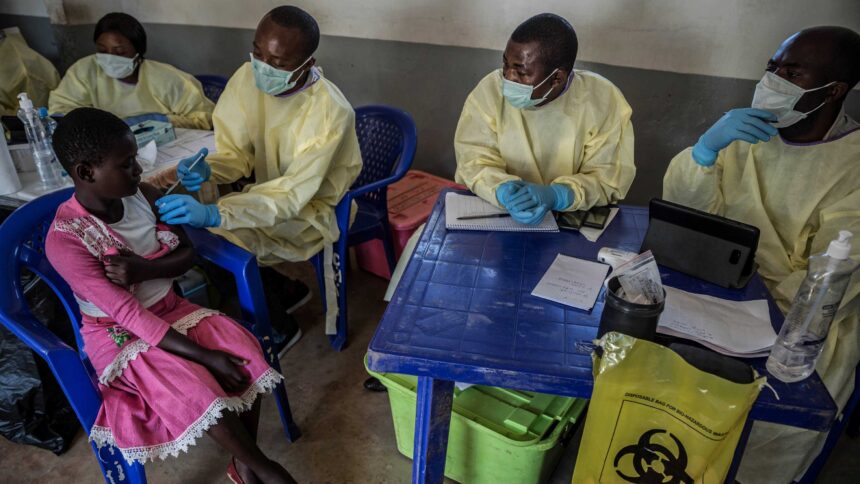
KINSHASA — The Ebola outbreak in the Democratic Republic of Congo has approached 900 suspected cases as the World Health Organisation issued its starkest warning yet about the trajectory of the crisis. WHO officials said the window for successful containment is rapidly closing and that a dramatically scaled-up global response is urgently needed.
The Ebola.fyi tracker recorded 867 suspected cases and at least 204 deaths as of Monday, May 25. The outbreak, caused by the Bundibugyo strain of the Ebola virus, is centred in Ituri Province but has spread to Goma in North Kivu Province and produced confirmed imported cases in Uganda.
Johns Hopkins Bloomberg School of Public Health said as of May 19, over 500 suspected cases and 130 deaths had been reported, with the Bundibugyo strain proving harder to contain than initially expected. The school’s analysis said the outbreak is unfolding in one of the most difficult operating environments for a health response, marked by armed conflict, displacement, and community mistrust.
Related News
The European Centre for Disease Prevention and Control confirmed in its latest risk assessment that the outbreak has spread to at least three health zones in Ituri Province. One American citizen was exposed to the virus in a healthcare setting and was medically evacuated to a special isolation ward in Germany along with six high-risk contacts.
The Escaped Patients Crisis
A major setback occurred on May 23 when 18 suspected Ebola patients escaped from a treatment centre in Mongbwalu after community members attacked and burned a tent at the facility. Contact tracers are working urgently to locate all 18 escaped individuals, who had been in direct contact with confirmed Ebola cases.
Related News
A medical expert with the Alima humanitarian organisation described the situation bluntly. “The outbreak is out of control,” said Dr. Richard Kojan, a veteran of multiple Ebola responses in DRC. His assessment reflects the frustration of responders who are working under extraordinarily difficult conditions in a conflict zone.
Furthermore, the outbreak was found to have started earlier than initially known. Three Red Cross volunteers who conducted body management in Djugu on March 27 are now believed to have been among the first victims. This earlier start date means the virus circulated undetected for almost seven weeks before formal response began.
Global Response and Nigeria’s Alert
The United States has extended its Ebola entry restrictions to include green card holders, a historically unprecedented step. Airport screening has been activated at Dulles, Atlanta, and Houston airports. The DRC World Cup football team has been ordered to self-isolate for 21 days before entering the US for the FIFA tournament.
South Korea announced on May 26 that it will expand its health alert on travellers from affected areas. Rwanda, despite having no confirmed cases, has implemented mandatory Ebola quarantine for certain travellers. The international response is widening as the outbreak shows no signs of being brought under control.
Nigeria’s NCDC confirmed on Tuesday that the country still has no confirmed Ebola cases. Enhanced surveillance remains active at all major ports of entry. Officials said Nigeria is in a state of heightened readiness and will act immediately if any suspected case is identified. The NCDC urged Nigerians to follow official guidance and avoid sharing unverified health information on social media.