

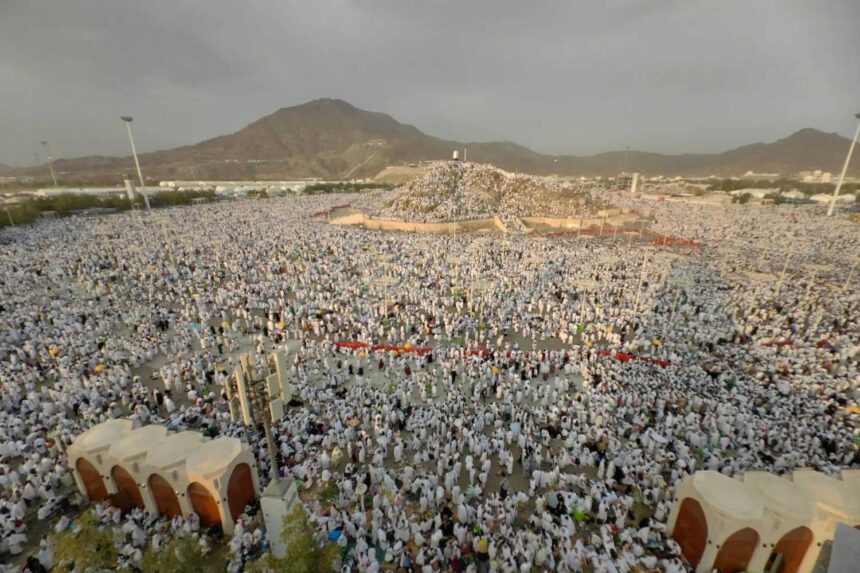
MECCA — More than two million Muslims from 183 countries gathered at Mount Arafat near Mecca on Tuesday, May 26, for the spiritual climax of the 2026 Hajj pilgrimage. The Wuquf, or standing at Arafat, is the most sacred ritual of Hajj. Islamic tradition holds that it was here that Prophet Ibrahim stood to pray and where Prophet Muhammad delivered his final sermon.
Saudi authorities described the 2026 gathering as one of the largest in recent years. Pilgrims arrived from every corner of the globe, with major contingents from Indonesia, Pakistan, Nigeria, Egypt, Bangladesh, India, and Turkey. The diversity of the gathering, millions of people from different nations united in faith and purpose, is one of the most powerful human scenes on earth.
Temperatures at the Arafat site reached above 42 degrees Celsius during the afternoon hours on Tuesday. Saudi health authorities deployed thousands of medical personnel, erected cooling tents, and distributed water to pilgrims throughout the day. Despite the heat, the vast majority of pilgrims completed the Wuquf without significant incident.
Related News
Saudi Arabia’s General Authority for Statistics reported that the 2026 Hajj season saw a six percent increase in international pilgrim arrivals compared to 2025. Saudi authorities attribute the growth to improved transportation infrastructure, expanded accommodation capacity, and smoother visa processing that has reduced barriers to participation for Muslims worldwide.
The Spiritual Significance
For the millions gathered at Arafat, the experience transcends mere physical presence at a historical site. Muslims believe the Wuquf is an opportunity for direct communication with God, a time when prayers are answered and sins forgiven for those who observe it with sincerity. Many pilgrims described the experience as life-changing.
Related News
Nigerian pilgrims who were present at Arafat shared their reflections through social media and phone calls home. Several said the sight of millions of people of all races, languages, and nationalities dressed identically in simple white garments, equal before God, is unlike anything they have experienced in their lives.
Furthermore, Muslim scholars said the Hajj carries lessons for how the world should be organised. The equality of all pilgrims, the communal sharing of food and space, and the focus on spiritual rather than material values offer a model that goes beyond religion into universal human ideals.
Post-Arafat Rituals
After leaving Arafat as the sun set on Tuesday, pilgrims moved to Muzdalifah to collect pebbles for the stoning ritual. On Wednesday, Eid al-Adha, they proceeded to Mina for the first of three days of stoning the Jamarat pillars, symbolising the rejection of evil. Pilgrims also slaughter their sacrificial animals at Mina, mirroring the Eid celebrations taking place simultaneously across the Muslim world.
Saudi authorities have invested heavily in managing the Jamarat ritual safely following deadly crowd crush incidents in previous years. Modern infrastructure including multi-level bridges, crowd flow management systems, and staggered timing for different pilgrim groups has significantly improved safety at what was once one of the most dangerous parts of the Hajj.
Nigerian pilgrims are expected to complete their Hajj obligations over the coming days and begin returning to Nigeria from late May through June 2026. NAHCON said it will ensure all pilgrims are safely transported home and will publish a full post-Hajj report on the performance of this year’s Nigerian delegation to the holy land.