

The recent blackouts in Lagos and Osun, triggered by transmission failures and flooding, have once again exposed the fragility of Nigeria’s power infrastructure and its ripple effects on business continuity. For a national and international audience, the incident underscores how energy reliability remains a critical determinant of economic growth, investor confidence, and everyday livelihoods.
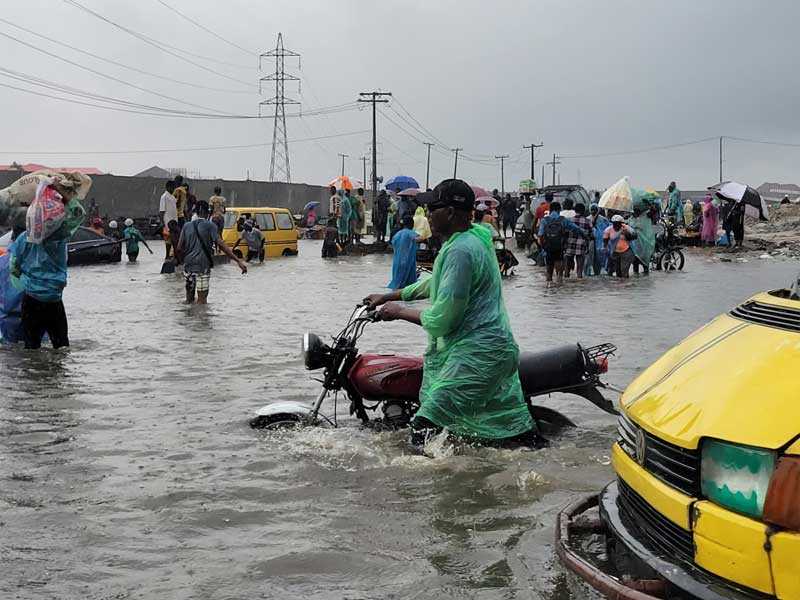
According to reports from Punch and Vanguard, widespread outages were recorded after flooding disrupted transmission lines, compounding existing challenges in the national grid. The Transmission Company of Nigeria (TCN) confirmed that heavy rainfall and subsequent flooding damaged critical infrastructure, leading to power cuts across key urban and industrial centres.
Business Implications of Power Instability
For Lagos, Nigeria’s commercial hub, the blackout is more than an inconvenience—it is a direct hit to productivity. Businesses reliant on consistent electricity, from manufacturing plants to financial services, faced operational disruptions. Small and medium enterprises (SMEs), which form the backbone of Nigeria’s economy, were particularly vulnerable, as many lack the resources to maintain alternative power supplies such as generators or solar systems.
Related News
In Osun, where agriculture and small-scale industries dominate, the blackout disrupted cold storage facilities, food processing plants, and local businesses. The economic cost of such outages is significant, with losses in production, increased overheads from alternative power sources, and reduced consumer confidence.
Infrastructure Fragility and Flooding Risks
The incident highlights a dual challenge: technical failures in transmission infrastructure and environmental vulnerabilities. Flooding, increasingly frequent due to climate change, has become a recurring threat to Nigeria’s power systems. Transmission lines, substations, and distribution networks are often located in flood-prone areas, making them susceptible to damage during heavy rains.
This raises questions about the resilience of Nigeria’s energy infrastructure. Without proactive investment in flood-resistant systems and modernized transmission lines, the cycle of blackouts will continue, undermining both economic stability and public trust.
Related News
Investor Confidence and Economic Growth
For international investors, Nigeria’s power sector remains a paradox: vast potential but persistent instability. Blackouts such as those in Lagos and Osun reinforce concerns about infrastructure reliability. Investors in manufacturing, technology, and energy-intensive industries often cite power instability as a major barrier to expansion.
The business fallout extends beyond immediate losses. Unreliable electricity supply increases the cost of doing business, discourages foreign direct investment, and limits Nigeria’s competitiveness in global markets. For a country seeking to diversify its economy beyond oil, stable power supply is non-negotiable.
Governance and Policy Response
The blackouts also spotlight governance challenges. While authorities often pledge reforms, implementation remains slow. Experts argue that Nigeria must prioritize investment in transmission infrastructure, integrate renewable energy solutions, and adopt climate-resilient designs.
Policy responses must also address the financial sustainability of the power sector. Transmission failures are often linked to underfunding, delayed maintenance, and weak regulatory oversight. Flooding adds another layer of complexity, requiring coordination between energy agencies and environmental management bodies.
The blackouts in Lagos and Osun, caused by transmission failures and flooding, are not isolated events—they are symptoms of deeper structural weaknesses in Nigeria’s power sector. As Punch and Vanguard have reported, the outages disrupted businesses, strained households, and highlighted the urgent need for resilient infrastructure.
For Nigeria’s national and international audience, the incident is a reminder that energy reliability is central to economic progress. Without decisive investment and policy reforms, the cycle of blackouts will continue to erode business confidence and hinder growth. The Lagos and Osun outages should therefore serve as a wake-up call: Nigeria’s economic future depends on building a power sector that can withstand both technical and environmental shocks.