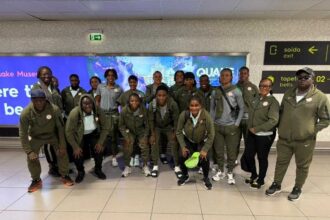


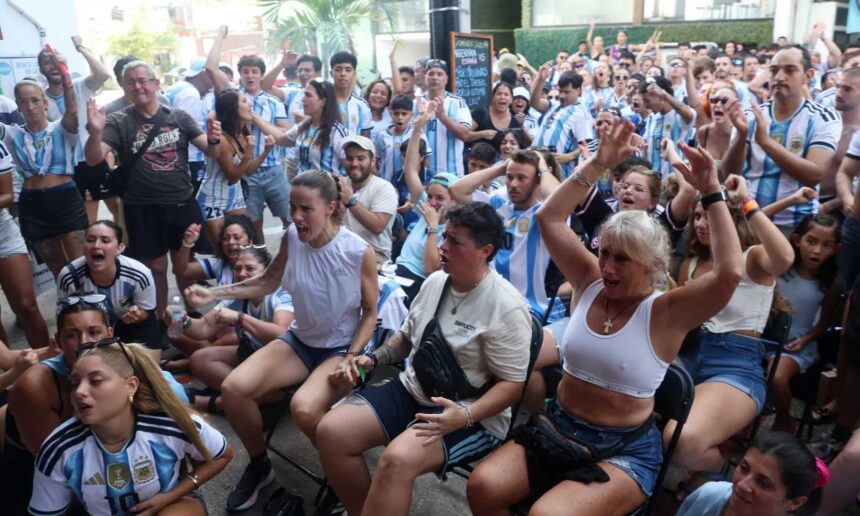
Argentina’s fans did something that travel analysts had not predicted at the start of the 2026 FIFA World Cup. While international booking data showed a broad retreat from North American host cities in the months leading into the tournament, the Albiceleste’s supporters did the opposite; they booked flights in real time every time their team won, producing one of the most reactive and passionate travel surges the World Cup has ever recorded.
That surge is now over. Spain beat Argentina 1-0 after extra time in the final at MetLife Stadium in East Rutherford, New Jersey on July 20, with Ferran Torres’ close-range header in extra time ending the reigning champions’ bid to become the first nation to win back-to-back World Cups since Brazil in 1958 and 1962. With Argentina eliminated, the hotel rooms their fans had filled across the United States now sit empty again, and the broader story of what happened to World Cup accommodation demand has lessons that will reshape how the hospitality industry plans for mega-events.
Before a single ball was kicked at the 2026 World Cup, which spanned 16 host cities across the United States, Canada, and Mexico, travel and hospitality data was already flashing amber.
Related News
According to Cirium, a global aviation analytics firm, airline bookings from Europe to the United States for July 2026 fell 14.22% compared to the previous year. The steepest drops came from major gateway cities including Frankfurt, Barcelona, Amsterdam, Paris, Munich, and Athens
Bookings from Europe to US World Cup host cities for June 2026 fell approximately 5%, while demand from Asia was down 3.6%. The US dollar had fallen 12% against the euro over the same period, making American trips cheaper, not more expensive, yet the hesitation persisted.
Anti-US sentiment was cited as a significant factor in slower hotel demand. Brent DeRaad, president of the Arlington Convention and Visitors Bureau, confirmed that growing global unease about travelling to the United States was measurably suppressing bookings in one of the tournament’s most active host cities.
Related News
Compounding the anxiety, FIFA cancelled thousands of hotel room block reservations across multiple host cities in the months before the tournament opened, sparking widespread uncertainty among fans and operators alike. Hotels that had hired additional staff and locked in revenue projections around FIFA’s room blocks suddenly found themselves releasing inventory back to the open market at exactly the moment they needed certainty.
Against that backdrop, Argentina’s supporters became the tournament’s most compelling counter-narrative in the travel data.
Flight bookings from Argentina to the United States jumped nearly 46% since the tournament began. Bhanu Chopra, who developed the Market Pulse Index for the 2026 FIFA World Cup at RateGain Travel Technologies, said: “Argentina shows what it looks like when fans book a trip the moment their team wins. Argentina fans are following the tournament closely and responding with bookings in real time.”
Flight bookings from Argentina specifically to Atlanta jumped nearly 108% year-on-year as fans scrambled to reach the city where their team was playing knockout-stage matches.
Kansas City recorded the most dramatic single-day hotel performance of the tournament on June 16, the day Argentina faced Algeria in Group J, reporting the largest occupancy growth of 25% against the same date a year earlier, alongside an average daily rate rise of over 150%. Argentine supporters had effectively turned Kansas City into a temporary extension of Buenos Aires for 24 hours.
The results on the pitch fed directly into the booking platforms. Argentina survived a heart-stopping round of 16 against Egypt, coming from 2-0 down with 11 minutes remaining to win 3-2, with Lionel Messi scoring his record-extending 21st FIFA World Cup final goal after having a penalty saved in the first half. They then beat Switzerland 3-1 in the quarterfinals, with Lautaro Martinez converting from the rebound in the dying minutes to seal the win, before edging England 2-1 in a tense semi-final to reach the final.
Each victory triggered another wave of bookings. Each goal by Messi sent another flight search to the top of every travel app in South America.
Spain’s Ferran Torres deflated those bookings with a single-headed goal in extra time. The final score of 1-0 brought Luis de la Fuente’s side their second successive World Cup crown, following their 2022 triumph, and ended Argentina’s defence of the title they won so memorably in Qatar.
Argentina had defended well throughout the final and grew into the match as it extended into extra time. The reigning champions had proved themselves repeatedly in late-stage situations across the tournament, and the deeper the game went without a goal, the more confident their fans had become. Torres’ header in the final moments of extra time was a cruel conclusion.
For Argentine supporters who had paid premium prices to be inside MetLife Stadium, the largest sporting event by economic projection ever held on American soil, at 82,500 seats, the defeat brought with it the compounded loss of hotel deposits, non-refundable flights, and travel plans built around what they had hoped would be a triumphant final weekend.
The broader 2026 World Cup travel story produced a lesson that hospitality economists have quickly moved to document.
Revenue per available room the key hospitality metric that combines occupancy and room rates, rose 23% during the knockout stage alone. Short-term rental bookings for the final weekend in the Newark and Jersey City area rose 45% from the previous year.
Vacation rental operators who raised nightly rates by 55% saw revenue per listing increase 43%, despite a 5.1-point drop in occupancy, evidence that pricing power, not volume, drove returns at this tournament.
David Tinsley, a senior economist at the Bank of America Institute, noted that the World Cup effect was visible on the ground, with restaurants and bars seeing some of the strongest spending gains as consumers turned matches into social events.
Argentina’s fans delivered the most vivid demonstration of what committed supporters can do to a city’s hospitality economy. When they left, they left a gap.
Argentina must now rebuild for the 2030 World Cup and beyond. Messi, 38 at the time of the final, has not confirmed whether this was his last major international tournament. His 21 World Cup goals remain the record, and his performance across this tournament, including the legendary comeback against Egypt, ensured that even in defeat, his legacy in the sport remains without parallel.
The global travel and hotel industry, for its part, will spend the coming months reviewing data from a tournament that broke records on the pitch and confounded projections off it. The pre-tournament anxiety that suppressed European bookings by 14% and emptied hotel blocks across multiple host cities was ultimately offset by the reactive, passionate, real-time travel behaviour of fans from Argentina, Brazil, and across South America.
FIFA and host city planners for 2030 and 2034 now have a new model to study: build for the fans who book when they win, not just the fans who plan months.