

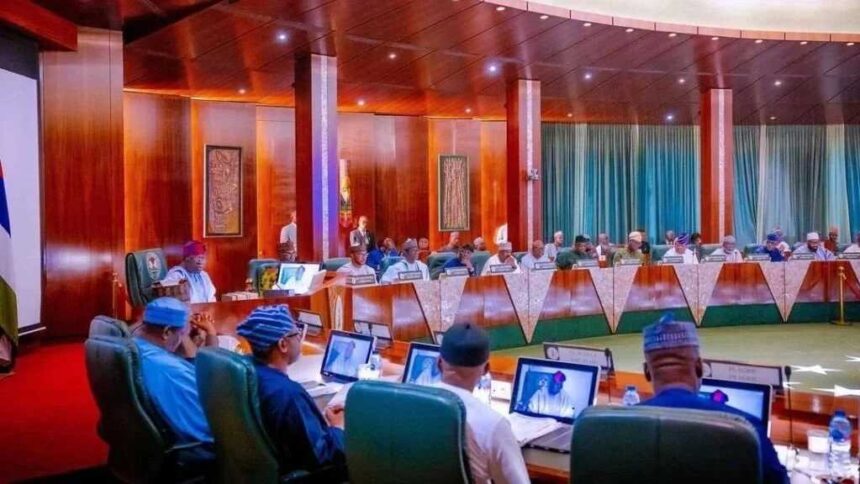
The Federation Account Allocation Committee distributed a total of N2.300 trillion from May 2026 revenue to the Federal Government, state governments, and local government councils at its June meeting in Abuja, the Office of the Accountant General of the Federation confirmed this week, representing a slight increase from the N2.257 trillion shared in April.
The distributable revenue comprised N1.611 trillion from statutory revenue and N688.785 billion from Value Added Tax, drawn from total gross revenue of N3.395 trillion for the month. From the distributable amount, the Federal Government received N818.680 billion, state governments received N759.141 billion, and local government councils received N534.277 billion. Oil-producing states received an additional N188.132 billion as 13 per cent derivation revenue.
Oil Revenues Drive the Increase
Related News
FAAC reported significant increases in Companies Income Tax, Capital Gains Tax, Petroleum Profit Tax, Hydrocarbon Tax, and oil and gas royalties during May. However, collections from VAT, Import Duty, Excise Duty, and Common External Tariff levies declined, with gross VAT revenue falling to N743.668 billion in May from N806.617 billion in April.
Gross statutory revenue for the month rose to N2.652 trillion, an increase of N273.623 billion compared to April. The overall upward trend in FAAC allocations reflects stronger performance in petroleum-related revenue streams as oil production levels and crude prices held above government benchmarks.
Citizens Question How Revenue Is Spent
Related News
However, the May allocation generated public debate online, with a Nigerian consumer expressing outrage at paying more than N300,000 in VAT on a single electronics purchase, questioning the gap between record government revenue and poor public service delivery. BudgIT co-founder Seun Onigbinde said there was zero excuse for states to lag on healthcare, infrastructure, or education given the scale of monthly allocations, and called for transparent, open-ledger accounting on the windfalls. Consequently, the fiscal story in Nigeria remains one of improving revenue collection alongside persistent questions about how effectively those revenues translate into services for ordinary citizens.