


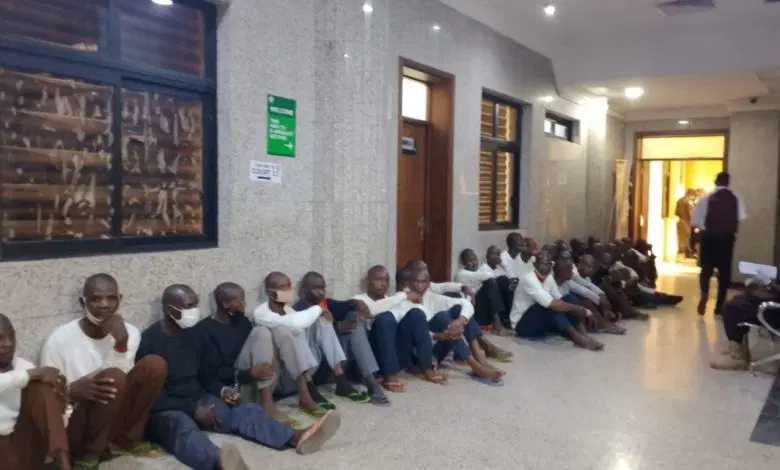
Six hundred suspects. One mass trial. And a Nigerian judiciary being asked to do something it has never done before at this scale.
The Federal Government of Nigeria has commenced mass terrorism trials for over 600 suspects in Abuja, in what officials describe as a landmark effort to address the significant backlog of unresolved terrorism cases clogging the country’s courts. The development, confirmed by Punch Newspapers on June 16, represents one of the most ambitious judicial undertakings in Nigeria’s recent legal history and signals a determination to ensure that arrest and prosecution — not just military action — becomes a consistent part of the counter-terrorism response.
Why This Matters
Related News
Nigeria’s security forces have arrested thousands of suspected terrorists and bandits over the past decade. However, the journey from arrest to conviction has historically been slow, inconsistent, and prone to collapse due to procedural issues, lack of evidence, or witness intimidation. As a result, many suspects have spent years in pre-trial detention without resolution — a situation that undermines both justice and public confidence in the legal system.
Mass trials, while complex, offer a way to process large numbers of cases with shared characteristics simultaneously. They have been used in post-conflict settings globally to address backlogs where individual trials would take decades. Nigeria’s adoption of this approach signals that the government is taking the judicial dimension of counter-terrorism seriously alongside the military one.
What the Trials Cover
Related News
The 600 plus suspects face charges related to terrorism, membership of proscribed organisations, and related offences. The cases span multiple theatres of Nigeria’s security crisis — from the northeast, where Boko Haram and ISWAP have been active, to the northwest, where bandit groups have operated.
Defence counsel and civil society organisations have called for due process to be maintained throughout. Every suspect has the right to a fair hearing. Furthermore, the credibility of the trials will depend heavily on the quality of evidence presented, the independence of the judiciary, and the transparency of the proceedings.
Technology and the Trial Process
One of the practical challenges in mass trials is the management of evidence, case files, and proceedings across hundreds of defendants simultaneously. Nigeria’s judiciary has been investing in digital case management systems in recent years. The Abuja trials will serve as a stress test of how far that digital infrastructure has come and where gaps remain.
The cases are expected to run over an extended period. However, the commencement of proceedings is itself a significant step. Nigerians have long demanded that accountability in the justice system match the ambition of the security operations. These trials are an attempt to deliver exactly that.