

Five billion dollars. Five years. And a commitment from Nigeria to finally fund its own health sector at the level it deserves.
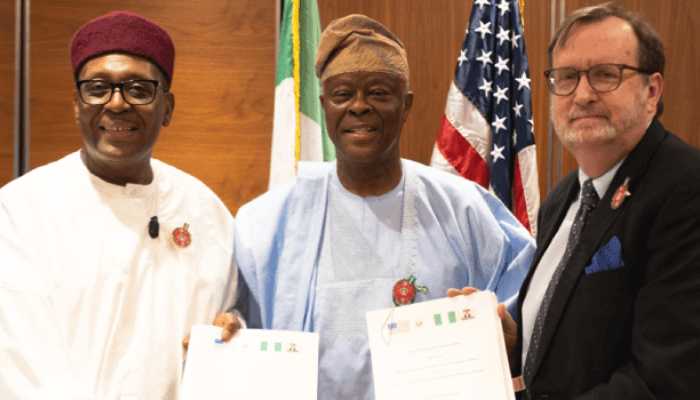
Nigeria and the United States Government have formalised a landmark health partnership, with the US expected to provide nearly $2 billion in grant funding to Nigeria’s health sector between April 2026 and December 2030. In parallel, Nigeria has committed to allocating at least six per cent of its executed annual federal and state budgets to health over the same period — a domestic investment projected to mobilise nearly $3 billion. Together, the combined value of the partnership approaches $5 billion over five years.
What the Agreement Covers
Related News
The Memorandum of Understanding, signed between the Federal Ministry of Health and Social Welfare and the US Government, is anchored in Nigeria’s National Health Sector Renewal Investment Initiative. The agreement covers disease surveillance and response, maternal and child health, primary healthcare strengthening, laboratory capacity, and the fight against epidemic prone diseases including Ebola, Lassa fever, and cholera.
Coordinating Minister of Health Prof. Ali Pate described the agreement as a “strategic shift toward sustainable, trade and investment based partnerships.” He emphasised that Nigeria is moving away from aid dependency toward a model where domestic financing drives the agenda and external support plays a complementary role. Furthermore, the six per cent budget commitment has already been reflected in the Federal Government’s 2026 Appropriation.
Why This Matters Right Now
Related News
The agreement arrives at a moment when Nigeria’s health system is under significant pressure. Lassa fever has killed 208 people in 2026. Cholera has killed 67 and infected 5,260 across 33 states. Ebola remains a high risk at the borders. And 39 healthcare workers have been infected during the current Lassa outbreak. The system needs investment urgently.
The six per cent budget commitment, if honoured consistently across federal and state levels, would represent a fundamental improvement in how Nigeria resources its health infrastructure. Currently, many public health facilities lack basic equipment, reliable power, and adequate staffing. Consequently, even preventable conditions become life threatening without reliable access to care.
The Long View
Nigeria is home to more than 230 million people. Its health challenges are enormous in scale. However, this agreement represents a genuine attempt to address those challenges with a level of financial commitment that has not always been present in previous partnerships.
The World Health Organisation, which works closely with Nigeria on its health priorities, has noted that the country has made measurable progress through evidence based approaches. This new agreement aims to accelerate that progress — from the clinics of rural Katsina to the teaching hospitals of Lagos. Every Nigerian deserves a health system that can save their life. This is a step toward making that real.