

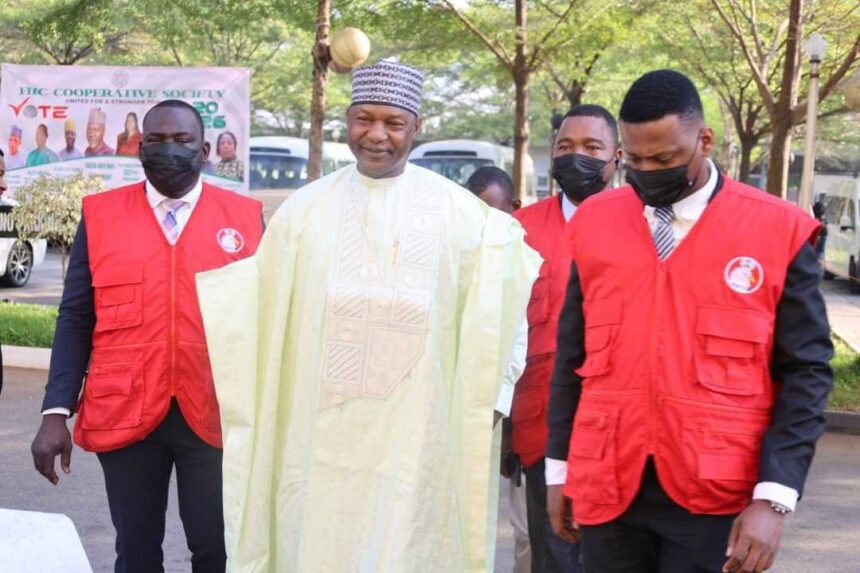
A Nigerian court ordered the remand of former Attorney General of the Federation Abubakar Malami and his son in Kuje Prison this week following their arraignment on charges connected to an alleged multibillion naira fraud case involving the diversion of public funds during Malami’s tenure as the country’s chief law officer.
The presiding judge ordered the remand after hearing arguments from both prosecution and defence counsel on the question of bail, with the court determining that the scale and seriousness of the allegations warranted continued detention pending further proceedings. Malami served as Attorney General of the Federation and Minister of Justice from 2015 to 2023 under the administration of former President Muhammadu Buhari.
Prosecutors allege that Malami and his son were involved in schemes that resulted in the diversion of public funds running into several billion naira, though the precise charges and the full scope of the allegations were still being detailed in court filings. The case represents one of the highest-profile prosecutions yet of a former cabinet-level official under the Tinubu administration’s anti-corruption enforcement drive.
Related News
High-Profile Prosecution Tests EFCC Capacity
Legal observers said the prosecution of a former Attorney General carries particular symbolic weight, given that the office is responsible for overseeing the federal government’s legal and prosecutorial functions. They noted that successfully prosecuting such a high-profile former official would send a strong signal about the independence and reach of Nigeria’s anti-corruption institutions.
However, Malami’s legal team is expected to mount a vigorous defence, and the case is likely to proceed through multiple stages of pretrial motions before reaching full trial. Civil society groups monitoring anti-corruption cases said they would track the proceedings closely, given the pattern of delays that have characterised previous prosecutions of senior former officials.
Related News
Furthermore, the case adds to a growing list of high-profile prosecutions in 2026, including the ongoing trial of former Minister Sadiya Farouq, the three simultaneous fraud cases against social media influencer Blessing CEO, and the prosecution of National Assembly directors over an alleged N337 million fraud. Still, transparency advocates including CISLAC and Transparency International have separately raised concerns about alleged diversion of NNPC royalties and taxes, urging the government to recover an estimated 120 billion dollars and N66.4 billion in unpaid obligations. Notably, the volume of major corruption cases currently working through Nigeria’s courts suggests a period of unusually intense anti-corruption activity. Consequently, the coming months will test whether the judiciary can process this caseload with the speed and rigour that public confidence in the rule of law requires.
CISLAC, TI Raise Concern Over NNPC Fund Diversion
In addition, the Civil Society Legislative Advocacy Centre and Transparency International jointly raised concerns this week over alleged diversion of funds linked to NNPC royalties and taxes, calling for the recovery of an estimated 120 billion dollars in unpaid obligations and N66.4 billion in royalties and taxes from NNPC and other entities. The groups urged the EFCC and other anti-corruption agencies to prioritise the recovery effort. As a result, Nigeria’s anti-corruption institutions face mounting pressure to demonstrate concrete asset recovery results alongside ongoing prosecutions.