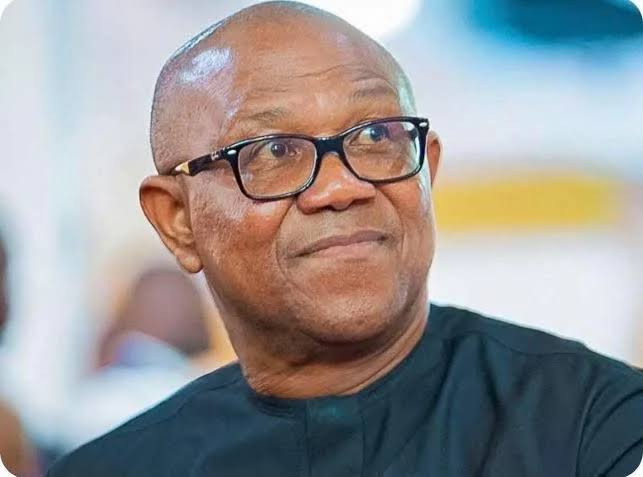
Peter Obi, presidential candidate of the Nigeria Democratic Congress (NDC), has firmly rejected the creation of a Presidential Campaign Council by the Obi-Kwankwaso (OK) Movement, stressing that support groups must not usurp the functions of the political party. His remarks have intensified the ongoing dispute between the NDC leadership and the OK Movement ahead of the 2027 general elections.
The controversy began when the OK Movement, a coalition of supporters drawn from the Obidient Movement and Kwankwasiyya, unveiled a 59-member Presidential Campaign Council on September 17, 2026. The council included zonal and state coordinators, directors for mobilisation, women affairs, legal strategy, security, and grassroots engagement. The announcement was intended to strengthen support for Obi and his running mate, Rabiu Kwankwaso, ahead of the 2027 polls.
However, the NDC swiftly distanced itself from the council, declaring that only the party’s National Working Committee had the authority to establish or announce a formal campaign structure.
Related News
Obi’s Position
Speaking during an interview on Arise Television’s Prime Time, Obi aligned with the stance of NDC National Leader, Senator Seriake Dickson, who had earlier warned that support groups should complement the party rather than compete with it.
“First, NDC is the political party we all belong to. OK Movement, Obidient group, Kwankwasiyya, and other supporting groups are supporting groups. They must play their role as supporting groups, supporting the party. They should not play the role of the party.”
He further clarified that any action taken in the name of the OK Movement must have the express approval of both himself and Kwankwaso. “Your OK Movement is Obi and Kwankwaso. So, whatever you do must have the express approval of both of us,” he said.
Related News
NDC Leadership’s Warning
Senator Dickson reinforced Obi’s position, stressing that support groups should not compete for political supremacy or establish parallel structures. He explained that their role was to mobilise grassroots support, not to act as political parties.
“The party is the umbrella under which all candidates and support groups operate. Support groups don’t compete with the political party that is sponsoring candidates,” Dickson said.
Despite Obi’s rejection, the OK Movement has insisted on its independence. Its leaders argue that the movement is not merely a support group but an organisation with its own structures at national, state, local government, and ward levels. They maintain that they will not collapse their structures into the NDC or surrender control to the party leadership.
The dispute highlights the challenges of coalition politics in Nigeria. While Obi and Kwankwaso enjoy significant grassroots support, the tension between the NDC and the OK Movement raises questions about coordination and unity ahead of the 2027 elections. Analysts warn that unresolved conflicts could weaken opposition efforts against the ruling party.