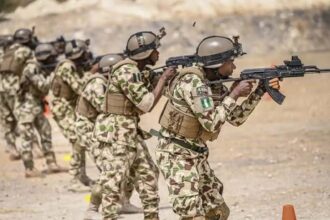


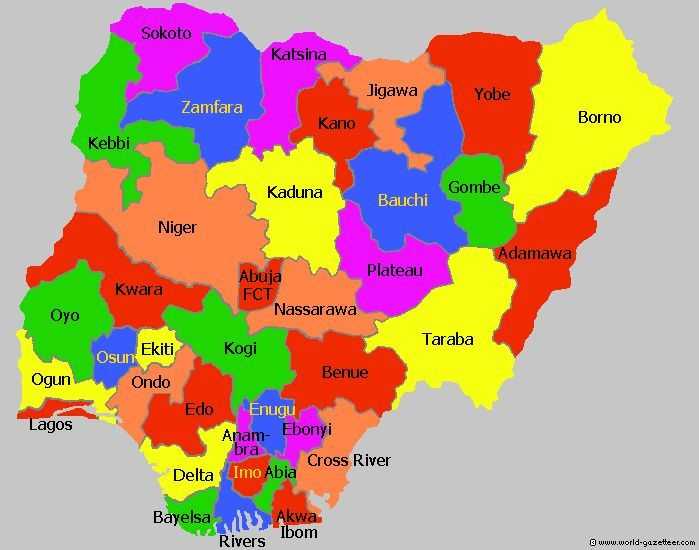
Thirty-one Nigerian states collectively spent ₦252 billion on security within six months, underscoring the growing financial burden of insecurity across the country.
The expenditure, revealed in recent budgetary reports, highlights how state governments are diverting significant resources to address challenges ranging from banditry and kidnapping to communal clashes and insurgency.
Analysts say the rising cost of security reflects the scale of Nigeria’s insecurity crisis, but questions remain about the effectiveness of such spending. Despite the huge allocations, many communities continue to face attacks, displacement, and loss of livelihoods.
Related News
Civil society organisations have called for greater transparency in how security funds are utilised. They argue that without accountability, the spending risks becoming unsustainable. “States must show clearly how these funds are being used. Citizens deserve to know whether the money is improving safety or simply disappearing into opaque structures,” one advocacy group stated.
Security experts note that state governments often rely on local security outfits, vigilante groups, and joint task forces to supplement federal agencies. While these initiatives provide immediate relief, they warn that inconsistent training and poor coordination can limit effectiveness.
The heavy spending has also raised concerns about its impact on other critical sectors. Education, healthcare, and infrastructure projects are reportedly suffering cuts as states prioritise security. Economists caution that this trend could undermine long-term development.
Related News
Governors defend the allocations, insisting that protecting lives and property must remain the top priority. Some argue that without peace and stability, investments in other sectors cannot yield results. “Security is the foundation of progress. We cannot ignore it,” a state official explained.
Observers believe the situation highlights the need for a more coordinated national approach. They argue that insecurity cannot be solved by individual states alone, and that federal agencies must strengthen collaboration with local authorities.
The spending also reflects the growing role of state governments in Nigeria’s security architecture, despite constitutional limitations that place policing under federal control. Calls for state police have intensified, with proponents arguing that decentralised policing could improve response times and accountability.
For many Nigerians, however, the reality remains grim. Communities across the North-West, North-Central, and parts of the South continue to suffer attacks despite billions spent on security. Residents say they want results, not just figures.
As insecurity persists, stakeholders agree that Nigeria must balance immediate spending with long-term reforms. Investment in intelligence, technology, and community engagement is seen as critical to breaking the cycle of violence.
The ₦252 billion figure underscores both the scale of the challenge and the urgency of finding sustainable solutions. For citizens, the key question is whether the money spent will translate into safer communities and a more secure future.