

Talks failed. Patients are now the ones paying the price.
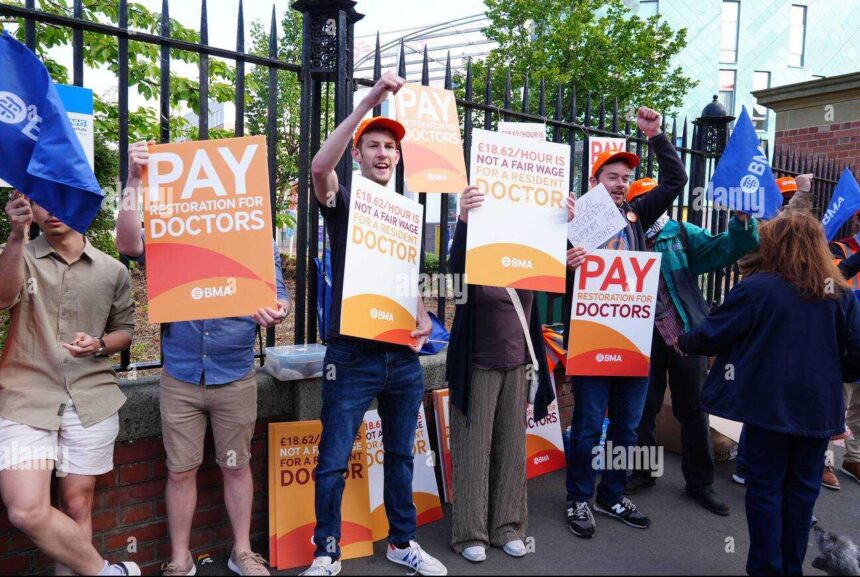
Resident doctors at the Olabisi Onabanjo University Teaching Hospital in Sagamu, Ogun State, have commenced a strike after negotiations with the state government for improved pay collapsed entirely. The action follows an earlier three day warning strike over the same underlying dispute, which had prompted negotiations between the doctors’ association and state authorities that ultimately failed to produce an agreement both sides could accept.
How the Dispute Escalated
Related News
The doctors, organised under the Association of Resident Doctors at OOUTH, said they were unable to reach agreement with hospital management and the state government on several key demands. In a letter addressed to Governor Dapo Abiodun, the association claimed that the state government had not demonstrated sufficient commitment toward addressing their welfare concerns.
The earlier three day warning strike had been intended as a signal of the seriousness of the doctors’ grievances, while allowing space for negotiation to continue. However, when those negotiations ultimately broke down, the association moved forward with a full strike action, leaving patients at the teaching hospital facing significant disruption to their care.
The Wider Pattern of Health Worker Strikes
Related News
OOUTH’s situation reflects a recurring challenge across Nigeria’s public health system, where resident doctors and other health workers regularly resort to strike action over unresolved pay and welfare disputes. The World Health Organisation has specifically warned that in low income countries like Nigeria, data on health worker strikes remains scarce, even though the implications of such strikes are potentially wide reaching when health systems are already fragile.
Furthermore, this pattern is not isolated to Ogun State. Nigeria has experienced multiple rounds of doctor strikes at both federal and state levels throughout 2025 and into 2026, often following similar cycles of agreements signed, strikes suspended, and promises subsequently unfulfilled.
The Cost to Patients
Every strike at a major teaching hospital carries direct consequences for patients who depend on that facility for care, particularly those requiring ongoing treatment for chronic conditions or urgent medical attention. For Sagamu and the surrounding Ogun State communities served by OOUTH, the strike represents a genuine disruption to already strained healthcare access.
As the standoff continues, pressure will likely build on the Ogun State government to return to the negotiating table with a credible offer. Until that happens, the doctors say their strike action will continue, leaving the hospital’s patients caught in the middle of a dispute they did not create but must nonetheless live with the consequences of.