

GENEVA — World Health Organisation Director-General Tedros Adhanom Ghebreyesus has said the Ebola outbreak in DRC and Uganda poses a high risk at the national and regional level but remains at a low risk globally. He made the assessment at a WHO media briefing on Wednesday.
Tedros confirmed that the PHEIC declaration he issued on Sunday, May 16, was unprecedented. It was the first time a WHO Director-General had declared a public health emergency of international concern before formally convening an Emergency Committee. He said the urgency of the situation demanded immediate action.
“I took this step in accordance with Article 12 of the International Health Regulations, after consulting the Ministers of Health of DRC and Uganda, and in view of the need for urgent action,” Tedros said at the briefing.
Related News
The Emergency Committee convened the day after the PHEIC declaration. It agreed with Tedros’s assessment that the situation constitutes a public health emergency but does not yet meet the criteria for a pandemic emergency. The pandemic emergency classification is the new highest level under recently amended International Health Regulations.
What Is Known About the Outbreak
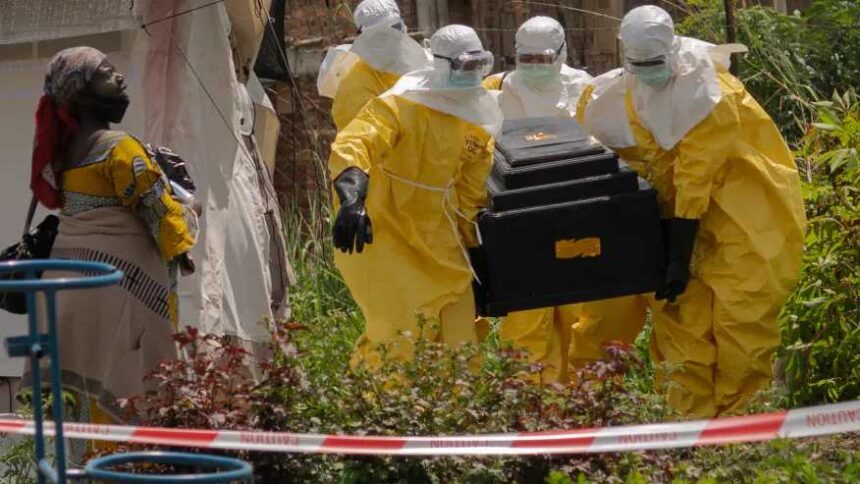
The current outbreak involves the Bundibugyo virus strain of Ebola. WHO received the initial alert on May 5, 2026, regarding an unknown illness with high mortality in Mongbwalu Health Zone, Ituri Province, DRC. Four health workers died within four days. Rapid response teams confirmed Ebola as the cause.
Related News
As of May 16, eight laboratory-confirmed cases and approximately 80 suspected deaths have been reported across at least three health zones in Ituri Province: Bunia, Rwampara, and Mongbwalu. One imported case from DRC, a Congolese man who died in Kampala, confirmed the virus had crossed into Uganda.
Furthermore, the Bundibugyo strain has been identified in previous outbreaks. It was first identified in Uganda in 2007. It is generally considered less lethal than the Zaire strain but still kills a significant proportion of those it infects without proper treatment and care.
Africa’s Preparedness Challenge
The outbreak highlights ongoing weaknesses in health systems across central and east Africa. Many health facilities in Ituri Province lack basic infection control equipment, trained personnel, and reliable diagnostic capacity. These gaps allowed the virus to spread for weeks before it was formally identified.
For Nigeria, the WHO assessment provides some reassurance. The low global risk rating suggests that the probability of Ebola spreading to West Africa through air travel or other channels remains limited. However, WHO cautioned that the risk assessment could change if the outbreak is not contained quickly.
The NCDC said it is following WHO guidance closely. Nigeria’s preparedness plans include isolation unit capacity at designated hospitals, stockpiles of personal protective equipment, and a trained rapid response force. Officials said the country is better prepared today than it was at the start of the 2014 outbreak.