

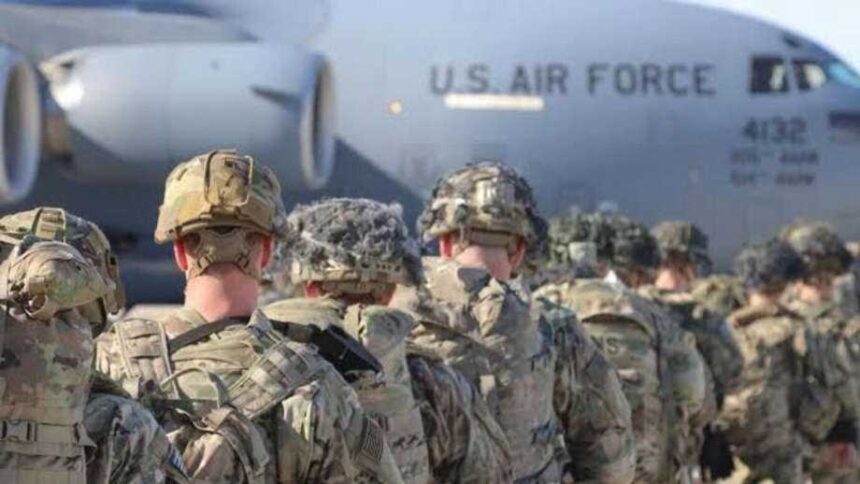
The United States has withdrawn its troops from Nigeria after completing a counterterrorism operation, a move that has stirred debate over the future of security cooperation between both nations.
The operation, carried out in the North-East, targeted extremist cells linked to Boko Haram and Islamic State West Africa Province (ISWAP). According to officials, the mission was aimed at disrupting networks responsible for cross-border attacks and recruitment.
US military sources confirmed that the deployment was temporary and focused on intelligence support, training, and precision strikes in coordination with Nigerian forces. With the mission concluded, troops have now returned to their bases outside Africa.
Related News
The withdrawal comes at a time when Nigeria continues to grapple with insurgency in Borno, Yobe, and Adamawa states. Despite gains by the Nigerian military, extremist groups remain active, posing threats to civilians and regional stability.
Security analysts say the US pullout underscores the challenges of sustaining foreign military involvement in Nigeria’s counterterrorism efforts. While the operation provided short-term relief, long-term success depends on strengthening Nigeria’s own capacity.
A senior Nigerian defence official acknowledged the support provided by the US but insisted that Nigeria must take ownership of its security challenges. “We appreciate the assistance, but ultimately, the responsibility lies with us. We must continue to build our forces and improve intelligence gathering,” he said.
Related News
Civil society groups have expressed mixed reactions. Some welcomed the withdrawal, arguing that Nigeria should not rely heavily on foreign troops. Others warned that the absence of US forces could embolden insurgents, especially in remote areas where Nigerian troops face logistical difficulties.
The development also raises questions about the broader US strategy in West Africa. In recent years, Washington has scaled back military footprints in the Sahel, citing resource constraints and shifting priorities. Nigeria’s case reflects this recalibration, with emphasis placed on advisory roles rather than prolonged deployments.
Political observers note that the withdrawal could influence Nigeria’s diplomatic relations. While cooperation with the US remains strong, Abuja may seek deeper ties with other partners, including the United Kingdom, France, and regional allies, to fill potential gaps.
For communities in the North-East, the immediate concern is whether the withdrawal will affect security on the ground. Residents in Maiduguri and surrounding towns have voiced fears of renewed attacks, urging the government to intensify patrols and provide humanitarian support.
The Nigerian military has assured citizens that operations against insurgents will continue without interruption. Commanders stressed that recent gains, including the capture of several ISWAP camps, demonstrate the army’s growing capacity.
Still, analysts caution that insurgency in Nigeria is complex, driven by poverty, unemployment, and porous borders. They argue that military action alone cannot end the crisis, calling for stronger governance, education, and economic opportunities in affected regions.
As the US troops depart, Nigeria faces the task of consolidating security gains while addressing root causes of extremism. The withdrawal marks a turning point in the fight against terrorism, highlighting both the importance and limitations of foreign military support.