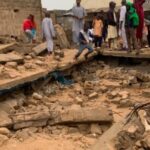


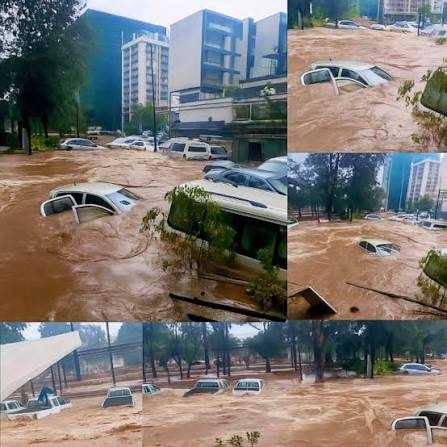
Heavy rainfall in Abuja has caused severe flooding that left residents stranded and vehicles submerged in several parts of the city.
The downpour, which lasted for hours, overwhelmed drainage systems and led to waterlogging in major roads and residential areas. Commuters were trapped in traffic as floodwaters rose, while some residents were forced to abandon their homes temporarily.
Eyewitnesses reported that vehicles were swept off roads in areas such as Lokogoma, Gwarinpa, and Lugbe, where flooding has become a recurring problem during the rainy season. Many motorists struggled to navigate submerged roads, with some abandoning their cars to seek safety.
Related News
Officials of the Federal Capital Territory Emergency Management Agency (FEMA) confirmed the incident, noting that rescue teams were deployed to assist stranded residents. A spokesperson for the agency urged residents to avoid flood-prone areas and adhere to safety advisories.
“Flooding remains a serious risk during this rainy season. We advise residents to stay away from waterways and report emergencies promptly. Our teams are on ground to provide support,” the spokesperson said.
Environmental experts have linked the recurring floods in Abuja to poor urban planning and blocked drainage channels. They argue that indiscriminate dumping of refuse and rapid urbanisation without adequate infrastructure have worsened the situation.
Related News
Residents expressed frustration over the repeated flooding, calling on authorities to implement long-term solutions. “Every year we face the same problem. The government needs to fix the drainage system and enforce building regulations,” a resident in Lokogoma lamented.
The Nigerian Meteorological Agency (NiMet) has warned of more heavy rainfall in the coming weeks, raising concerns about further flooding in Abuja and other parts of the country. NiMet advised residents to remain alert and take precautionary measures.
Flooding has become a major environmental challenge in Nigeria, often leading to loss of lives, property damage, and displacement of communities. In recent years, Abuja has recorded several incidents of flash floods, highlighting the urgent need for improved disaster preparedness.
Authorities have assured that measures are being taken to mitigate the impact, including clearing blocked drainage systems and sensitising residents on flood risks. However, experts insist that stronger enforcement of environmental laws and investment in infrastructure are necessary to prevent future disasters.
For now, residents in affected areas continue to count their losses, as submerged vehicles and damaged property add to the economic burden caused by the flood.