

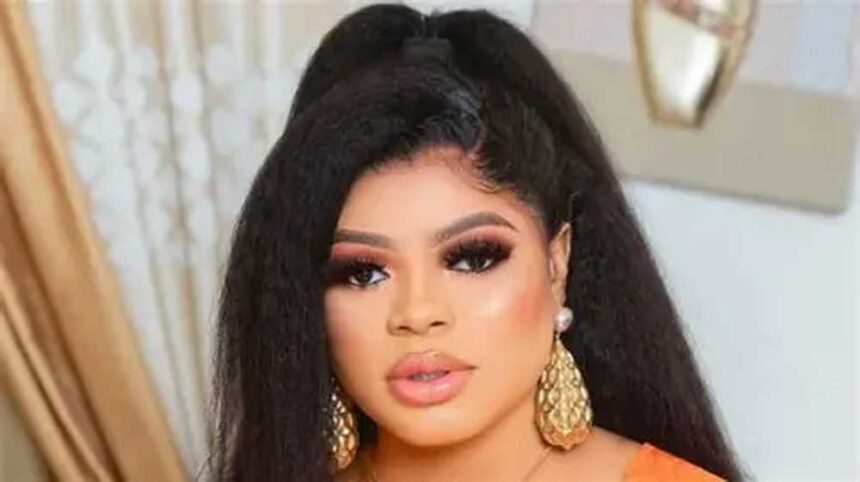
A federal government panel set up to investigate the circumstances surrounding the incarceration of crossdresser Idris Okuneye, widely known as Bobrisky, released its findings this week, exposing a series of unlawful privileges he allegedly enjoyed during his prison term and controversially recommending the prosecution of social media activist VeryDarkMan, who first publicly raised the alarm about the alleged special treatment.
The panel found that Bobrisky, who was convicted and sentenced to six months in prison for naira mutilation, did not actually serve his term in a standard correctional facility but was instead given irregular accommodation arrangements that departed significantly from the conditions applicable to other inmates. The findings confirmed much of what VeryDarkMan had alleged publicly, vindicating his original claims about preferential treatment.
However, the panel also recommended that VeryDarkMan, whose real name is Martins Vincent Otse, should face prosecution for his role in publicising the scandal, a recommendation that drew immediate and fierce backlash from civil society, legal commentators, and the general public, who described it as an attempt to shoot the messenger rather than address the institutional failures the scandal had exposed.
Related News
Public Outrage Over VDM Prosecution Recommendation
The recommendation to prosecute VeryDarkMan was widely condemned as unjust and counterproductive. Civil liberties groups said any prosecution of a whistleblower for exposing genuine institutional wrongdoing would set a dangerous precedent that would deter future accountability activism. The Nigerian Bar Association said it would monitor any prosecution attempt closely, adding that the legal basis for such a prosecution would need to be clearly established.
VeryDarkMan himself rejected the recommendation, saying he had acted in the public interest and that the panel’s findings had vindicated his original claims. His supporters on social media launched a campaign opposing any prosecution, arguing that the real targets of state action should be the correctional officials who facilitated the unlawful privileges, not the activist who exposed them.
Related News
Furthermore, the scandal raises serious questions about the integrity of Nigeria’s correctional system and whether preferential treatment for wealthy or high-profile inmates is a systemic rather than isolated problem. The Correctional Service said it had suspended the officials most directly implicated in facilitating Bobrisky’s special treatment. Still, observers said a more comprehensive institutional review was needed. Notably, the Bobrisky prison scandal broke against the backdrop of the Suleja prison escape, which exposed deteriorating infrastructure, and the NDLEA’s N4.8 billion drug seizure in Lagos, which highlighted ongoing contraband challenges within the prison system. Consequently, Nigeria’s correctional system faces sustained public scrutiny from multiple directions simultaneously.
Baba Ijesha Celebrates Birth of Son After Prison Release
In a contrasting story from within the entertainment and justice space, Nollywood actor Baba Ijesha, who was released from prison in November 2025 after serving his sentence for sexual assault, announced the birth of his son King Kagar Omiyinka with his wife this week. The announcement attracted mixed reactions on social media, reflecting the continuing public sensitivity around his case. As a result, his story continues to generate debate about accountability, rehabilitation, and public forgiveness in Nigeria’s entertainment community.