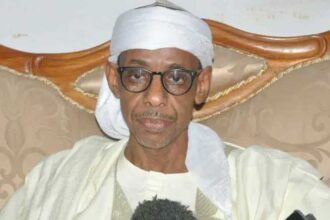


The African Democratic Congress fired back at former Secretary to the Government of the Federation Babachir Lawal on Thursday, dismissing his sustained criticism of the party’s presidential primary as the embittered outburst of a man who had lost a political contest he entered as a spectator rather than a genuine participant in the party’s democratic process.
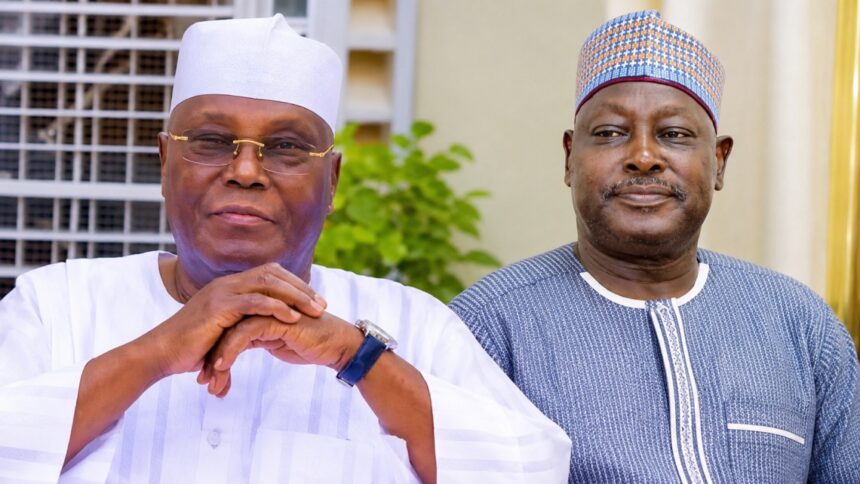
Lawal had declared this week that he had eliminated both the APC and ADC from consideration and was assessing his options for 2027, following his resignation from the ADC over what he described as a massively rigged presidential primary that produced former Vice President Atiku Abubakar as its flagbearer. The ADC’s national publicity secretary said the party had moved on from Lawal’s resignation and was fully focused on building a presidential campaign around Atiku.
Atiku’s media office described the ongoing criticism from Lawal as a distraction that would not affect the candidate’s work or the party’s organisational momentum. Officials said the former Vice President was conducting meetings with political allies, business leaders, and voter groups across Nigeria as he built his campaign coalition for 2027, a process they said was progressing well despite the noise surrounding the primary controversy.
Related News
Opposition Landscape Still in Flux
Beyond the ADC-Lawal dispute, the broader 2027 opposition landscape remained notably unsettled on Democracy Day. Peter Obi’s position relative to the New Democratic Congress was still being defined, with the party navigating its own internal primary disputes. The PRP, bolstered by Datti Baba-Ahmed’s public profile, was positioning itself as the northern opposition voice, while smaller parties including the ADC, SDP, and NNPP were each working to carve out distinct electoral niches.
However, no single opposition figure had yet succeeded in building the kind of broad, geographically diverse coalition that analysts say would be needed to challenge the APC’s structural advantages in 2027. Furthermore, the multiplicity of candidates and parties in the opposition space risked repeating the vote-splitting pattern of 2023 that allowed the APC to win with a relatively modest share of the national vote.
Related News
Still, Dele Momodu, who had earlier described Atiku as Tinubu’s most formidable challenger, said the 2027 election was far from decided and that the Tinubu administration’s handling of insecurity and economic hardship over the next 12 months would be the decisive factor in determining whether the President secured re-election. Notably, the nationwide Democracy Day protests demonstrated that there was genuine and organised public discontent that a disciplined opposition could potentially convert into electoral support. Consequently, the 2027 campaign season, while still in its early stages, is being shaped in real time by governance failures and social pressures that neither the ruling party nor the opposition can yet fully predict or control.
Accord Party Confirms Olawepo-Hashim Refund
In addition, the Accord Party formally confirmed that it had refunded the N50 million nomination fee paid by presidential aspirant Gbenga Olawepo-Hashim after declaring that his primary was not recognised by the national leadership. Olawepo-Hashim said he was pursuing legal options to challenge the party’s position. As a result, the Accord Party’s 2027 presidential candidate situation remained unresolved, adding another thread of uncertainty to Nigeria’s already complex opposition picture.