

The rules of engagement just got clearer. Nigeria’s Defence Minister has told security forces not to hesitate when facing armed bandits and terrorists.
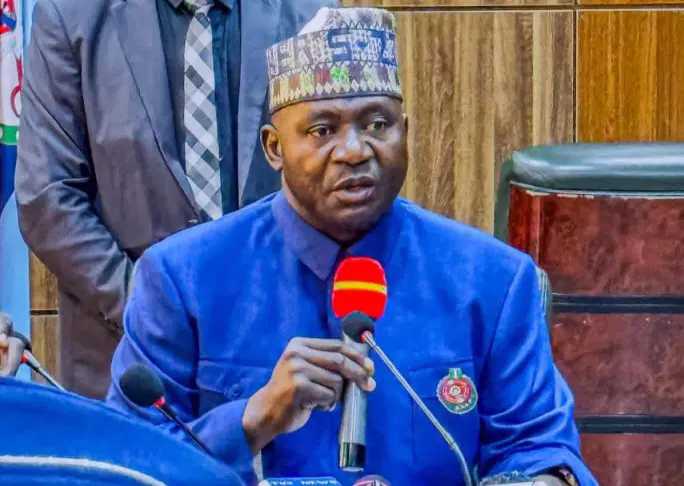
Minister of Defence General Christopher Musa (retd.) has directed all security personnel not to hesitate in confronting armed bandits and terrorists, declaring that any operative who fails to neutralise clearly identified threats will face consequences for that failure. The directive, confirmed by Punch Newspapers on July 8, represents one of the most explicit public statements on military rules of engagement by a serving government minister in Nigeria’s recent security history.
What the Order Says
Related News
General Musa’s directive leaves little room for ambiguity. Security personnel who encounter armed bandits or terrorists are instructed to engage and neutralise them without hesitation. The minister made clear that failing to act when faced with an identified armed threat is itself an accountability issue, not merely a tactical choice.
The order reflects growing frustration at the highest levels of Nigeria’s security establishment with instances where armed groups have operated in areas where security forces were present but did not engage. Whether because of tactical caution, coordination failures, or other reasons, the perception that some security responses have been insufficiently aggressive has clearly reached ministerial attention.
The Context Behind the Directive
Related News
General Musa’s order comes against a backdrop of continued attacks across multiple states, including the July 6 bandit raid on two Niger State villages that killed four civilians and targeted a hospital, and ongoing insecurity in Plateau, Zamfara, and Borno. The minister’s words reflect both the scale of the continuing threat and an assessment that more aggressive engagement is necessary.
Furthermore, the directive builds on President Tinubu’s recent Army Day commitment to technology-enabled and intelligence-driven military operations. Together, these statements signal an administration intent on appearing firmly in command of the security response, ahead of what promises to be an increasingly scrutinised period as Nigeria approaches the 2027 general election cycle.
Accountability and Human Rights Considerations
Public shoot-on-sight directives from government officials routinely attract scrutiny from human rights organisations, who note that military operations must be governed by law of armed conflict principles regardless of political directives. The line between armed combatants and civilians is not always clear in complex environments like Nigeria’s northwest, where markets, farms, and community spaces are sometimes simultaneously used by criminal groups.
For Nigerian communities directly affected by banditry and terrorism, however, the immediate concern is whether security forces will now protect them more decisively. That practical question, not the legal debate, will determine how the directive is received by the millions of Nigerians living under daily threat.