


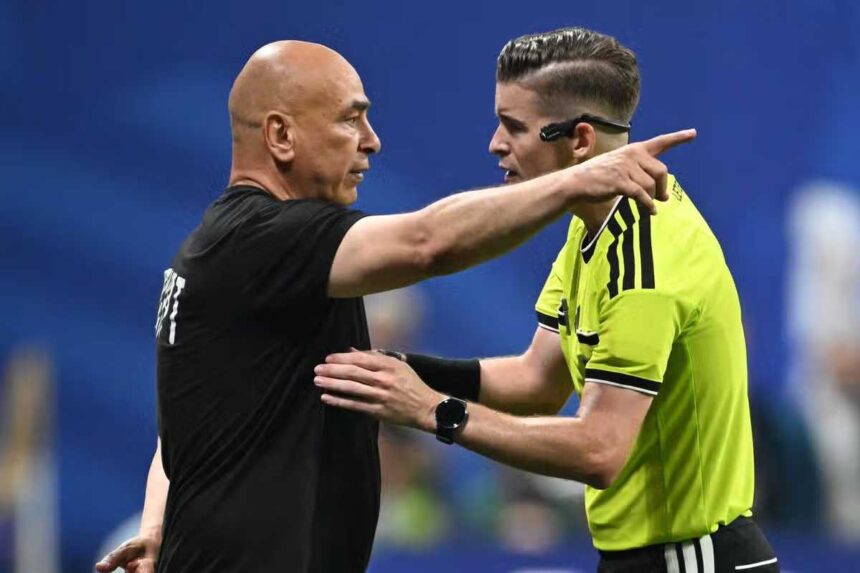
For a national and international audience, Egypt’s formal complaint against the referee following their controversial World Cup exit has reignited global conversations about officiating standards and fairness in elite football.
According to verified post-match reports and coverage by Punch Newspapers and Vanguard, the Egyptian Football Association (EFA) submitted an official protest to FIFA, alleging bias and poor officiating during their knockout match. The EFA claimed that several key decisions—including a disallowed goal and a penalty appeal—were mishandled, ultimately affecting the team’s chances of advancing.
The controversy unfolded during Egypt’s tense Round of 16 clash, where the referee’s decisions drew immediate criticism from players, fans, and analysts. Television replays showed what appeared to be a handball in the opponent’s box, but the referee waved play on despite protests from Egyptian players.
Related News
Moments later, Egypt’s forward found the net, only for the goal to be ruled offside after a lengthy VAR review. The decision, described by commentators as “borderline,” became the turning point of the match.
In a statement released after the game, the EFA said it had “lodged a formal complaint to FIFA demanding a review of the officiating crew’s performance.” The association insisted that the integrity of the competition must be protected and called for accountability in referee appointments.
The EFA’s move has drawn support from several African football federations, who argue that African teams often face inconsistent officiating at global tournaments.
Related News
FIFA has acknowledged receipt of Egypt’s complaint but has yet to issue a detailed response. A spokesperson confirmed that the governing body would “review all match incidents in accordance with established procedures.”
While FIFA rarely overturns match results, the review process could lead to disciplinary action or retraining for officials involved.
Beyond the immediate controversy, Egypt’s complaint has sparked a wider debate about the transparency of refereeing decisions and the use of technology in football. Critics argue that VAR, introduced to reduce human error, has instead amplified disputes due to inconsistent interpretations across tournaments.
Sports analysts note that Egypt’s protest reflects growing frustration among teams from developing football regions. “It’s not just about one match,” said a Lagos-based football analyst. “It’s about trust in the system. When decisions repeatedly go against certain teams, it erodes confidence in global football governance.”
This is not the first time Egypt has challenged officiating at major tournaments. Court records and verified reports show that the EFA previously filed complaints during the 2018 World Cup qualifiers, citing similar concerns over referee bias.
The latest incident, however, carries greater weight given the global visibility of the World Cup and the increasing scrutiny of FIFA’s officiating standards.
Across social media, Egyptian fans expressed outrage, calling the match “a robbery in daylight.” Hashtags demanding justice trended across Africa and the Middle East, while neutral observers called for reforms in referee selection and training.
International commentators have also weighed in, urging FIFA to strengthen oversight mechanisms and ensure balanced representation among officiating crews.
Egypt’s elimination may have ended their World Cup campaign, but the fallout could influence future tournaments. The EFA has vowed to pursue the matter until “fairness and accountability are upheld.”
For Nigeria and other African football nations, the episode serves as a reminder of the persistent challenges facing teams from the continent on the global stage. It also underscores the need for stronger advocacy within FIFA to ensure equitable treatment.
Egypt’s complaint against the referee is more than a reaction to defeat—it is a call for reform in football governance. As FIFA reviews the case, the outcome will test the organisation’s commitment to transparency and fairness in the world’s most-watched sporting event.
For both national and international readers, the controversy highlights a crucial question: can football’s governing bodies guarantee justice on the pitch, or will the game’s credibility continue to depend on subjective calls?