


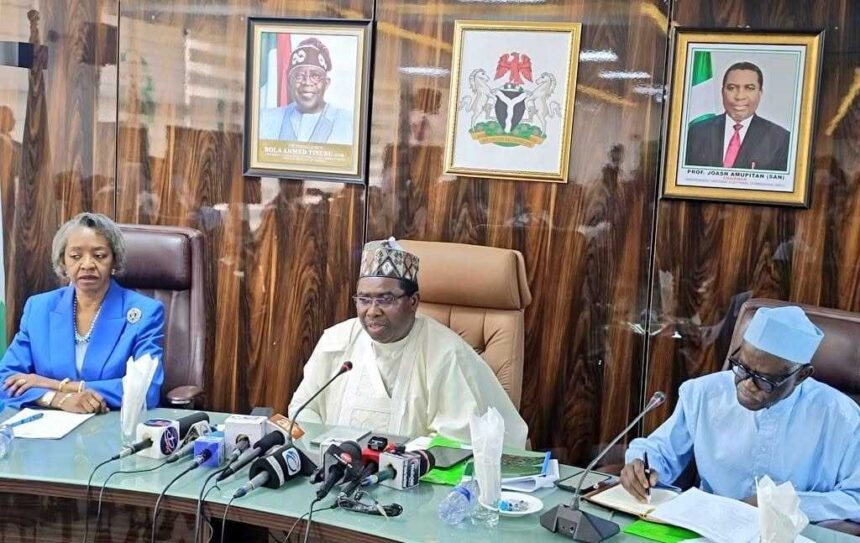
As Nigeria inches closer to the 2027 general elections, the Independent National Electoral Commission (INEC) has once again placed technology at the heart of its preparations. The commission’s insistence on strict adherence to its online portal deadline for uploading candidate lists and other essential documents has triggered a last-minute scramble among political parties. While this rush is not unusual in Nigeria’s electoral history, the digital dimension of the process has introduced new layers of accountability, transparency, and international attention.
According to reports from Vanguard and Punch Newspapers, INEC’s online portal for submission of candidate details closed at midnight on Sunday, July 5, 2026. Parties that failed to meet the deadline risk exclusion from the ballot, a sanction INEC has consistently enforced in past elections. Court records from earlier disputes, such as the 2019 Zamfara State case, show that late submissions have led to entire parties being disqualified from participating in elections. This precedent underscores the seriousness of the current deadline and explains the frantic activity witnessed across party headquarters nationwide.
Major parties, including the All Progressives Congress (APC), the People’s Democratic Party (PDP), and newer entrants like the Labour Party (LP), reportedly rushed to finalize their lists of candidates for governorship, legislative, and presidential contests. Verified post-match reports from party officials indicate that technical glitches, internal disputes over primaries, and last-minute negotiations with aspirants slowed down the uploading process. In some states, parallel congresses produced conflicting candidate lists, leaving party leaders scrambling to resolve disputes before the INEC deadline.
Related News
While INEC’s digital portal is designed to enhance transparency and reduce human interference, it has also exposed the weaknesses of Nigeria’s political parties. Smaller parties without robust IT infrastructure struggled to navigate the portal, raising concerns about whether technology might inadvertently disenfranchise less-resourced groups. International observers, including the European Union Election Observation Mission, have previously noted that Nigeria’s embrace of technology must be matched with capacity-building for all stakeholders to ensure inclusivity.
Legal experts warn that the uploading deadline could trigger a wave of pre-election litigation. Already, some aspirants have threatened to challenge their exclusion in court, citing procedural irregularities. Court records from past elections show that such disputes often drag on until days before voting, creating uncertainty for voters and candidates alike. Analysts believe that the judiciary will once again play a decisive role in interpreting INEC’s powers and the rights of political parties.
Nigeria’s elections are not just a domestic affair; the international community closely monitors them. As Africa’s largest democracy, the credibility of the 2027 polls will influence perceptions of democratic resilience across the continent. The emphasis on digital compliance resonates with global trends, where electoral commissions are increasingly adopting technology to safeguard integrity. However, Nigeria’s experience also highlights the risks of uneven preparedness among political actors.
Related News
Beyond the technicalities, INEC’s uploading deadline serves as a stress test for party discipline and organizational capacity. Political parties that consistently struggle to meet deadlines reveal deeper structural weaknesses—poor internal democracy, weak administrative systems, and over-reliance on last-minute improvisation. For voters, this raises questions about whether such parties can govern effectively if entrusted with power. For INEC, the deadline is not merely a bureaucratic requirement but a tool to enforce order in Nigeria’s often chaotic political landscape.
The 2027 elections are shaping up to be a landmark moment in Nigeria’s democratic journey. INEC’s digital deadline has forced parties to confront their organizational shortcomings while signaling to the world that Nigeria is serious about electoral integrity. Yet the rush to meet the deadline also exposes vulnerabilities that could spill into the courts and test the system’s resilience. As the nation prepares for the polls, one thing is clear: technology has become both a guardian and a gatekeeper of Nigeria’s democracy.
Discover more from News247 Nigeria
Subscribe to get the latest posts sent to your email.